THE CLASSIC COLLECTION✦My diaries, being a personal narrative of events 1888-1914, Part 2 (1900-1914)CLASSIC FREE BOOKS
My diaries, being a personal narrative of events 1888-1914, Part 2 (1900-1914)
Wilfrid Scawen Blunt
THE CLASSIC COLLECTION · 1712
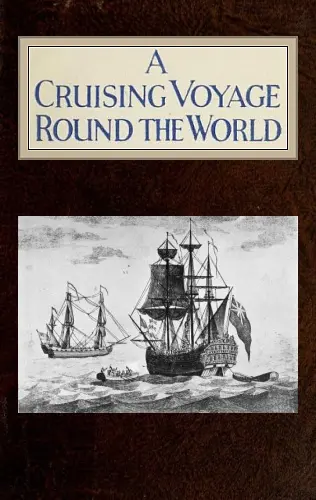
"A Cruising Voyage Round the World" by Woodes Rogers is a historical account written in the early 18th century. The book chronicles Rogers's remarkable voyage on two ships, the "Duke" and "Dutchess", as they set out to explore the South Seas and engage in privateering during a time of intense maritime competition and conflict. The narrative not only details the expedition's adventures and challenges but also provides insight into the life and character of Rogers, a significant figure in British maritime history. The opening of "A Cruising Voyage Round the World" introduces Captain Woodes Rogers as he prepares for a notable expedition in 1708, aiming to disrupt the lucrative South Sea trade dominated by France and Spain. His foresight leads him to gather a skilled crew, including the experienced Captain William Dampier, and organize two ships to sail from Bristol. The narrative unfolds with the preparations for the journey, the initial challenges faced by the crew—including mutiny and illness—and their eventual encounters with treasure ships and capture of prizes, setting the stage for a dramatic tale of adventure, resilience, and naval exploits that highlights the spirit of the age.
Introduction adapted from the source catalogue; source summaries may be automatically generated.
Free to read · English · 160,581 words · No account needed
MAKE TIME FOR A GOOD BOOK
On by default. Untick to stop anonymous reading totals. Each page counts after 10 seconds in view. How this works.
Anonymous counting is on unless you have switched it off.
February 1. About two yesterday in the Afternoon we hoisted our Pinnace out; Capt Dover with the Boats Crew went in her to go ashore, tho we could not be less than 4 Ls. off. As soon as the Pinnace was gone, I went on board the Dutchess, who admir’d our Boat attempted going ashore at that distance from Land: ’twas against my Inclination, but to oblige Capt. Dover I consented to let her go. As soon as it was dark, we saw a Light ashore; our Boat was then about a League from the Island, and bore away for the Ships as soon as she saw the Lights. We put out Lights abroad for the Boat, tho some were of opinion the Lights we saw were our Boats Lights; but as Night came on, it appear’d too large for that. We fir’d one Quarter-Deck Gun and several Muskets, showing Lights in our Mizen and Fore-Shrouds, that our Boat might find us, whilst we ply’d in the Lee of the Island. About two in the Morning our Boat came on board, having been two hours on board the Dutchess, that took ’em up a-stern of us: we-were glad they got well off, because it begun to blow. We are all convinc’d the Light is on the shore, and design to make our Ships ready to engage, believing them to be French Ships at anchor, and we must either fight ’em or want Water, etc.
Febr. 2. We stood on the back side along the South end of the Island, in order to lay in with the first Southerly Wind, which Capt. Dampier told us generally blows there all day long. In the Morning, being past the Island, we tack’d to lay it in close aboard the Land; and about ten a clock open’d the South End of the Island, and ran close aboard the Land that begins to make the North-East side. The Flaws[122] came heavy off shore, and we-were forc’d to reef our Top-sails when we open’d the middle Bay, where we expected to find our Enemy, but saw all clear, and no Ships in that nor the other Bay next the N W. End. These two Bays are all that Ships ride in which recruit on this Island, but the middle Bay is by much the best. We guess’d there had been Ships there, but that they were gone on sight of us. We sent our Yall ashore about Noon, with Capt. Dover, Mr. Frye, and six Men, all arm’d; mean while we and the Dutchess kept turning to get in, and such heavy Flaws came off the Land, that we were forc’d to let fly our Topsail-Sheet, keeping all Hands to stand by our Sails, for fear of the Wind’s carrying ’em away: but when the Flaws were gone, we had little or no Wind. These Flaws proceeded from the Land, which is very high in the middle of the Island. Our Boat did not return, so we sent our Pinnace with the Men arm’d, to see what was the occasion of the Yall’s stay; for we were afraid that the Spaniards had a Garison there, and might have seiz’d ’em. We put out a Signal for our Boat, and the Dutchess show’d a French Ensign. Immediately our Pinnace returned from the shore, and brought abundance of Craw-fish, with a Man cloth’d in Goat-Skins, who look’d wilder than the first Owners of them. He had been on the Island four Years and four Months, being left there by Capt. Stradling in the Cinque-Ports; his Name was Alexander Selkirk a Scotch Man, who had been Master of the Cinque-Ports, a Ship that came here last with Capt. Dampier, who told me that this was the best Man in her; so I immediately agreed with him to be a Mate on board our Ship. ’Twas he that made the Fire last night when he saw our Ships, which he judg’d to be English. During his stay here, he saw several Ships pass by, but only two came in to anchor. As he went to view them, he found ’em to be Spaniards, and retir’d from ’em; upon which they shot at him. Had they been French, he would have submitted; but chose to risque his dying alone on the Island, rather than fall into the hands of the Spaniards in these parts, because he apprehended they would murder him, or make a Slave of him in the Mines, for he fear’d they would spare no Stranger that might be capable of discovering the South-Sea. The Spaniards had landed, before he knew what they were, and they came so near him that he had much ado to escape; for they not only shot at him but pursu’d him into the Woods, where he climb’d to the top of a Tree, at the foot of which they made water, and kill’d several Goats just by, but went off again without discovering him. He told us that he was born at Largo in the County of Fife in Scotland, and was bred a Sailor from his Youth. The reason of his being left here was a difference betwixt him and his Captain; which, together with the Ships being leaky, made him willing rather to stay here, than go along with him at first; and when he was at last willing, the Captain would not receive him. He had been in the Island before to wood and water, when two of the Ships Company were left upon it for six Months till the Ship return’d, being chas’d thence by two French South-Sea Ships.
Your reading position is saved on this browser. Take it to another device with a library code. Reading pages adapt to text, rather than matching a printed edition.
BEHIND THE BOOK
This eBook is for the use of anyone anywhere in the United States and most other parts of the world at no cost and with almost no restrictions whatsoever. You may copy it, give it away or re-use it under the terms of the Project Gutenberg License included with this eBook or online at www.gutenberg.org. If you are not located in the United States, you will have to check the laws of the country where you are located before using this eBook. Read the source licence.
The original source file, including credits and licence, is retained by this library. Request an original-format copy at no charge. Please include the book title and Project Gutenberg identifier #55538.
KEEP YOUR CURIOSITY GOING
Wilfrid Scawen Blunt
Wilfrid Scawen Blunt

E. W. (Edgar Watson) Howe
Cécile Tormay

Moritz Busch
John L. Ransom