THE CLASSIC COLLECTION✦My diaries, being a personal narrative of events 1888-1914, Part 2 (1900-1914)CLASSIC FREE BOOKS
My diaries, being a personal narrative of events 1888-1914, Part 2 (1900-1914)
Wilfrid Scawen Blunt
THE CLASSIC COLLECTION · 1712
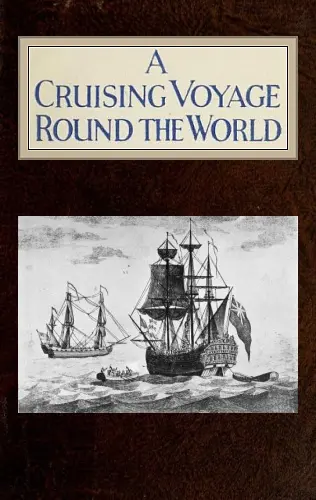
"A Cruising Voyage Round the World" by Woodes Rogers is a historical account written in the early 18th century. The book chronicles Rogers's remarkable voyage on two ships, the "Duke" and "Dutchess", as they set out to explore the South Seas and engage in privateering during a time of intense maritime competition and conflict. The narrative not only details the expedition's adventures and challenges but also provides insight into the life and character of Rogers, a significant figure in British maritime history. The opening of "A Cruising Voyage Round the World" introduces Captain Woodes Rogers as he prepares for a notable expedition in 1708, aiming to disrupt the lucrative South Sea trade dominated by France and Spain. His foresight leads him to gather a skilled crew, including the experienced Captain William Dampier, and organize two ships to sail from Bristol. The narrative unfolds with the preparations for the journey, the initial challenges faced by the crew—including mutiny and illness—and their eventual encounters with treasure ships and capture of prizes, setting the stage for a dramatic tale of adventure, resilience, and naval exploits that highlights the spirit of the age.
Introduction adapted from the source catalogue; source summaries may be automatically generated.
Free to read · English · 160,581 words · No account needed
MAKE TIME FOR A GOOD BOOK
On by default. Untick to stop anonymous reading totals. Each page counts after 10 seconds in view. How this works.
Anonymous counting is on unless you have switched it off.
M. de Beauchesne Gouin, who is the last that attempted the Passage of the Straits of Magellan, that we have heard of, came to an anchor at the Virgins Cape in the mouth of this Strait the 24th of June 1699. and the Wind being contrary, he lay at anchor betwixt the Continent and Terra del Fuego. He weighed again, the Winds being still contrary, and on the third of July anchor’d at Port Famine in the Straits, where the Spaniards had built a Garison, but were forc’d to quit it for want of Provisions. He observes, that from the Mouth of the Straits to this place, the Climate seem’d to be as temperate as in France, tho now the coldest Season of the Year in those parts. He found abundance of Wood for Firing, but the greatest Inconveniency he met with there, was from the great Storms of Snow, tho it did not lie long, being carry’d off by Rains which come from the West. He is of opinion that a Settlement might easily be made here, in a part of the Country extending above 20 Leagues; and that he was inform’d the Islands of St. Elizabeth in the Straits are proper enough for Corn and Cattel, if planted with them. He sent his Sloop ashore on Terra del Fuego, where he saw Fires, and found the savage Natives by 50 or 60 together in Companies, and some of them came aboard his Ship that lay 5 Ls. from the shore. They were very peaceable and friendly, but more miserable than our Beggars in Europe, having no Clothes but a strait Coat of wild Beasts Skins, that comes no lower than their knees, and pitiful Hutts made up of Poles cover’d with Skins of Beasts; and this is all the shelter they have against the Extremity of the Weather. They came in such multitudes to beg from him, as soon made him weary of their Company; so that he weigh’d again the 16th of August, and stopt at Port Galand to leave some Letters there for those who were to follow him from France, as had been agreed on. And here he observes, that both the Climate and the Navigation of the Straits are very unequal; and that from this place to the Entrance of the South-Sea there’s nothing but extraordinary high Mountains on each side, from whence come very impetuous and frightful Torrents, and scarce any place for Anchorage to be found, or one Day without either Rain or Snow. He adds, that he found an Island opposite to the Mouth of the Strait of St. Jerom, that is set down in none of our Maps. This Island, he says, has two good Harbours, which may be of great consequence to those who pass this way. He took possession of it, call’d it by the name of the Island Louis le Grand; the largest Harbour he nam’d Port Dauphin, and the lesser, which is very convenient, Port Philippeaux. After having given this Character of those Straits, he says one may be sure of a Passage thro them, provided it be in the proper Season, but ’tis very difficult in the Winter. He came out of those Straits into the South-Sea on the 21st of January, 1700. and went to view the Harbour of San Domingo, which he says is the Spanish Frontier, and the only Place where a new Settlement can be made there, the rest being all possess’d already. He arriv’d there the 3d of February, 1700. and on the 5th anchor’d on the East of an Island call’d by different Names, but the latest Authors call it St. Magdalens Island. He sent his first Lieutenant to view and take possession of it, who brought him word that it was a very pleasant place, and shew’d him some fine beautiful Shrubs and Pease-Blossoms that he found upon the East side of it; from whence he conjectures that it may be a proper place to inhabit, tho he owns that the Climate is very moist, and they have frequent Rains and Mists, which he ascribes to the high Mountains. He made ready to discover four other Islands, which lie in view of this Isle and the Main Land, and sounded as he went on, but durst not venture to go among ’em with so large a Ship, because there blew a strong North-West Wind, follow’d by a thick Mist, which made him lose sight of Land; so that to his great sorrow he could not compleat the Discovery of that Frontier. He adds, that ’tis full of high Mountains down to the very Sea; but was afterwards inform’d by a Spaniard who winter’d in those parts, that there’s a very good Harbour for Ships to ride in, where they may be moor’d to tall Trees, and that there are very few Inhabitants on this Coast, but some wandring Savages, like those on the Straits of Magellan.
Your reading position is saved on this browser. Take it to another device with a library code. Reading pages adapt to text, rather than matching a printed edition.
BEHIND THE BOOK
This eBook is for the use of anyone anywhere in the United States and most other parts of the world at no cost and with almost no restrictions whatsoever. You may copy it, give it away or re-use it under the terms of the Project Gutenberg License included with this eBook or online at www.gutenberg.org. If you are not located in the United States, you will have to check the laws of the country where you are located before using this eBook. Read the source licence.
The original source file, including credits and licence, is retained by this library. Request an original-format copy at no charge. Please include the book title and Project Gutenberg identifier #55538.
KEEP YOUR CURIOSITY GOING
Wilfrid Scawen Blunt
Wilfrid Scawen Blunt

E. W. (Edgar Watson) Howe
Cécile Tormay

Moritz Busch
John L. Ransom