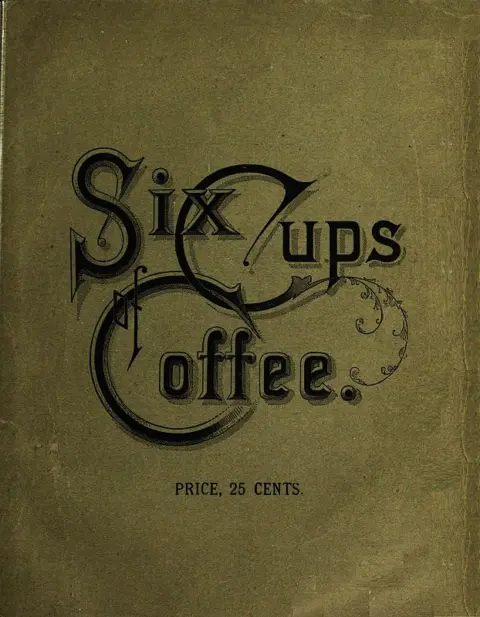
Six Cups of Coffee Prepared for the Public Palate by the Best Authorities on Coffee Making
Maria Parloa & Helen Campbell & Juliet Corson & Marion Harland & Mary J. (Mary Johnson) Lincoln & Catherine Owen & Hester M. (Hester Martha) Poole
THE CLASSIC COLLECTION · 1887
"A Course of Lectures on the Principles of Domestic Economy and Cookery" by Miss Juliet Corson is a practical guide on domestic economy and cooking techniques written in the late 19th century. The work captures a series of lectures delivered to women attending the University of Minnesota to better equip them for home management and culinary skills. The lectures cover a wide range of topics from the preparation of basic dishes to advanced cooking methods, aiming to enhance the audience's knowledge in domestic responsibilities. The beginning of the text outlines the structure and intent of Corson's lectures, aimed particularly at two groups: experienced housekeepers seeking to refine their cooking skills and young women balancing education with home duties. Corson explains the methodology of her classes, emphasizing hands-on learning where dishes are prepared and tasted in real-time. She introduces fundamental recipes like soup stock, boiled salmon with cream sauce, and various methods for preparing vegetables, clearly laying the foundations for her teachings in domestic cookery throughout the series. The opening portion establishes a relatable and instructional tone, encouraging active participation and discussion among the attendees.
Introduction adapted from the source catalogue; source summaries may be automatically generated.
Free to read · English · 51,329 words · No account needed
MAKE TIME FOR A GOOD BOOK
On by default. Untick to stop anonymous reading totals. Each page counts after 10 seconds in view. How this works.
Anonymous counting is on unless you have switched it off.
Question. If you made it of bread wouldn't you have to use more sugar
in it?
MISS CORSON. Yes, if you use bread you would have to use more sugar.
Question. Do you have any salt in it?
MISS CORSON. You don't need to put any salt in it. You can if you want to. There is no necessity for it, because there will be salt both in your bread and in your cake.
Question. Do you flavor the custard?
MISS CORSON. No, just the plainest custard. You will find that the French fruit will give the custard all the flavor you require. You will find that if you put the custard into a pitcher after it is made you can pour it into the pudding very much more readily than if you try to pour it from the bowl. Either put it into a pitcher or use a cup, because you will have to pour it slowly in order to let it thoroughly absorb.
Next take the recipe for pea soup. Some of the ladies who were at the Monday afternoon lesson will need only to make one or two notes, and the others will take the full recipe. For pea soup, four quarts, use a cupful of dried peas, yellow split peas. Pick them over, wash them in cold water, put them over the fire in two quarts of cold water and let them heat slowly. As the water heats it softens the peas. When it is boiling add half a cupful more of cold water and let that heat; then add more cold water; continue to add cold water, half a cupful at a time, until you have used two quarts more of cold water in addition to the first two quarts. The object of adding cold water slowly is to soften the peas, by reducing the heat of the water and then gradually increasing it again you soften the peas so that you can cook them in from an hour and a half to two hours. Boil them very slowly without the addition of salt until they are soft enough to rub through a sieve with a potato masher. After they are rubbed through the sieve put them again into the soup kettle with a tablespoonful of butter and a tablespoonful of flour rubbed to a smooth paste. Stir the soup over the fire until the butter and flour are entirely dissolved; then season the soup palatably with salt and pepper and let it boil for two or three minutes. While it is boiling cut two slices of stale bread--bakers' bread is the best, or very light home-made bread--in little dice about half an inch square. Put a couple of tablespoonfuls of butter in a frying pan over the fire and let the butter begin to brown, then throw the dice of stale bread into the butter and stir the bread until it is brown. Take it out of the butter with a skimmer, if it has not absorbed all the butter, and lay it for a moment on brown paper, and then put it on a hot dish to send to the table with the soup. Do not put the bread into the soup unless you are going to serve at once, because it will soften a little; but you will find that fried bread will soften less quickly than toasted bread. A great many people put small squares of toast in the pea soup, but that softens at once. If you have a frying kettle which you use for doughnuts or fritters, or anything of that sort, partly full of frying fat, you can heat it and fry the bread in that instead of frying it with the butter in a frying pan. Have the fat smoking hot; the bread browns very quickly; take it out on a skimmer and lay it on a brown paper for a moment; then it is ready for the soup. These little fried crusts of bread are called croutons or crusts in the cookery books. I am going to add an onion fried in butter to the soup to-day. Put that in, if you use it, when you first begin to cook the soup. One onion, peeled, sliced, and fried light brown in a tablespoonful of butter. You could also use the bones from ham, cold roast ham, cold boiled ham, or the bones of beef either raw or cooked, in the place of the onion, or in addition to the onion, as you like. Remember all those things give distinct flavors to the pea soup. If you put any kind of bones in, put them in with the peas at the beginning and boil them with the peas.
Your reading position is saved on this browser. Take it to another device with a library code. Reading pages adapt to text, rather than matching a printed edition.
Maria Parloa & Helen Campbell & Juliet Corson & Marion Harland & Mary J. (Mary Johnson) Lincoln & Catherine Owen & Hester M. (Hester Martha) Poole
Juliet Corson
Juliet Corson
BEHIND THE BOOK
This eBook is for the use of anyone anywhere in the United States and most other parts of the world at no cost and with almost no restrictions whatsoever. You may copy it, give it away or re-use it under the terms of the Project Gutenberg License included with this eBook or online at www.gutenberg.org. If you are not located in the United States, you will have to check the laws of the country where you are located before using this eBook. Read the source licence.
The original source file, including credits and licence, is retained by this library. Request an original-format copy at no charge. Please include the book title and Project Gutenberg identifier #35567.
KEEP YOUR CURIOSITY GOING

Charles G. (Charles Griffith) Ross
Hannah Webster Foster

Emily Lawless
Edwin Hamlin Carr

Charles De Lano Hine
Andrew Ure