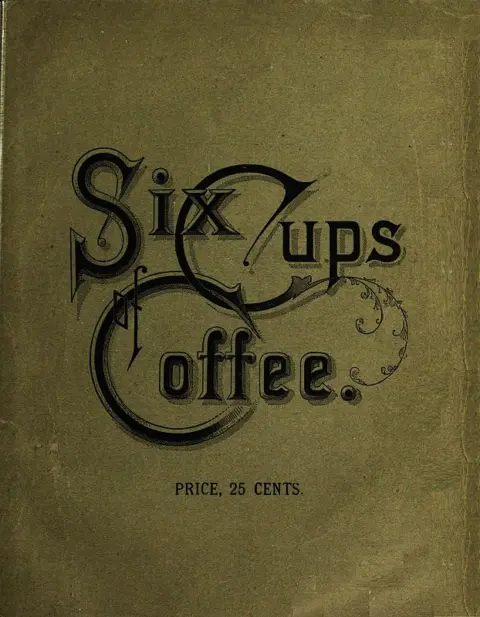
Six Cups of Coffee Prepared for the Public Palate by the Best Authorities on Coffee Making
Maria Parloa & Helen Campbell & Juliet Corson & Marion Harland & Mary J. (Mary Johnson) Lincoln & Catherine Owen & Hester M. (Hester Martha) Poole
THE CLASSIC COLLECTION · 1887
"A Course of Lectures on the Principles of Domestic Economy and Cookery" by Miss Juliet Corson is a practical guide on domestic economy and cooking techniques written in the late 19th century. The work captures a series of lectures delivered to women attending the University of Minnesota to better equip them for home management and culinary skills. The lectures cover a wide range of topics from the preparation of basic dishes to advanced cooking methods, aiming to enhance the audience's knowledge in domestic responsibilities. The beginning of the text outlines the structure and intent of Corson's lectures, aimed particularly at two groups: experienced housekeepers seeking to refine their cooking skills and young women balancing education with home duties. Corson explains the methodology of her classes, emphasizing hands-on learning where dishes are prepared and tasted in real-time. She introduces fundamental recipes like soup stock, boiled salmon with cream sauce, and various methods for preparing vegetables, clearly laying the foundations for her teachings in domestic cookery throughout the series. The opening portion establishes a relatable and instructional tone, encouraging active participation and discussion among the attendees.
Introduction adapted from the source catalogue; source summaries may be automatically generated.
Free to read · English · 51,329 words · No account needed
MAKE TIME FOR A GOOD BOOK
On by default. Untick to stop anonymous reading totals. Each page counts after 10 seconds in view. How this works.
Anonymous counting is on unless you have switched it off.
To make the dish which I am going to prepare this morning, I have had the whole quarter brought in so that I can show you how the shoulder should be cut off. Simply with a large piece of the outside skin attached. Usually the butcher might cut the shoulder square off close, but I want this large piece of skin for stuffing. There is a natural division between the shoulder and the ribs, so that the shoulder comes off with perfect ease. If you buy an entire fore quarter like that you will have the butcher cut off the shoulder for roasting or baking, then let him cut the neck in rather small pieces for stews or mutton broth. What is called the rack or ribs would be cut into chops for broiling or frying, and the breast would be cut off entire to be stewed or roasted or baked. A very nice way to prepare the breast is to have the bones all taken out, spread a layer of nice force meat or stuffing over it, roll it up, and tie it. Then it can be baked, or roasted, or stewed. Another nice way to cook the breast is to boil it until it is tender enough to enable you to pull the bones out without any difficulty; then take out all the bones, put it on a platter, set another platter on top of it with a heavy weight on the top platter, and press it until it is cold. Then cut it in rather small pieces, about two or three inches square, and bread and fry it. The process of breading and frying is accomplished in this way. You have cracker crumbs--cracker crumbs rolled and sifted--or bread crumbs, stale bread, dried in the oven and rolled and sifted, in a large dish. In another dish beat a couple of eggs until they are liquid. It does not need to be frothy, but simply to have the substance of the egg well broken; then dip the little pieces of boiled lamb, first in the cracker dust, then in the beaten egg, then again in the cracker dust. That is called breading. To fry properly, so that you have no grease, you want the frying kettle half full of fat. You don't want a little fat in a frying pan, but a frying kettle like that which you use in frying doughnuts. Put the kettle over the fire and let the fat get hot, that is, let it get so hot that it begins to smoke. When the fat begins to smoke you plunge whatever article you wish to fry into it. If you take the precaution to do that, have plenty of fat and let it get smoking hot and then fry in it, you will never have anything greasy. The action of the hot fat at once so carbonizes the surface of what you wish to fry, and prevents the soaking of the fat. Fry whatever article you are treating until it is a light brown, then take it out of the fat with a skimmer, and lay it on brown paper for a moment--coarse brown paper--and that will absorb the very little fat on the surface. It will be perfectly free from grease. You can season before you bread an article, or you can season the bread crumbs or cracker dust which you use in breading, just as you like. Or, after the article is fried you can season it with salt and pepper. Some things are seasoned after the frying--for instance, Saratoga potatoes--they are always salted after frying. You can make bread crumbs very fine by using a fine sieve and sifting. If you have cracker meal already prepared you will see that it is as fine as Indian meal; it is sold in the grocery stores and at the cracker factories, and it is cheaper to buy cracker dust or cracker meal than it is to make it at home, if you buy the whole crackers, because, of course the manufacturers can afford to use their broken crackers--they are all perfectly good--in making cracker meal and sell that very much cheaper than they can sell the whole crackers. The question of the digestibility of fried articles of food is very often raised. You understand that the hard fried surface is less digestible than any soft surface, and many fried articles are indigestible because of the quantity of grease they contain. If you fry in the way I have told you, you will not have that excess of grease.
Your reading position is saved on this browser. Take it to another device with a library code. Reading pages adapt to text, rather than matching a printed edition.
Maria Parloa & Helen Campbell & Juliet Corson & Marion Harland & Mary J. (Mary Johnson) Lincoln & Catherine Owen & Hester M. (Hester Martha) Poole
Juliet Corson
Juliet Corson
BEHIND THE BOOK
This eBook is for the use of anyone anywhere in the United States and most other parts of the world at no cost and with almost no restrictions whatsoever. You may copy it, give it away or re-use it under the terms of the Project Gutenberg License included with this eBook or online at www.gutenberg.org. If you are not located in the United States, you will have to check the laws of the country where you are located before using this eBook. Read the source licence.
The original source file, including credits and licence, is retained by this library. Request an original-format copy at no charge. Please include the book title and Project Gutenberg identifier #35567.
KEEP YOUR CURIOSITY GOING

Charles G. (Charles Griffith) Ross
Hannah Webster Foster

Emily Lawless
Edwin Hamlin Carr

Charles De Lano Hine
Andrew Ure