THE CLASSIC COLLECTION✦A dead man’s diaryCLASSIC FREE BOOKS
A dead man’s diary
Coulson Kernahan
THE CLASSIC COLLECTION · 1894
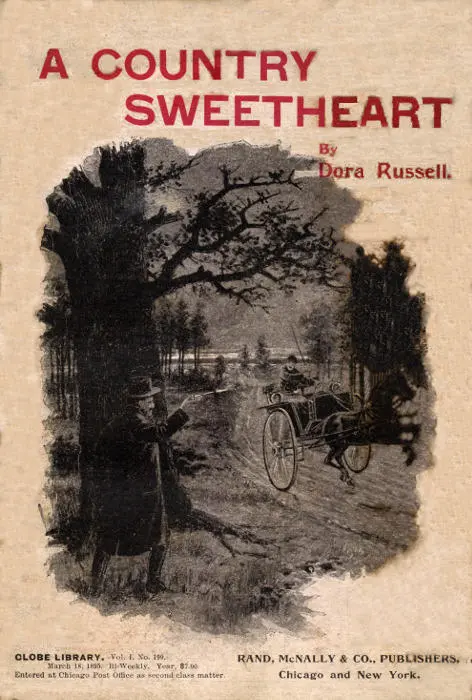
"A Country Sweetheart" by Dora Russell is a fictional narrative written in the late 19th century. The story unfolds around the tragic circumstances surrounding the death of young Phillip Temple, the only son of the wealthy Temple family. As Phillip's parents grapple with their impending loss, the narrative introduces themes of love, grief, and the repercussions on family dynamics, particularly as the heirs of the estate shift with his tragic passing. The opening of this novel begins with the profound sorrow experienced by Mr. and Mrs. Temple as they process the grim news from a surgeon regarding their son’s critical condition following a football accident. Their despair is palpable as Mrs. Temple is overwhelmed with anguish, while Mr. Temple reflects on his marital woes and their strained relationship. The scene is set against the backdrop of a wealthy estate, which will soon see its heir replaced due to Phillip's death. As the narrative progresses, we also meet the new heir, John Temple, who arrives to mourn, contrasting the first family's grief with his own complicated feelings about inheritance and relationships. This early section lays the groundwork for exploring the intertwining lives of love, loss, and the social expectations of the time.
Introduction adapted from the source catalogue; source summaries may be automatically generated.
Free to read · English · 132,347 words · No account needed
MAKE TIME FOR A GOOD BOOK
On by default. Untick to stop anonymous reading totals. Each page counts after 10 seconds in view. How this works.
Anonymous counting is on unless you have switched it off.
"Yes; that will suit me very well," answered John; and while a few moments later her father went to see after his trap, John had a word to half-whisper into May's willing ears.
"I will see you again, then," he said, and May smiled her answer, and as her father drove her back to Woodside, John Temple's words and looks recurred again and again to her mind.
As for John, he walked back to the Hall, thinking only of her.
"She is the dearest little girl," he told himself, and he wished the afternoon were already come. But he found when he arrived at his uncle's house that he was eagerly awaited for, and that he was expected to give a complete account of all that had taken place during the inquest.
The news of Elsie Wray's tragic death had indeed created an immense sensation in the neighborhood. Young Henderson of Stourton Grange was so well known, and had frequently visited at Woodlea Hall, and when John Temple entered the dining-room he found both Mrs. Temple and her mother, Mrs. Layton, eagerly talking of him.
"Well, here you are at last," said Mrs. Temple. "Now come and tell us all about it, and what had Tom Henderson to do with it?"
"A good deal, I fear," answered John, seating himself at the luncheon
table.
"But what?" asked Mrs. Temple, sharply.
"By his own account he wrote to the unfortunate girl to ask her to meet him on the ridge above Fern Dene on the night of her death, and he also said there had been some talk of marriage between them."
"Of marriage!" repeated Mrs. Temple, incredulously, and at the same moment Mrs. Layton emitted a dismal groan.
"He wanted to be out of it; fling her off, I understand," continued
John.
"I should think so," said Mrs. Temple, scornfully. "A girl of that
class!"
"He should have remembered that when he made love to her," remarked
John, coolly.
"The depravity of the girl, to think of such a thing!" cried Mrs.
Layton.
"Do you mean of marriage?" smiled John.
"I mean of marriage with a young man in a perfectly different position of life to her own, Mr. Temple," replied Mrs. Layton, with injured dignity.
"Yet we have heard of such things," said John.
"There is but one end to such connections," groaned Mrs. Layton, "disgrace and shame, and in this case death; in my opinion she deserved to die."
"I do not believe Tom Henderson shot her," said Mrs. Temple.
Your reading position is saved on this browser. Take it to another device with a library code. Reading pages adapt to text, rather than matching a printed edition.
BEHIND THE BOOK
This eBook is for the use of anyone anywhere in the United States and most other parts of the world at no cost and with almost no restrictions whatsoever. You may copy it, give it away or re-use it under the terms of the Project Gutenberg License included with this eBook or online at www.gutenberg.org. If you are not located in the United States, you will have to check the laws of the country where you are located before using this eBook. Read the source licence.
The original source file, including credits and licence, is retained by this library. Request an original-format copy at no charge. Please include the book title and Project Gutenberg identifier #47282.
KEEP YOUR CURIOSITY GOING
Coulson Kernahan

Maurice Baring
Frances Wright
Cécile Tormay

Frederic Jesup Stimson

W. H. P. (William Henry Pope) Jarvis