THE CLASSIC COLLECTION✦A dead man’s diaryCLASSIC FREE BOOKS
A dead man’s diary
Coulson Kernahan
THE CLASSIC COLLECTION · 1894
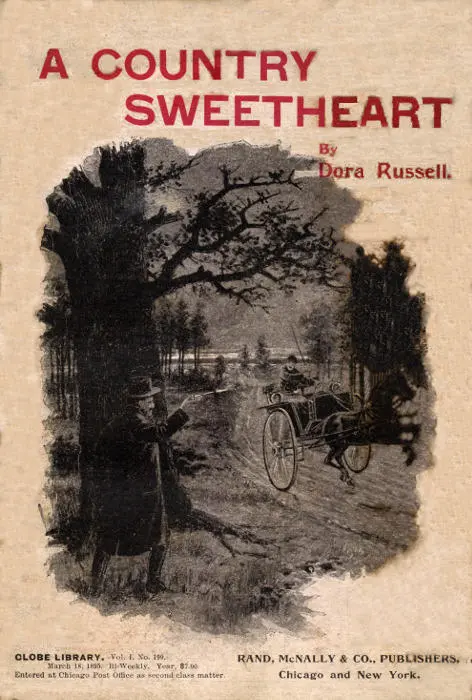
"A Country Sweetheart" by Dora Russell is a fictional narrative written in the late 19th century. The story unfolds around the tragic circumstances surrounding the death of young Phillip Temple, the only son of the wealthy Temple family. As Phillip's parents grapple with their impending loss, the narrative introduces themes of love, grief, and the repercussions on family dynamics, particularly as the heirs of the estate shift with his tragic passing. The opening of this novel begins with the profound sorrow experienced by Mr. and Mrs. Temple as they process the grim news from a surgeon regarding their son’s critical condition following a football accident. Their despair is palpable as Mrs. Temple is overwhelmed with anguish, while Mr. Temple reflects on his marital woes and their strained relationship. The scene is set against the backdrop of a wealthy estate, which will soon see its heir replaced due to Phillip's death. As the narrative progresses, we also meet the new heir, John Temple, who arrives to mourn, contrasting the first family's grief with his own complicated feelings about inheritance and relationships. This early section lays the groundwork for exploring the intertwining lives of love, loss, and the social expectations of the time.
Introduction adapted from the source catalogue; source summaries may be automatically generated.
Free to read · English · 132,347 words · No account needed
MAKE TIME FOR A GOOD BOOK
On by default. Untick to stop anonymous reading totals. Each page counts after 10 seconds in view. How this works.
Anonymous counting is on unless you have switched it off.
May Churchill blushed. Mrs. Layton knew perfectly well that May had nothing to do with the selling of eggs, nor the management of the poultry-yard. But she simply chose to ignore this; she liked "to keep people in their proper stations," she used to say, and as she considered a farmer's daughter ought to know about the selling of eggs, she was determined to let May Churchill know this.
"Of course I mean to purchase them," Mrs. Layton added, as May
hesitated.
"I will inquire if we have any to spare," replied May, just a little haughtily; and as she spoke she turned and went in the direction of the dairy, and a few minutes later reappeared, carrying a small basketful of fresh eggs.
"I have brought you a few eggs, Mrs. Layton," she said, "and I trust
you will accept them."
"Oh, dear, no; please tell me how much they are?" replied Mrs. Layton,
fumbling for her purse.
"We do not sell eggs," answered May, coldly.
"Not sell eggs! Dear me, I thought all farmer's daughters sold eggs. But as you are so kind, I will accept them; and you'll not forget to tell your father about the milk and cream? Well, good-afternoon, Miss Margaret; I think I must steal one of your roses, though, before I go."
It must be admitted that May Churchill entered the house after this interview feeling a little ruffled. She had felt so happy before, and had enjoyed her afternoon so much, and then to be snubbed in this fashion!
"She's a vulgar old woman," she consoled herself by thinking, and tried to forget her annoyance in arranging the table prettily for her father's tea.
This meal was of a very substantial order. The farmer dined early, but between seven and eight partook of a heavy meat tea. Cold lamb, a fowl, and a home-cured ham, and various other good things awaited him, to which he presently did ample justice. He was a very sober man, and healthful, and he laughed heartily about Mrs. Layton asking for the milk and cream.
"She's not troubled with modesty, the parson's wife, is she?" he said. But somehow May did not tell her father what Mrs. Layton had said about the selling of eggs.
May's two young brothers were spending some days with a neighboring farmer's son, and the father and daughter were thus alone. And after tea was over Mr. Churchill, having lit his pipe, looked more than once reflectively at his pretty girl.
"I've got something to say to you, May," he said, at last.
Your reading position is saved on this browser. Take it to another device with a library code. Reading pages adapt to text, rather than matching a printed edition.
BEHIND THE BOOK
This eBook is for the use of anyone anywhere in the United States and most other parts of the world at no cost and with almost no restrictions whatsoever. You may copy it, give it away or re-use it under the terms of the Project Gutenberg License included with this eBook or online at www.gutenberg.org. If you are not located in the United States, you will have to check the laws of the country where you are located before using this eBook. Read the source licence.
The original source file, including credits and licence, is retained by this library. Request an original-format copy at no charge. Please include the book title and Project Gutenberg identifier #47282.
KEEP YOUR CURIOSITY GOING
Coulson Kernahan

Maurice Baring
Frances Wright
Cécile Tormay

Frederic Jesup Stimson

W. H. P. (William Henry Pope) Jarvis