THE CLASSIC COLLECTION✦A dead man’s diaryCLASSIC FREE BOOKS
A dead man’s diary
Coulson Kernahan
THE CLASSIC COLLECTION · 1894
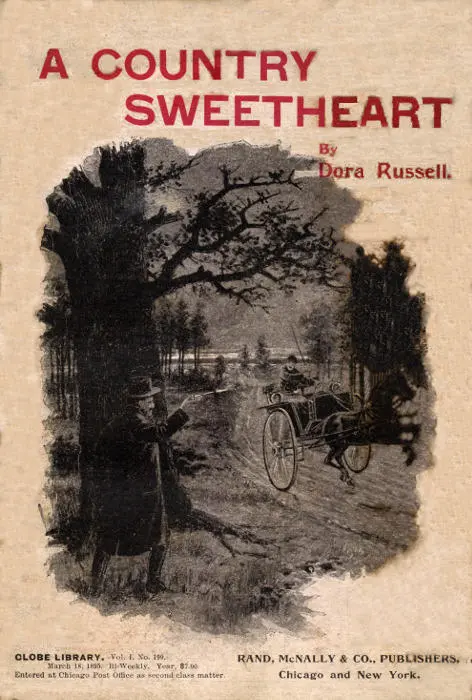
"A Country Sweetheart" by Dora Russell is a fictional narrative written in the late 19th century. The story unfolds around the tragic circumstances surrounding the death of young Phillip Temple, the only son of the wealthy Temple family. As Phillip's parents grapple with their impending loss, the narrative introduces themes of love, grief, and the repercussions on family dynamics, particularly as the heirs of the estate shift with his tragic passing. The opening of this novel begins with the profound sorrow experienced by Mr. and Mrs. Temple as they process the grim news from a surgeon regarding their son’s critical condition following a football accident. Their despair is palpable as Mrs. Temple is overwhelmed with anguish, while Mr. Temple reflects on his marital woes and their strained relationship. The scene is set against the backdrop of a wealthy estate, which will soon see its heir replaced due to Phillip's death. As the narrative progresses, we also meet the new heir, John Temple, who arrives to mourn, contrasting the first family's grief with his own complicated feelings about inheritance and relationships. This early section lays the groundwork for exploring the intertwining lives of love, loss, and the social expectations of the time.
Introduction adapted from the source catalogue; source summaries may be automatically generated.
Free to read · English · 132,347 words · No account needed
MAKE TIME FOR A GOOD BOOK
On by default. Untick to stop anonymous reading totals. Each page counts after 10 seconds in view. How this works.
Anonymous counting is on unless you have switched it off.
And early the next morning he sent a telegram to May at St. Phillip's Hospital to say he would be with her by eleven o'clock. May received this telegram with great surprise, for Webster never wrote to her, nor sent telegrams, and when he called it was generally late in the afternoon. But precisely at eleven o'clock a message was sent to her that Mr. Webster was waiting to see her in the sitting-room of the house surgeon, Doctor Brentwood.
She accordingly went there, and found Webster standing, looking grave and pale, and so ill that she instantly remarked on it.
"Are you not well, Mr. Webster?" she said. "You do not look at all
well."
Webster scarcely answered her; he had taken her hand, and stood looking in her fair face, and there was great pain and trouble in his heart.
"I have some news for you, May," he said at length.
He had never before called her "May," and she noticed this and blushed.
"News?" she answered. "Not bad news, I hope."
Twice he opened his lips, but somehow no words came forth. And his manner was so strange that May grew really alarmed.
"What is it?" she said. "Oh! you frighten me--has anything happened?"
Then with a great effort he told her.
"May, Kathleen Weir is dead."
The blood rushed to May's face as she listened to these words, and then died away, leaving her very pale.
"Dead!" she repeated; and in an instant it flashed across her mind all that this might mean to her.
"Yes," went on Webster, trying to speak calmly, "she died the day before yesterday. It was an accident; she was burned to death."
"How dreadful!--and does--he know?"
"Yes," again answered Webster. "I saw him yesterday--it was but right that he should know--he is coming to you to-day."
May gave a little cry; a little start, as if she were half afraid.
"If it is for your happiness," continued Webster with faltering lips,
"otherwise, of course--"
For a moment or two May did not speak. She stood as if thinking, as if in doubt. Then suddenly she held out her hand to Webster.
"It is but right," she said, speaking with an effort. "And you--how am I to thank you for all you have done for me?"
Webster's lips quivered. He tried to say some commonplace words. He stooped down and kissed her trembling hand.
"Your happiness is--everything to me," he faltered. "I have thought of
that alone."
Your reading position is saved on this browser. Take it to another device with a library code. Reading pages adapt to text, rather than matching a printed edition.
BEHIND THE BOOK
This eBook is for the use of anyone anywhere in the United States and most other parts of the world at no cost and with almost no restrictions whatsoever. You may copy it, give it away or re-use it under the terms of the Project Gutenberg License included with this eBook or online at www.gutenberg.org. If you are not located in the United States, you will have to check the laws of the country where you are located before using this eBook. Read the source licence.
The original source file, including credits and licence, is retained by this library. Request an original-format copy at no charge. Please include the book title and Project Gutenberg identifier #47282.
KEEP YOUR CURIOSITY GOING
Coulson Kernahan

Maurice Baring
Frances Wright
Cécile Tormay

Frederic Jesup Stimson

W. H. P. (William Henry Pope) Jarvis