THE CLASSIC COLLECTION✦A dead man’s diaryCLASSIC FREE BOOKS
A dead man’s diary
Coulson Kernahan
THE CLASSIC COLLECTION · 1894
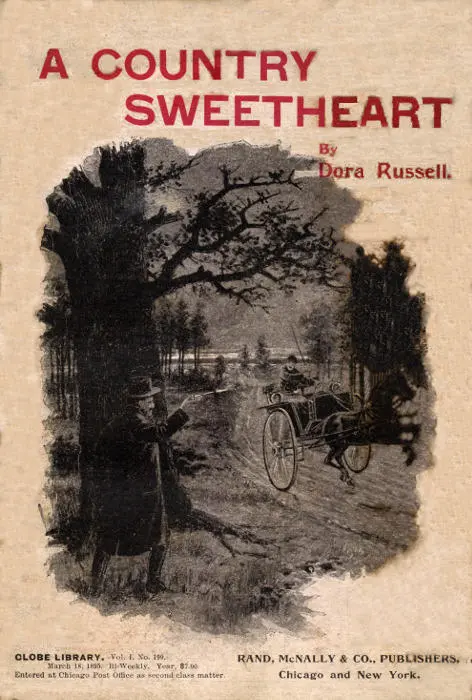
"A Country Sweetheart" by Dora Russell is a fictional narrative written in the late 19th century. The story unfolds around the tragic circumstances surrounding the death of young Phillip Temple, the only son of the wealthy Temple family. As Phillip's parents grapple with their impending loss, the narrative introduces themes of love, grief, and the repercussions on family dynamics, particularly as the heirs of the estate shift with his tragic passing. The opening of this novel begins with the profound sorrow experienced by Mr. and Mrs. Temple as they process the grim news from a surgeon regarding their son’s critical condition following a football accident. Their despair is palpable as Mrs. Temple is overwhelmed with anguish, while Mr. Temple reflects on his marital woes and their strained relationship. The scene is set against the backdrop of a wealthy estate, which will soon see its heir replaced due to Phillip's death. As the narrative progresses, we also meet the new heir, John Temple, who arrives to mourn, contrasting the first family's grief with his own complicated feelings about inheritance and relationships. This early section lays the groundwork for exploring the intertwining lives of love, loss, and the social expectations of the time.
Introduction adapted from the source catalogue; source summaries may be automatically generated.
Free to read · English · 132,347 words · No account needed
MAKE TIME FOR A GOOD BOOK
On by default. Untick to stop anonymous reading totals. Each page counts after 10 seconds in view. How this works.
Anonymous counting is on unless you have switched it off.
"But surely I will," went on Kathleen Weir, as Webster paused and hesitated. "However, I have not told you all. 'And as you are a rich man,' I continued, 'you must pay for your freedom. I am ready to swear falsely; to rid you of a wife to whom you are indifferent, and who is perfectly indifferent to you, but I must be paid for it.' He made no objections, and I named the sum I would accept--ten thousand pounds--and to this also he made no objections. Now, don't you think it was very clever of me?"
"But--have you any case against him?"
"Of course I have a case, and we can arrange the particulars between us. He won't deny the hair-pulling and the beatings, and the judge will believe me to be an injured woman, and give me the release I am dying for. I will be free--free and rich--and perhaps then--"
Her voice faltered as she said the last few words, for the first time during this interview, and her eyes fell. Webster's eyes also fell, and he moved uneasily, and then he rose and went toward the fireplace and stood leaning against the mantel-piece.
Kathleen Weir glanced after him; then also rose and followed him to
where he was standing.
"Do not think me hard, or cold, or mercenary," she said, "in making this bargain. I--I was not thinking of myself when I did so. I make a large income by my profession; more than I need. But I wanted this sum--Ralph Webster, shall I tell you why?"
She put out her white hand as she spoke, and laid it on his arm. It was trembling, and Webster saw it tremble, and an embarrassed silence followed for a few moments between them.
"Shall I tell you why?" she presently repeated, in a soft, low voice, and she looked up in his face. "I wanted it for you--for you, for whose sake I wish also to be free."
"Hush, hush, do not speak thus," said Webster, in great agitation. "I thank you very much for your kindness, your friendship--but--"
"But what?" asked Kathleen, quickly, and her face grew pale.
"There--there is a girl, a woman," faltered Webster, "whom I may never marry--who--who does not love me, yet--"
"You love her?" said Kathleen, with a sort of gasp.
"Yes, and I shall love no other--forgive me, Miss Weir--but this is
true."
Again there was a few moments' painful silence, and then with a strong effort the actress recovered herself.
Your reading position is saved on this browser. Take it to another device with a library code. Reading pages adapt to text, rather than matching a printed edition.
BEHIND THE BOOK
This eBook is for the use of anyone anywhere in the United States and most other parts of the world at no cost and with almost no restrictions whatsoever. You may copy it, give it away or re-use it under the terms of the Project Gutenberg License included with this eBook or online at www.gutenberg.org. If you are not located in the United States, you will have to check the laws of the country where you are located before using this eBook. Read the source licence.
The original source file, including credits and licence, is retained by this library. Request an original-format copy at no charge. Please include the book title and Project Gutenberg identifier #47282.
KEEP YOUR CURIOSITY GOING
Coulson Kernahan

Maurice Baring
Frances Wright
Cécile Tormay

Frederic Jesup Stimson

W. H. P. (William Henry Pope) Jarvis