THE CLASSIC COLLECTION✦A dead man’s diaryCLASSIC FREE BOOKS
A dead man’s diary
Coulson Kernahan
THE CLASSIC COLLECTION · 1894
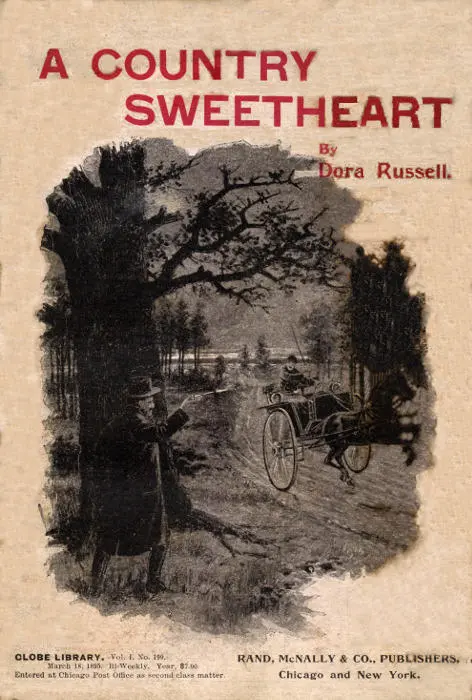
"A Country Sweetheart" by Dora Russell is a fictional narrative written in the late 19th century. The story unfolds around the tragic circumstances surrounding the death of young Phillip Temple, the only son of the wealthy Temple family. As Phillip's parents grapple with their impending loss, the narrative introduces themes of love, grief, and the repercussions on family dynamics, particularly as the heirs of the estate shift with his tragic passing. The opening of this novel begins with the profound sorrow experienced by Mr. and Mrs. Temple as they process the grim news from a surgeon regarding their son’s critical condition following a football accident. Their despair is palpable as Mrs. Temple is overwhelmed with anguish, while Mr. Temple reflects on his marital woes and their strained relationship. The scene is set against the backdrop of a wealthy estate, which will soon see its heir replaced due to Phillip's death. As the narrative progresses, we also meet the new heir, John Temple, who arrives to mourn, contrasting the first family's grief with his own complicated feelings about inheritance and relationships. This early section lays the groundwork for exploring the intertwining lives of love, loss, and the social expectations of the time.
Introduction adapted from the source catalogue; source summaries may be automatically generated.
Free to read · English · 132,347 words · No account needed
MAKE TIME FOR A GOOD BOOK
On by default. Untick to stop anonymous reading totals. Each page counts after 10 seconds in view. How this works.
Anonymous counting is on unless you have switched it off.
May tried to swallow the restorative the doctor held toward her, and its effect was soon visible. It brought back memory--infinite pain! She looked at John Temple, and he saw she was remembering his words. He bent closer to her; he whispered that nothing should ever part them; he asked her for his sake to get well; and the doctor, watching her face, slightly touched John Temple on the shoulder.
"I will give you some directions," he said, and as John rose, he drew him to one side of the room.
"She must not be excited," he said; "as far as I can judge, this attack has been brought on by some mental shock. Is there any tendency to heart affection?"
"I know of none," answered John, with quivering lips.
"Is she your wife?"
"Yes."
"Well, keep her very quiet for the next few hours, and do not talk to her of anything that would be likely to disquiet her. Are you staying here?"
"Yes," again answered John, briefly.
"I will look in this evening then. For the present, everyone but yourself is best out of the room. But be sure you keep her quiet."
Then he gave some further directions, and finally left the room, and presently John and May were once more alone. She lay quite still, but that terrible look of pain never left her face. John went and sat by her, and took her hand, but he dare not talk to her after what the doctor had said. And so the time passed on, and after an hour or so, May herself broke the silence.
"John," she said in a feeble voice, "I have something to say to you."
"What is it, my darling? But you had best not talk of anything just
now."
"I want to say--I can not go back to Pembridge Terrace," went on May, still in those faltering accents; "I can not see my father."
"You shall not, May--I swear you shall not! This was why I brought you away. You shall see no one, and we will go to Australia together; go anywhere you like, and you shall be my own dear wife always; my own sweet, dear wife."
A faint shudder ran through May's frame.
"Nothing shall ever part us, May," continued John Temple, and once more he knelt down by her side and took both her hands in his. "We could not live apart."
May looked in his face with strange wistfulness, and a quiver passed over her pale lips, and then she drew John's hand closer to her.
"We could not live apart," she murmured, and then she sighed.
Your reading position is saved on this browser. Take it to another device with a library code. Reading pages adapt to text, rather than matching a printed edition.
BEHIND THE BOOK
This eBook is for the use of anyone anywhere in the United States and most other parts of the world at no cost and with almost no restrictions whatsoever. You may copy it, give it away or re-use it under the terms of the Project Gutenberg License included with this eBook or online at www.gutenberg.org. If you are not located in the United States, you will have to check the laws of the country where you are located before using this eBook. Read the source licence.
The original source file, including credits and licence, is retained by this library. Request an original-format copy at no charge. Please include the book title and Project Gutenberg identifier #47282.
KEEP YOUR CURIOSITY GOING
Coulson Kernahan

Maurice Baring
Frances Wright
Cécile Tormay

Frederic Jesup Stimson

W. H. P. (William Henry Pope) Jarvis