THE CLASSIC COLLECTION✦A dead man’s diaryCLASSIC FREE BOOKS
A dead man’s diary
Coulson Kernahan
THE CLASSIC COLLECTION · 1894
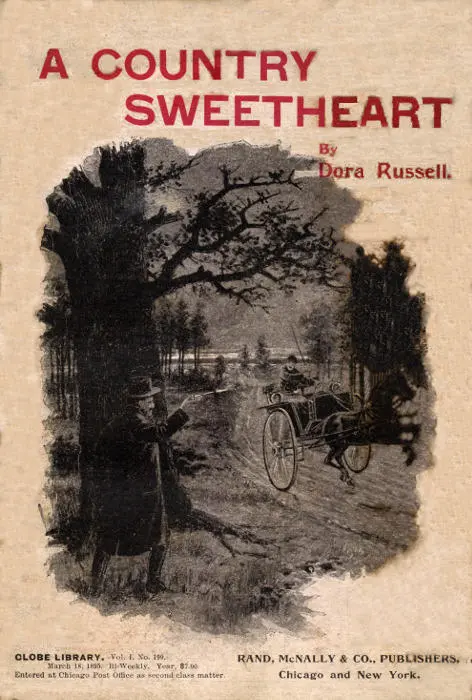
"A Country Sweetheart" by Dora Russell is a fictional narrative written in the late 19th century. The story unfolds around the tragic circumstances surrounding the death of young Phillip Temple, the only son of the wealthy Temple family. As Phillip's parents grapple with their impending loss, the narrative introduces themes of love, grief, and the repercussions on family dynamics, particularly as the heirs of the estate shift with his tragic passing. The opening of this novel begins with the profound sorrow experienced by Mr. and Mrs. Temple as they process the grim news from a surgeon regarding their son’s critical condition following a football accident. Their despair is palpable as Mrs. Temple is overwhelmed with anguish, while Mr. Temple reflects on his marital woes and their strained relationship. The scene is set against the backdrop of a wealthy estate, which will soon see its heir replaced due to Phillip's death. As the narrative progresses, we also meet the new heir, John Temple, who arrives to mourn, contrasting the first family's grief with his own complicated feelings about inheritance and relationships. This early section lays the groundwork for exploring the intertwining lives of love, loss, and the social expectations of the time.
Introduction adapted from the source catalogue; source summaries may be automatically generated.
Free to read · English · 132,347 words · No account needed
MAKE TIME FOR A GOOD BOOK
On by default. Untick to stop anonymous reading totals. Each page counts after 10 seconds in view. How this works.
Anonymous counting is on unless you have switched it off.
"You must have some wine or some tea. You must stay to dinner, of course?" the next moment suggested hospitable Miss Webster.
"Thanks, I will take a glass of wine," answered John, "but I will not stay to dinner; I am going to take May out to dine with me."
Both the sisters protested against this, but John Temple was firm, and after he had taken his wine he looked at May, and asked her to get ready to go out with him. May rose at once to obey his wish, but she still felt uneasy. John was not like himself; his smile was strained, his very voice was different.
"Something is worrying him dreadfully, I am sure," she told herself as she hurried on her hat and cape, and when she turned to the sitting-room and told John she was ready, to her surprise John put out his hand to take leave of Miss Webster.
"But you'll bring May back; we will see you, then?" said Miss Webster,
also surprised.
"Oh! yes, I forgot," answered John, and then he led May to the cab, and, having placed her in it, took his seat by her side.
May slid her little hand into his as the horse started.
"John, I am sure something is vexing you," she said, tenderly and anxiously, looking at his half-averted face; "have you any bad news to tell me?"
"I have some news," he answered, with an effort.
"Is it bad news?" urged May.
"I can not tell you here; wait until we get to the hotel--I will tell
you then."
"But John--"
"Hush, hush, dear; you will hear it soon enough."
He spoke huskily, almost hoarsely, and he turned away his head from her tender gaze. After this they drove on almost in silence until they reached the Grosvenor Hotel, where John usually stayed when he was in town. When he arrived there he ordered rooms and dinner, and then when they were alone May once more looked at him questioningly.
"Tell me now, John, what is it?" she asked.
"May--" began John, and then he paused, absolutely unable to find words
to tell her the truth.
"Oh! do tell me, John!" she prayed, and she laid her hand beseechingly
on his arm.
Then he looked at her, and there was great pain in his eyes and on his
pale face.
"I should rather be dead--I swear it, though you may not believe it--than say to you what I am forced to say to-day."
"Oh! you frighten me! What can it be?" cried May.
Your reading position is saved on this browser. Take it to another device with a library code. Reading pages adapt to text, rather than matching a printed edition.
BEHIND THE BOOK
This eBook is for the use of anyone anywhere in the United States and most other parts of the world at no cost and with almost no restrictions whatsoever. You may copy it, give it away or re-use it under the terms of the Project Gutenberg License included with this eBook or online at www.gutenberg.org. If you are not located in the United States, you will have to check the laws of the country where you are located before using this eBook. Read the source licence.
The original source file, including credits and licence, is retained by this library. Request an original-format copy at no charge. Please include the book title and Project Gutenberg identifier #47282.
KEEP YOUR CURIOSITY GOING
Coulson Kernahan

Maurice Baring
Frances Wright
Cécile Tormay

Frederic Jesup Stimson

W. H. P. (William Henry Pope) Jarvis