THE CLASSIC COLLECTION✦A dead man’s diaryCLASSIC FREE BOOKS
A dead man’s diary
Coulson Kernahan
THE CLASSIC COLLECTION · 1894
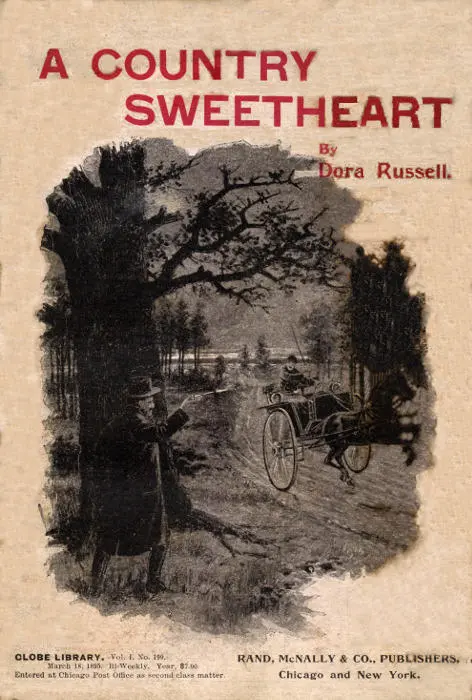
"A Country Sweetheart" by Dora Russell is a fictional narrative written in the late 19th century. The story unfolds around the tragic circumstances surrounding the death of young Phillip Temple, the only son of the wealthy Temple family. As Phillip's parents grapple with their impending loss, the narrative introduces themes of love, grief, and the repercussions on family dynamics, particularly as the heirs of the estate shift with his tragic passing. The opening of this novel begins with the profound sorrow experienced by Mr. and Mrs. Temple as they process the grim news from a surgeon regarding their son’s critical condition following a football accident. Their despair is palpable as Mrs. Temple is overwhelmed with anguish, while Mr. Temple reflects on his marital woes and their strained relationship. The scene is set against the backdrop of a wealthy estate, which will soon see its heir replaced due to Phillip's death. As the narrative progresses, we also meet the new heir, John Temple, who arrives to mourn, contrasting the first family's grief with his own complicated feelings about inheritance and relationships. This early section lays the groundwork for exploring the intertwining lives of love, loss, and the social expectations of the time.
Introduction adapted from the source catalogue; source summaries may be automatically generated.
Free to read · English · 132,347 words · No account needed
MAKE TIME FOR A GOOD BOOK
On by default. Untick to stop anonymous reading totals. Each page counts after 10 seconds in view. How this works.
Anonymous counting is on unless you have switched it off.
"I have been betrayed into nothing," answered John, coldly; "whatever I have done is by my own will."
Mrs. Temple began walking restlessly up and down the room, and then she suddenly stopped before John.
"You came here," she began; "you took my boy's place--"
"You know how deeply I grieved for you," said John Temple; "in everything I wished to consider you."
"Yet you made love to this girl--this girl, a farmer's daughter, whose brothers were playing in the fatal game when my boy was killed! One of them may have been his murderer; was I believe; and this is how you showed your consideration for me!"
"Mrs. Temple, this is unreasonable."
"What is she to you? Answer this question at least; is she your wife?"
"As I told them down-stairs, I will betray no one's secrets without
their leave."
"If she is, you need never bring her here! You heard what your uncle said about your marrying her, but I will not receive her here."
"You shall never be asked to do so, nor will I ever return. What my uncle said was worthy of him--the words of a good man, whom I most heartily like and respect--but I will trouble you with my presence here no more."
Again Mrs. Temple began those restless pacings up and down the floor; in her anger she had done what she did not wish to do--driven John Temple away--and now she was sorely repenting her own action.
"And there is one thing I wish to say before I go," continued John Temple, "that I thank you for all your kindness to me while I have been here. I came to your house under most painful circumstances, but you over-looked this--"
"Do not go!" broke in Mrs. Temple, impetuously; "at least, not yet; let us think what can be done, what it will be best to do."
"I know what it is best for me to do," answered John Temple, who was now in the act of locking the small portmanteau he meant to carry away with him, "and that is to leave Woodlea at once--good-by, Mrs. Temple."
He did not offer her his hand, but she took it almost against his will,
and held it.
"I have been so lonely," she said, in a broken voice; "so miserably lonely--and now I will be more lonely still."
John Temple made no answer to this appeal.
"Bid good-by to my uncle for me," he said, "as I do not care, in my present temper, to encounter again those two men down-stairs."
"What if you have killed Henderson? They were sending for the doctor for him as I came upstairs."
Your reading position is saved on this browser. Take it to another device with a library code. Reading pages adapt to text, rather than matching a printed edition.
BEHIND THE BOOK
This eBook is for the use of anyone anywhere in the United States and most other parts of the world at no cost and with almost no restrictions whatsoever. You may copy it, give it away or re-use it under the terms of the Project Gutenberg License included with this eBook or online at www.gutenberg.org. If you are not located in the United States, you will have to check the laws of the country where you are located before using this eBook. Read the source licence.
The original source file, including credits and licence, is retained by this library. Request an original-format copy at no charge. Please include the book title and Project Gutenberg identifier #47282.
KEEP YOUR CURIOSITY GOING
Coulson Kernahan

Maurice Baring
Frances Wright
Cécile Tormay

Frederic Jesup Stimson

W. H. P. (William Henry Pope) Jarvis