READ · DISCOVER · ENJOYClassic literature · Always free
THE CLASSIC COLLECTION✦A Chosen Few: Short StoriesFrank R. StocktonCLASSIC FREE BOOKS

THE CLASSIC COLLECTION · 1895

A Chosen Few: Short Stories

"A Chosen Few: Short Stories" by Frank R. Stockton is a collection of short stories written in the late 19th century. The volume showcases several of the author's best-known works, selected through a unique literary process. The stories explore various themes, often featuring interesting characters faced with peculiar situations, including tales of scientific inquiry, social dilemmas, and human emotions. The opening of the collection introduces a narrative titled "A Tale of Negative Gravity," which follows a middle-aged American couple enjoying a spring afternoon in northern Italy. The protagonist, a retired professional, reveals his groundbreaking invention of a mechanism that produces "negative gravity," significantly reducing weight and making objects easier to carry. As the story unfolds, the couple confronts the implications of this invention on their lives, revealing their thoughts on personal satisfaction versus societal expectations. This mix of scientific endeavor and personal reflection sets the tone for the fascinating and imaginative stories to follow in the collection.

Introduction adapted from the source catalogue; source summaries may be automatically generated.

Start reading ↓

Free to read · English · 54,145 words · No account needed

MAKE TIME FOR A GOOD BOOK

A Chosen Few: Short Stories

On by default. Untick to stop anonymous reading totals. Each page counts after 10 seconds in view. How this works.

Anonymous counting is on unless you have switched it off.

A Chosen Few: Short Stories

"And now I beg your pardon, sir," said the narrator, addressing the Shipwreck Clerk, "but I forgot that you said you'd finish this story yourself. Perhaps you'd like to take it up just here?"

The Shipwreck Clerk seemed surprised, and had apparently forgotten his previous offer. "Oh no," said he, "tell your own story. This is not a matter of business."

"Very well, then," said the brother-in-law of J. George Watts, "I'll go on. We made everything as tight as we could, and then we got our supper, having forgotten all about dinner, and being very hungry. We didn't make any tea and we didn't light the lamp, for we knew that would use up air; but we made a better meal than three people sunk out of sight in the ocean had a right to expect. 'What troubles me most,' said William Anderson, as he turned in, 'is the fact that if we are forty feet under water our flagpole must be covered up. Now, if the flag was sticking out, upside down, a ship sailing by would see it and would know there was something wrong.' 'If that's all that troubles you,' said I, 'I guess you'll sleep easy. And if a ship was to see the flag, I wonder how they'd know we were down here, and how they'd get us out if they did!' 'Oh, they'd manage it,' said William Anderson; 'trust those sea-captains for that.' And then he went to sleep. The next morning the air began to get mighty disagreeable in the part of the cabin where we were, and then William Anderson he says, 'What we've got to do is to climb up into the stern state-rooms, where the air is purer. We can come down here to get our meals, and then go up again to breathe comfortable.' 'And what are we going to do when the air up there gets foul?' says I to William, who seemed to be making arrangements for spending the summer in our present quarters. 'Oh, that'll be all right,' said he. 'It don't do to be extravagant with air any more than with anything else. When we've used up all there is in this cabin, we can bore holes through the floor into the hold and let in air from there. If we're economical, there'll be enough to last for dear knows how long.' We passed the night each in a state-room, sleeping on the end wall instead of the berth, and it wasn't till the afternoon of the next day that the air of the cabin got so bad we thought we'd have some fresh; so we went down on the bulkhead, and with an auger that we found in the pantry we bored three holes, about a yard apart, in the cabin floor, which was now one of the walls of the room, just as the bulkhead was the floor, and the stern end, where the two round windows were, was the ceiling or roof. We each took a hole, and I tell you it was pleasant to breathe the air which came in from the hold. 'Isn't this jolly?' said William Anderson. 'And we ought to be mighty glad that that hold wasn't loaded with codfish or soap. But there's nothing that smells better than new sewing-machines that haven't ever been used, and this air is pleasant enough for anybody.' By William's advice we made three plugs, by which we stopped up the holes when we thought we'd had air enough for the present. 'And now,' says he, 'we needn't climb up into those awkward state-rooms any more. We can just stay down here and be comfortable, and let in air when we want it.' 'And how long do you suppose that air in the hold is going to last?' said I. 'Oh, ever so long,' said he, 'using it so economically as we do; and when it stops coming out lively through these little holes, as I suppose it will after a while, we can saw a big hole in this flooring and go into the hold and do our breathing, if we want to.' That evening we did saw a hole about a foot square, so as to have plenty of air while we were asleep; but we didn't go into the hold, it being pretty well filled up with machines; though the next day Sam and I sometimes stuck our heads in for a good sniff of air, though William Anderson was opposed to this, being of the opinion that we ought to put ourselves on short rations of breathing so as to make the supply of air hold out as long as possible. 'But what's the good,' said I to William, 'of trying to make the air hold out if we've got to be suffocated in this place after all?' 'What's the good?' says he. 'Haven't you enough biscuits and canned meats and plenty of other things to eat, and a barrel of water in that room opposite the pantry, not to speak of wine and brandy if you want to cheer yourself up a bit, and haven't we good mattresses to sleep on, and why shouldn't we try to live and be comfortable as long as we can?' 'What I want,' said I, 'is to get out of this box. The idea of being shut up in here down under the water is more than I can stand. I'd rather take my chances going up to the surface and swimming about till I found a piece of the wreck, or something to float on.' 'You needn't think of anything of that sort,' said William, 'for if we were to open a door or a window to get out, the water'd rush in and drive us back and fill up this place in no time; and then the whole concern would go to the bottom. And what would you do if you did get to the top of the water? It's not likely you'd find anything there to get on, and if you did you wouldn't live very long floating about with nothing to eat. No, sir,' says he, 'what we've got to do is to be content with the comforts we have around us, and something will turn up to get us out of this; you see if it don't.' There was no use talking against William Anderson, and I didn't say any more about getting out. As for Sam, he spent his time at the windows of the state-rooms a-looking out. We could see a good way into the water--farther than you would think--and we sometimes saw fishes, especially porpoises, swimming about, most likely trying to find out what a ship was doing hanging bows down under the water. What troubled Sam was that a swordfish might come along and jab his sword through one of the windows. In that case it would be all up, or rather down, with us. Every now and then he'd sing out, 'Here comes one!' And then, just as I'd give a jump, he'd say, 'No, it isn't; it's a porpoise.' I thought from the first, and I think now, that it would have been a great deal better for us if that boy hadn't been along. That night there was a good deal of motion to the ship, and she swung about and rose up and down more than she had done since we'd been left in her. 'There must be a big sea running on top,' said William Anderson, 'and if we were up there we'd be tossed about dreadful. Now the motion down here is just as easy as a cradle; and, what's more, we can't be sunk very deep, for if we were there wouldn't be any motion at all.' About noon the next day we felt a sudden tremble and shake run through the whole ship, and far down under us we heard a rumbling and grinding that nearly scared me out of my wits. I first thought we'd struck bottom; but William he said that couldn't be, for it was just as light in the cabin as it had been, and if we'd gone down it would have grown much darker, of course. The rumbling stopped after a little while, and then it seemed to grow lighter instead of darker; and Sam, who was looking up at the stern windows over our heads, he sung out, 'Sky!' And, sure enough, we could see the blue sky, as clear as daylight, through those windows! And then the ship she turned herself on the slant, pretty much as she had been when her forward compartment first took in water, and we found ourselves standing on the cabin floor instead of the bulkhead. I was near one of the open state-rooms, and as I looked in there was the sunlight coming through the wet glass in the window, and more cheerful than anything I ever saw before in this world. William Anderson he just made one jump, and, unscrewing one of the state-room windows, he jerked it open. We had thought the air inside was good enough to last some time longer; but when that window was open and the fresh air came rushing in, it was a different sort of thing, I can tell you. William put his head out and looked up and down and all around. 'She's nearly all out of water,' he shouted, 'and we can open the cabin door!' Then we all three rushed at those stairs, which were nearly right side up now, and we had the cabin doors open in no time. When we looked out we saw that the ship was truly floating pretty much as she had been when the captain and crew left her, though we all agreed that her deck didn't slant as much forward as it did then. 'Do you know what's happened?' sung out William Anderson, after he'd stood still for a minute to look around and think. 'That bobbing up and down that the vessel got last night shook up and settled down the pig-iron inside of her, and the iron plates in the bow, that were smashed and loosened by the collision, have given way under the weight, and the whole cargo of pig-iron has burst through and gone to the bottom. Then, of course, up we came. Didn't I tell you something would happen to make us all right?'
Your reading position is saved on this browser. Take it to another device with a library code. Reading pages adapt to text, rather than matching a printed edition.

More from this author

BEHIND THE WORDS

About Frank R. Stockton

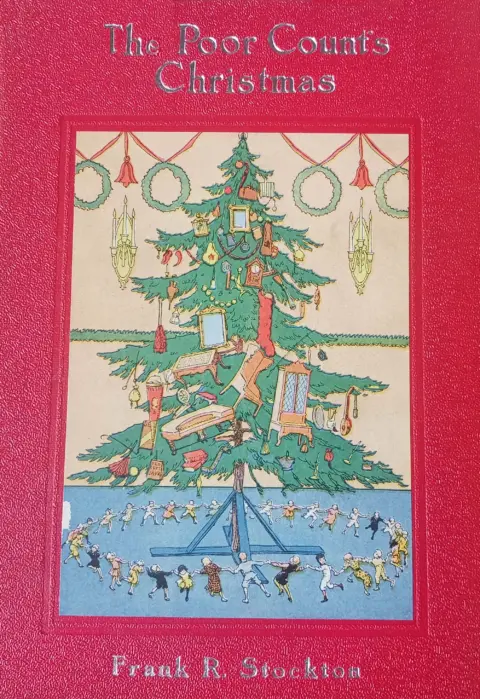
Frank R. Stockton (1834–1902). Explore Pomona’s Travels A Series of Letters to the Mistress of Rudder Grange from her Former Handmaiden, The poor Count’s Christmas, Tales out of school and other works in this collection. These books span classic fiction, travel & exploration, children’s books.

Explore this author’s books →

THE READERS’ VERDICT

How did this story stay with you?

Not rated yet
Your rating for A Chosen Few: Short Stories

Be the first to share your verdict.

One rating per browser, which you can change or remove. A necessary browser identifier remembers your vote. How ratings work

A GOOD STORY DESERVES COMPANY

Pass this book along.

A great read is even better when it’s shared.

SEND A LITTLE INSPIRATION

Share this book

BEHIND THE BOOK

Edition & source details.

Title
A Chosen Few: Short Stories
Author
Frank R. Stockton
Publication year
1895
Digital edition publisher
Project Gutenberg
Gutenberg release date
2008-05-21
Language
English
Source edition imprint
Not stated in source catalogue
Source identifier
Project Gutenberg #25549
Contributors
No additional named contributors in source metadata

Public-domain source & licence

This eBook is for the use of anyone anywhere in the United States and most other parts of the world at no cost and with almost no restrictions whatsoever. You may copy it, give it away or re-use it under the terms of the Project Gutenberg License included with this eBook or online at www.gutenberg.org. If you are not located in the United States, you will have to check the laws of the country where you are located before using this eBook. Read the source licence.

Full source licence and obtaining an original copy

The original source file, including credits and licence, is retained by this library. Request an original-format copy at no charge. Please include the book title and Project Gutenberg identifier #25549.

the full Project Gutenberg License must appear
prominently whenever any copy of a Project Gutenberg work (any work
on which the phrase “Project Gutenberg” appears, or with which the
phrase “Project Gutenberg” is associated) is accessed, displayed,
performed, viewed, copied or distributed:

This eBook is for the use of anyone anywhere in the United States and most
other parts of the world at no cost and with almost no restrictions
whatsoever. You may copy it, give it away or re-use it under the terms
of the Project Gutenberg™ License included with this eBook or online
at www.gutenberg.org. If you
are not located in the United States, you will have to check the laws
of the country where you are located before using this eBook.

1.E.2. If an individual Project Gutenberg electronic work is
derived from texts not protected by U.S. copyright law (does not
contain a notice indicating that it is posted with permission of the
copyright holder), the work can be copied and distributed to anyone in
the United States without paying any fees or charges. If you are
redistributing or providing access to a work with the phrase “Project
Gutenberg” associated with or appearing on the work, you must comply
either with the requirements of paragraphs 1.E.1 through 1.E.7 or
obtain permission for the use of the work and the Project Gutenberg
trademark as set forth in paragraphs 1.E.8 or 1.E.9.

1.E.3. If an individual Project Gutenberg electronic work is posted
with the permission of the copyright holder, your use and distribution
must comply with both paragraphs 1.E.1 through 1.E.7 and any
additional terms imposed by the copyright holder. Additional terms
will be linked to the Project Gutenberg License for all works
posted with the permission of the copyright holder found at the
beginning of this work.

1.E.4. Do not unlink or detach or remove the full Project Gutenberg
License terms from this work, or any files containing a part of this
work or any other work associated with Project Gutenberg.

1.E.5. Do not copy, display, perform, distribute or redistribute this
electronic work, or any part of this electronic work, without
prominently displaying the sentence set forth in paragraph 1.E.1 with
active links or immediate access to the full terms of the Project
Gutenberg License.

1.E.6. You may convert to and distribute this work in any binary,
compressed, marked up, nonproprietary or proprietary form, including
any word processing or hypertext form. However, if you provide access
to or distribute copies of a Project Gutenberg work in a format
other than “Plain Vanilla ASCII” or other format used in the official
version posted on the official Project Gutenberg website
(www.gutenberg.org), you must, at no additional cost, fee or expense
to the user, provide a copy, a means of exporting a copy, or a means
of obtaining a copy upon request, of the work in its original “Plain
Vanilla ASCII” or other form. Any alternate format must include the
full Project Gutenberg License as specified in paragraph 1.E.1.

1.E.7. Do not charge a fee for access to, viewing, displaying,
performing, copying or distributing any Project Gutenberg works
unless you comply with paragraph 1.E.8 or 1.E.9.

1.E.8. You may charge a reasonable fee for copies of or providing
access to or distributing Project Gutenberg electronic works
provided that:

• You pay a royalty fee of 20% of the gross profits you derive from
the use of Project Gutenberg works calculated using the method
you already use to calculate your applicable taxes. The fee is owed
to the owner of the Project Gutenberg trademark, but he has
agreed to donate royalties under this paragraph to the Project
Gutenberg Literary Archive Foundation. Royalty payments must be paid
within 60 days following each date on which you prepare (or are
legally required to prepare) your periodic tax returns. Royalty
payments should be clearly marked as such and sent to the Project
Gutenberg Literary Archive Foundation at the address specified in
Section 4, “Information about donations to the Project Gutenberg
Literary Archive Foundation.”

• You provide a full refund of any money paid by a user who notifies
you in writing (or by e-mail) within 30 days of receipt that s/he
does not agree to the terms of the full Project Gutenberg™
License. You must require such a user to return or destroy all
copies of the works possessed in a physical medium and discontinue
all use of and all access to other copies of Project Gutenberg™
works.

• You provide, in accordance with paragraph 1.F.3, a full refund of
any money paid for a work or a replacement copy, if a defect in the
electronic work is discovered and reported to you within 90 days of
receipt of the work.

• You comply with all other terms of this agreement for free
distribution of Project Gutenberg™ works.


1.E.9. If you wish to charge a fee or distribute a Project
Gutenberg™ electronic work or group of works on different terms than
are set forth in this agreement, you must obtain permission in writing
from the Project Gutenberg Literary Archive Foundation, the manager of
the Project Gutenberg™ trademark. Contact the Foundation as set
forth in Section 3 below.

1.F.

1.F.1. Project Gutenberg volunteers and employees expend considerable
effort to identify, do copyright research on, transcribe and proofread
works not protected by U.S. copyright law in creating the Project
Gutenberg™ collection. Despite these efforts, Project Gutenberg™
electronic works, and the medium on which they may be stored, may
contain “Defects,” such as, but not limited to, incomplete, inaccurate
or corrupt data, transcription errors, a copyright or other
intellectual property infringement, a defective or damaged disk or
other medium, a computer virus, or computer codes that damage or
cannot be read by your equipment.

1.F.2. LIMITED WARRANTY, DISCLAIMER OF DAMAGES - Except for the “Right
of Replacement or Refund” described in paragraph 1.F.3, the Project
Gutenberg Literary Archive Foundation, the owner of the Project
Gutenberg™ trademark, and any other party distributing a Project
Gutenberg™ electronic work under this agreement, disclaim all
liability to you for damages, costs and expenses, including legal
fees. YOU AGREE THAT YOU HAVE NO REMEDIES FOR NEGLIGENCE, STRICT
LIABILITY, BREACH OF WARRANTY OR BREACH OF CONTRACT EXCEPT THOSE
PROVIDED IN PARAGRAPH 1.F.3. YOU AGREE THAT THE FOUNDATION, THE
TRADEMARK OWNER, AND ANY DISTRIBUTOR UNDER THIS AGREEMENT WILL NOT BE
LIABLE TO YOU FOR ACTUAL, DIRECT, INDIRECT, CONSEQUENTIAL, PUNITIVE OR
INCIDENTAL DAMAGES EVEN IF YOU GIVE NOTICE OF THE POSSIBILITY OF SUCH
DAMAGE.

1.F.3. LIMITED RIGHT OF REPLACEMENT OR REFUND - If you discover a
defect in this electronic work within 90 days of receiving it, you can
receive a refund of the money (if any) you paid for it by sending a
written explanation to the person you received the work from. If you
received the work on a physical medium, you must return the medium
with your written explanation. The person or entity that provided you
with the defective work may elect to provide a replacement copy in
lieu of a refund. If you received the work electronically, the person
or entity providing it to you may choose to give you a second
opportunity to receive the work electronically in lieu of a refund. If
the second copy is also defective, you may demand a refund in writing
without further opportunities to fix the problem.

1.F.4. Except for the limited right of replacement or refund set forth
in paragraph 1.F.3, this work is provided to you ‘AS-IS’, WITH NO
OTHER WARRANTIES OF ANY KIND, EXPRESS OR IMPLIED, INCLUDING BUT NOT
LIMITED TO WARRANTIES OF MERCHANTABILITY OR FITNESS FOR ANY PURPOSE.

1.F.5. Some states do not allow disclaimers of certain implied
warranties or the exclusion or limitation of certain types of
damages. If any disclaimer or limitation set forth in this agreement
violates the law of the state applicable to this agreement, the
agreement shall be interpreted to make the maximum disclaimer or
limitation permitted by the applicable state law. The invalidity or
unenforceability of any provision of this agreement shall not void the
remaining provisions.

1.F.6. INDEMNITY - You agree to indemnify and hold the Foundation, the
trademark owner, any agent or employee of the Foundation, anyone
providing copies of Project Gutenberg™ electronic works in
accordance with this agreement, and any volunteers associated with the
production, promotion and distribution of Project Gutenberg™
electronic works, harmless from all liability, costs and expenses,
including legal fees, that arise directly or indirectly from any of
the following which you do or cause to occur: (a) distribution of this
or any Project Gutenberg work, (b) alteration, modification, or
additions or deletions to any Project Gutenberg work, and (c) any
Defect you cause.

Section 2. Information about the Mission of Project Gutenberg

Project Gutenberg is synonymous with the free distribution of
electronic works in formats readable by the widest variety of
computers including obsolete, old, middle-aged and new computers. It
exists because of the efforts of hundreds of volunteers and donations
from people in all walks of life.

Volunteers and financial support to provide volunteers with the
assistance they need are critical to reaching Project Gutenberg’s
goals and ensuring that the Project Gutenberg collection will
remain freely available for generations to come. In 2001, the Project
Gutenberg Literary Archive Foundation was created to provide a secure
and permanent future for Project Gutenberg and future
generations. To learn more about the Project Gutenberg Literary
Archive Foundation and how your efforts and donations can help, see
Sections 3 and 4 and the Foundation information page at www.gutenberg.org.

Section 3. Information about the Project Gutenberg Literary Archive Foundation

The Project Gutenberg Literary Archive Foundation is a non-profit
501(c)(3) educational corporation organized under the laws of the
state of Mississippi and granted tax exempt status by the Internal
Revenue Service. The Foundation’s EIN or federal tax identification
number is 64-6221541. Contributions to the Project Gutenberg Literary
Archive Foundation are tax deductible to the full extent permitted by
U.S. federal laws and your state’s laws.

The Foundation’s business office is located at 41 Watchung Plaza #516,
Montclair NJ 07042, USA, +1 (862) 621-9288. Email contact links and up
to date contact information can be found at the Foundation’s website
and official page at www.gutenberg.org/contact

Section 4. Information about Donations to the Project Gutenberg
Literary Archive Foundation

Project Gutenberg™ depends upon and cannot survive without widespread
public support and donations to carry out its mission of
increasing the number of public domain and licensed works that can be
freely distributed in machine-readable form accessible by the widest
array of equipment including outdated equipment. Many small donations
($1 to $5,000) are particularly important to maintaining tax exempt
status with the IRS.

The Foundation is committed to complying with the laws regulating
charities and charitable donations in all 50 states of the United
States. Compliance requirements are not uniform and it takes a
considerable effort, much paperwork and many fees to meet and keep up
with these requirements. We do not solicit donations in locations
where we have not received written confirmation of compliance. To SEND
DONATIONS or determine the status of compliance for any particular state
visit www.gutenberg.org/donate.

While we cannot and do not solicit contributions from states where we
have not met the solicitation requirements, we know of no prohibition
against accepting unsolicited donations from donors in such states who
approach us with offers to donate.

International donations are gratefully accepted, but we cannot make
any statements concerning tax treatment of donations received from
outside the United States. U.S. laws alone swamp our small staff.

Please check the Project Gutenberg web pages for current donation
methods and addresses. Donations are accepted in a number of other
ways including checks, online payments and credit card donations. To
donate, please visit: www.gutenberg.org/donate.

Section 5. General Information About Project Gutenberg electronic works

Professor Michael S. Hart was the originator of the Project
Gutenberg concept of a library of electronic works that could be
freely shared with anyone. For forty years, he produced and
distributed Project Gutenberg eBooks with only a loose network of
volunteer support.

Project Gutenberg eBooks are often created from several printed
editions, all of which are confirmed as not protected by copyright in
the U.S. unless a copyright notice is included. Thus, we do not
necessarily keep eBooks in compliance with any particular paper
edition.

Most people start at our website which has the main PG search
facility: www.gutenberg.org.

This website includes information about Project Gutenberg,
including how to make donations to the Project Gutenberg Literary
Archive Foundation, how to help produce our new eBooks, and how to
subscribe to our email newsletter to hear about new eBooks.


KEEP YOUR CURIOSITY GOING

Your next chapter awaits.

THE CLASSIC COLLECTION✦The Boarding School; Lessons of a Preceptress to Her Pupils Consisting of Information, Instruction and Advice, Calculated to Improve the Manners and Form the Character of Young Ladies. To Which Is Added, a Collection of Letters, Written by the Pupils to Their Instructress, Their Friends, and Each Other.Hannah Webster FosterCLASSIC FREE BOOKS
Open book ↗
Literature & Collections1798

The Boarding School; Lessons of a Preceptress to Her Pupils Consisting of Information, Instruction and Advice, Calculated to Improve the Manners and Form the Character of Young Ladies. To Which Is Added, a Collection of Letters, Written by the Pupils to Their Instructress, Their Friends, and Each Other.

Hannah Webster Foster


