THE CLASSIC COLLECTION✦In the Heart of a FoolCLASSIC FREE BOOKS
In the Heart of a Fool
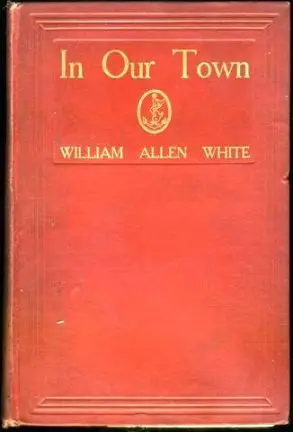
William Allen White
THE CLASSIC COLLECTION · 1909
"A Certain Rich Man" by William Allen White is a novel written in the early 20th century. The story is set against the backdrop of a small town in Kansas during the tumultuous years leading up to and including the Civil War. The narrative focuses on young John Barclay, his childhood adventures, and the unfolding drama as his community grapples with issues of freedom and conflict, particularly through the relationships with key figures like Philemon Ward and the dynamics of the war. At the start of the novel, the reader is introduced to a group of boys at play in the woods, unaware of the historical significance surrounding their actions. John Barclay is depicted as a free-spirited child who enjoys imaginative games, evoking innocence amidst the larger conflicts brewing around him. The narrative quickly shifts to a pivotal moment in John’s life as he encounters a band of Indians, setting the stage for subsequent reflections on migration, freedom, and the personal cost of war. His experiences are colored by memories of his father’s abolitionist beliefs and the struggles faced by his mother, weaving a rich tapestry of familial bonds, community spirit, and the moral questions surrounding the Civil War.
Introduction adapted from the source catalogue; source summaries may be automatically generated.
Free to read · English · 159,948 words · No account needed
MAKE TIME FOR A GOOD BOOK
On by default. Untick to stop anonymous reading totals. Each page counts after 10 seconds in view. How this works.
Anonymous counting is on unless you have switched it off.
Though it was past midnight, Mary Barclay was dressed for the day. She stood in the doorway with the dimmed light behind her, a tall, strong woman, straight and gaunt as a Nemesis. "No, John--nothing is wrong--in the house." She walked into the veranda and began as she approached a chair, "Sit down, John; I wish to talk with you."
"Well, mother--what is it?" asked the son, as he sat facing her.
She paused a moment looking earnestly at his face and replied, "The time has come when we must talk this thing out, John, soul to soul."
He shrank from what was coming. His instinct told him to fight away the crisis. He began to palaver, but his mother cut him short, as she exclaimed:--
"Why don't you let Him in, John?"
"Let who in?" asked her son.
"You know Whom, John Barclay; that was your grandfather speaking then, the old polly foxer. You know, my boy. Don't you remember me bending over the town wash-tub when you were a child, Johnnie? Don't you remember the old song I used to sing--of course you do, child--as I rubbed the clothes on the board: 'Let Him in, He is your friend, let Him in, He is your friend; He will keep you to the end--let--Him--in!' Of course you remember it, boy, and you have been fighting Him with all your might for six months now, and since Jane went, the fight is driving you crazy--can't you see, John?"
The son did not reply for a moment, then he said, "Oh, well, mother, that was all right in that day, but--"
"John Barclay," cried the mother sternly, as she leaned toward him, "the faith that bore your father a martyr to the grave, sustained me in this wilderness, and kept me happy as I scrubbed for your bread, shall not be scoffed in my presence. We are going to have this thing out to-night. I, who bore you, and nursed you, and fed you, and staked my soul on your soul, have some rights to-night. Here you are, fifty-four years old, and what have you done? You've killed your friend and your friend's father before him--I know that, John. You've wrecked the life of the sister of your first sweetheart, and put fear and disgrace in her father's face forever--forever, John Barclay, as long as he lives. I know that too; I haven't been wrapped in pink cotton all these years, boy--I've lived my own life since you left my wing, and made my own way too, as far as that goes. And now you are trying to quench the fires of remorse in your soul because your wife died a victim of your selfish, ruthless, practical scheme of things. More than that, my son--more than that, your child is suffering all the agony that a woman can suffer because of your devilish system of traffic in blood for money. You know what I mean, John. That boy told the truth, as you admit, and he could either run or lie, and for being a man you have broken up a God-sent love merely to satisfy your own vanity. Oh, John--John," she cried passionately, "my poor, blind, foolish boy--haven't you found the ashes in the core of your faith yet--aren't you ready to quit?"
Your reading position is saved on this browser. Take it to another device with a library code. Reading pages adapt to text, rather than matching a printed edition.
William Allen White
William Allen White
William Allen White
BEHIND THE BOOK
This eBook is for the use of anyone anywhere in the United States and most other parts of the world at no cost and with almost no restrictions whatsoever. You may copy it, give it away or re-use it under the terms of the Project Gutenberg License included with this eBook or online at www.gutenberg.org. If you are not located in the United States, you will have to check the laws of the country where you are located before using this eBook. Read the source licence.
The original source file, including credits and licence, is retained by this library. Request an original-format copy at no charge. Please include the book title and Project Gutenberg identifier #18684.
KEEP YOUR CURIOSITY GOING
Cécile Tormay

Moritz Busch
Coulson Kernahan
John L. Ransom

Maurice Baring
Frances Wright