THE CLASSIC COLLECTION✦In the Heart of a FoolCLASSIC FREE BOOKS
In the Heart of a Fool
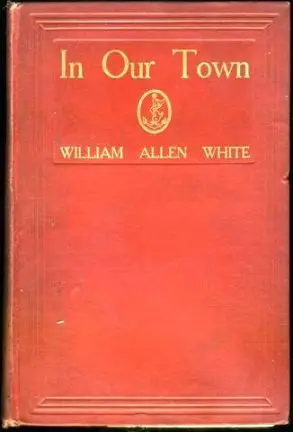
William Allen White
THE CLASSIC COLLECTION · 1909
"A Certain Rich Man" by William Allen White is a novel written in the early 20th century. The story is set against the backdrop of a small town in Kansas during the tumultuous years leading up to and including the Civil War. The narrative focuses on young John Barclay, his childhood adventures, and the unfolding drama as his community grapples with issues of freedom and conflict, particularly through the relationships with key figures like Philemon Ward and the dynamics of the war. At the start of the novel, the reader is introduced to a group of boys at play in the woods, unaware of the historical significance surrounding their actions. John Barclay is depicted as a free-spirited child who enjoys imaginative games, evoking innocence amidst the larger conflicts brewing around him. The narrative quickly shifts to a pivotal moment in John’s life as he encounters a band of Indians, setting the stage for subsequent reflections on migration, freedom, and the personal cost of war. His experiences are colored by memories of his father’s abolitionist beliefs and the struggles faced by his mother, weaving a rich tapestry of familial bonds, community spirit, and the moral questions surrounding the Civil War.
Introduction adapted from the source catalogue; source summaries may be automatically generated.
Free to read · English · 159,948 words · No account needed
MAKE TIME FOR A GOOD BOOK
On by default. Untick to stop anonymous reading totals. Each page counts after 10 seconds in view. How this works.
Anonymous counting is on unless you have switched it off.
And so out came Neal Ward, a likely-looking young man of twenty-one or maybe twenty-two--a good six feet in height, with a straight leg, a square shoulder, and firm jaw, set like his father's, and clean brown eyes that did not blink. And as Jeanette Barclay, with her mother's height, and her father's quick keen features, and her Grandmother Barclay's eyes and dominant figure, stood beside him in the doorway, Mrs. Jane Barclay thought a good way ahead, and Jeanette would have blushed her face to a cinder if the mother had spoken her thoughts. The three, mother and daughter and handsome young man, sat for a while together in the living room, and then Jane, who knew the heart of youth, and did not fear it, said, "You children should go out on the porch--it's a beautiful night; I'm going upstairs."
And now let us once more in our astral bodies watch them there in the light of the veiled moon--for it is the last time that even we should see them alone. She is sitting on a balustrade, and he is standing beside her, and their hands are close together on the stones. "Yes," he is saying, "I shall be busy at the train to-morrow trying to catch the governor for an interview on the railroad question, and may not see you."
"I wish you would throw the governor into the deep blue sea," she
says, and he responds:--
"I wish I could." There is a silence, and then he risks it--and the thing he has been trying to say comes out, "I wonder if you will do something for me, Jeanette?"
"Oh, I don't know--don't ask me anything hard--not very hard, Neal!"
The last word was all he cared for, and by what sleight of hand he
slipped his fraternity pin from his vest into her hand, neither ever
knew.
"Will you?" he asks. "For me?"
She pins it at her throat, and smiles. Then she says, "Is this long enough--do you want it back now?"
He shakes his head, and finally she asks, "When?" and then it comes
out:--
"Never."
And her face reddens, and she does not speak. Their hands, on the wall, have met--they just touch, that is all, but they do not hasten apart. A long, long time they are silent--an eternity of a minute; and then she says, "We shall see in the morning."
And then another eternal minute rolls by, and the youth slips the rose from her hair--quickly, and without disarranging a strand.
"Oh," she cries, "Neal!" and then adds, "Let me get you a pretty
one--that is faded."
Your reading position is saved on this browser. Take it to another device with a library code. Reading pages adapt to text, rather than matching a printed edition.
William Allen White
William Allen White
William Allen White
BEHIND THE BOOK
This eBook is for the use of anyone anywhere in the United States and most other parts of the world at no cost and with almost no restrictions whatsoever. You may copy it, give it away or re-use it under the terms of the Project Gutenberg License included with this eBook or online at www.gutenberg.org. If you are not located in the United States, you will have to check the laws of the country where you are located before using this eBook. Read the source licence.
The original source file, including credits and licence, is retained by this library. Request an original-format copy at no charge. Please include the book title and Project Gutenberg identifier #18684.
KEEP YOUR CURIOSITY GOING
Cécile Tormay

Moritz Busch
Coulson Kernahan
John L. Ransom

Maurice Baring
Frances Wright