THE CLASSIC COLLECTION✦In the Heart of a FoolCLASSIC FREE BOOKS
In the Heart of a Fool
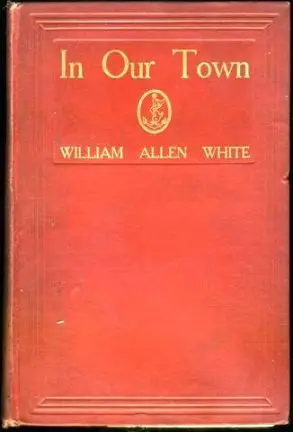
William Allen White
THE CLASSIC COLLECTION · 1909
"A Certain Rich Man" by William Allen White is a novel written in the early 20th century. The story is set against the backdrop of a small town in Kansas during the tumultuous years leading up to and including the Civil War. The narrative focuses on young John Barclay, his childhood adventures, and the unfolding drama as his community grapples with issues of freedom and conflict, particularly through the relationships with key figures like Philemon Ward and the dynamics of the war. At the start of the novel, the reader is introduced to a group of boys at play in the woods, unaware of the historical significance surrounding their actions. John Barclay is depicted as a free-spirited child who enjoys imaginative games, evoking innocence amidst the larger conflicts brewing around him. The narrative quickly shifts to a pivotal moment in John’s life as he encounters a band of Indians, setting the stage for subsequent reflections on migration, freedom, and the personal cost of war. His experiences are colored by memories of his father’s abolitionist beliefs and the struggles faced by his mother, weaving a rich tapestry of familial bonds, community spirit, and the moral questions surrounding the Civil War.
Introduction adapted from the source catalogue; source summaries may be automatically generated.
Free to read · English · 159,948 words · No account needed
MAKE TIME FOR A GOOD BOOK
On by default. Untick to stop anonymous reading totals. Each page counts after 10 seconds in view. How this works.
Anonymous counting is on unless you have switched it off.
Hendricks grunted, and they walked on in silence. Hendricks knew from Brownwell's overdraft that things were not going well with him, and he believed that matters must have reached a painful crisis in the Culpepper family if Brownwell had brought suit against the colonel.
The next morning Colonel Martin Culpepper came into the bank. He had grown into a large gray man--with gray hair, gray mustaches of undiminished size, and chin whiskers grayed and broadened with the years. His fine black eyes were just beginning to lose their lustre, and the spring was going out of his stride. As he came into the bank, Hendricks noticed that the colonel seemed to shuffle just a little. He put out his fat hand, and said:--
"Robert, will you come into the back room with me a moment? It isn't business--I just want to talk with you." He smiled apologetically and added, "Just troubles, Robert--just an old man wants to talk to some one, in point of fact."
Hendricks followed the colonel into the directors' room, and without ceremony the colonel sank heavily into a fat leather chair, facing the window, and Hendricks sat down facing the colonel. The colonel looked at the floor and fumbled his triangular watch-charm a moment, and cleared his throat, as he spoke, "I don't know just how to begin--to get at it--to proceed, as I may say, Robert." Hendricks did not reply, and the colonel went on, "I just wanted to talk to some one, that's all--to talk to you--just to you, sir, to be exact."
Hendricks looked kindly at the colonel, whose averted eyes made the younger man feel uncomfortable. Then he said gently, "Well, Colonel, don't be backward about saying what you want to to me." It was a long speech for Hendricks, and he felt it, and then qualified it with, "But, of course, I don't want to urge you."
The colonel's face showed a flush of courage to Hendricks, but the courage passed, and there was a silence, and then a little twitch under his eyes told Hendricks that the colonel was contemplating a flank attack as he spoke, "Robert, may I ask you in confidence if Adrian Brownwell is hard up?"
Hendricks believed the truth would bring matters to a head, and he answered, "Well, I shouldn't wonder, Colonel."
"Very hard up?" pressed the colonel.
Hendricks remembered Brownwell's overdraft and half a dozen past due notes to cover other overdrafts and answered, "Well, Colonel, not desperate, but you know the Index has been getting the best of the Banner for two or three years."
There was a pause, and then the colonel blurted out, "Well, Bob, he's
sued me."
Your reading position is saved on this browser. Take it to another device with a library code. Reading pages adapt to text, rather than matching a printed edition.
William Allen White
William Allen White
William Allen White
BEHIND THE BOOK
This eBook is for the use of anyone anywhere in the United States and most other parts of the world at no cost and with almost no restrictions whatsoever. You may copy it, give it away or re-use it under the terms of the Project Gutenberg License included with this eBook or online at www.gutenberg.org. If you are not located in the United States, you will have to check the laws of the country where you are located before using this eBook. Read the source licence.
The original source file, including credits and licence, is retained by this library. Request an original-format copy at no charge. Please include the book title and Project Gutenberg identifier #18684.
KEEP YOUR CURIOSITY GOING
Cécile Tormay

Moritz Busch
Coulson Kernahan
John L. Ransom

Maurice Baring
Frances Wright