THE CLASSIC COLLECTION✦In the Heart of a FoolCLASSIC FREE BOOKS
In the Heart of a Fool
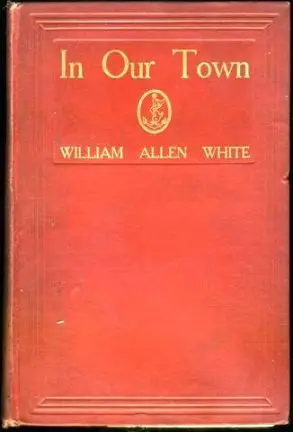
William Allen White
THE CLASSIC COLLECTION · 1909
"A Certain Rich Man" by William Allen White is a novel written in the early 20th century. The story is set against the backdrop of a small town in Kansas during the tumultuous years leading up to and including the Civil War. The narrative focuses on young John Barclay, his childhood adventures, and the unfolding drama as his community grapples with issues of freedom and conflict, particularly through the relationships with key figures like Philemon Ward and the dynamics of the war. At the start of the novel, the reader is introduced to a group of boys at play in the woods, unaware of the historical significance surrounding their actions. John Barclay is depicted as a free-spirited child who enjoys imaginative games, evoking innocence amidst the larger conflicts brewing around him. The narrative quickly shifts to a pivotal moment in John’s life as he encounters a band of Indians, setting the stage for subsequent reflections on migration, freedom, and the personal cost of war. His experiences are colored by memories of his father’s abolitionist beliefs and the struggles faced by his mother, weaving a rich tapestry of familial bonds, community spirit, and the moral questions surrounding the Civil War.
Introduction adapted from the source catalogue; source summaries may be automatically generated.
Free to read · English · 159,948 words · No account needed
MAKE TIME FOR A GOOD BOOK
On by default. Untick to stop anonymous reading totals. Each page counts after 10 seconds in view. How this works.
Anonymous counting is on unless you have switched it off.
It is now nearly a generation since that corner-stone was laid. Boys and girls who then were children have children in the university, and its alumni include a brigadier in the army, a poet, a preacher of national renown, two college presidents, an authority upon the dynamics of living matter, and two men who died in the American mission at Foo Chow during the uprising in 1900. When General Ward was running for President of the United States on one of the various seceding branches of the prohibition party, while Jeanette Barclay was a little girl, he found the money for it; two maiden great-aunts on his mother's side of the family had half a million dollars to leave to something, and the general got it. They willed it to him to hold in trust during his lifetime, but the day after the check came for it, he had transferred the money to a university fund, and had borrowed fifty dollars of Bob Hendricks to clean up his grocery bills and tide him over until his pension came. But he was a practical old fox. He announced that he would give the money to a college only if the town would give a similar sum, and what with John Barclay's hundred-thousand-dollar donation, and Bob Hendricks' ten thousand, and what with the subscription paper carried around by Colonel Culpepper, who proudly headed it with five thousand dollars, and after the figure wrote in red ink "in real estate," much to the town's merriment, and what with public meetings and exhortations in the churches, and what with voting one hundred thousand dollars in bonds by Garrison County for the privilege of sending students to the college without tuition, the amount was raised; and as the procession wheeled out of Main Street to attend the ceremonies incident to laying the corner-stone that beautiful October day, it is doubtful which was the prouder man--Martin Culpepper, the master of ceremonies, in his plumed hat, flashing sword, and red sash, or General Philemon Ward, who for the first time in a dozen years heard the crowd cheer his name when the governor in his speech pointed at the general's picture--his campaign picture that had been hooted with derision and spattered with filth on so many different occasions in the town. The governor's remarks were of course perfunctory; he devoted five or ten minutes to the praise of General Ward, of Sycamore Ridge, of John Barclay, and of education in general, and then made his regular speech that he used for college commencements, for addresses of welcome to church conferences, synods, and assemblies, and for conclaves of the grand lodge. General Ward spoke poorly, which was to his credit, considering the occasion, and Watts McHurdie's poem got entangled with Juno and Hermes and Minerva and a number of scandalous heathen gods,--who were no friends of Watts,--and the crowd tired before he finished the second canto. But many discriminating persons think that John Barclay's address, "The Time of True Romance," was the best thing he ever wrote. It may be found in his book as Chapter XI. "The Goths," he said, "came out of the woods, pulled the beards of the senators, destroyed the Roman state, murdered and pillaged the Roman people, and left the world the Gothic arch; the Vikings came over the sea, roaring their sagas of rapine and slaughter; the conquerors came to Europe with spear and sword and torch and left the outlines of the map, the boundaries of states. Luther married his nun, and set Christendom to fighting over it for a hundred years, but he left a free conscience. Cromwell thrust his pikes into the noble heads of England, snapped his fingers at law, and left civil liberty. Organized murder reached its sublimity in the war that Lincoln waged, and in that murdering and pillage true romance came to mankind in its flower. Murder for the moment in these piping times has become impolite. But true romance is here. Our heroes rob and plunder, and build cities, and swing gayly around the curves of the railroads they have stolen, and swagger through the cities they have levied upon the people to build. Do we care to-day whether Charlemagne murdered his enemies with a sword or an axe; do we ask if King Arthur used painless assassination or burned his foes at the stake? Who cares to know that Caesar was a rake, and that William the Conqueror was a robber? They did their work and did it well, and are snugly sitting on their monuments where no moralist can reach them. So those searching for true romance to-day, who regard the decalogue as mere persiflage, and the moral code as a thing of archaic interest, will get their day's work done and strut into posterity in bronze and marble. They will cheat and rob and oppress and grind the faces off the poor, and do their work and follow their visions, and live the romance in their hearts. To-morrow we will take their work, disinfect it, and dedicate it to God's uses."
Your reading position is saved on this browser. Take it to another device with a library code. Reading pages adapt to text, rather than matching a printed edition.
William Allen White
William Allen White
William Allen White
BEHIND THE BOOK
This eBook is for the use of anyone anywhere in the United States and most other parts of the world at no cost and with almost no restrictions whatsoever. You may copy it, give it away or re-use it under the terms of the Project Gutenberg License included with this eBook or online at www.gutenberg.org. If you are not located in the United States, you will have to check the laws of the country where you are located before using this eBook. Read the source licence.
The original source file, including credits and licence, is retained by this library. Request an original-format copy at no charge. Please include the book title and Project Gutenberg identifier #18684.
KEEP YOUR CURIOSITY GOING
Cécile Tormay

Moritz Busch
Coulson Kernahan
John L. Ransom

Maurice Baring
Frances Wright