THE CLASSIC COLLECTION✦Among the campsCLASSIC FREE BOOKS
Among the camps
Thomas Nelson Page
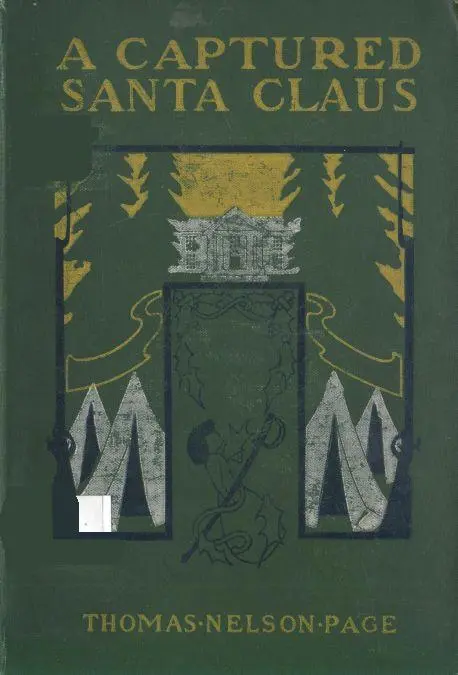
THE CLASSIC COLLECTION · 1891
"A Captured Santa Claus" by Thomas Nelson Page is a Christmas-themed novella written in the early 20th century. This historical account is set during the American Civil War, specifically around the Christmas of 1863, capturing the poignant contrast between the joys of the holiday season and the harsh realities of war. The book explores themes of family, hope, and the spirit of Christmas through the eyes of children awaiting the beloved figure of Santa Claus amidst their father's absence at the front. The story revolves around the Stafford family at their Virginia home, Holly Hill, as they prepare for Christmas during a time of conflict. The children, particularly Charlie and Evelyn, are excited yet disappointed by the absence of presents due to the war. On Christmas Eve, Major Stafford returns home disguised as a peddler, fulfilling a promise made to his children. Amidst the festivities, however, Union soldiers led by General Denby threaten to discover his presence, leading to a tense standoff. Ultimately, the children’s innocence and bravery shine through, and the General is moved by their spirit, leading to a resolution that highlights themes of compassion and forgiveness amidst the chaos of war. As Christmas arrives, the family embraces the magic of the season, celebrating love and hope despite the surrounding turmoil.
Introduction adapted from the source catalogue; source summaries may be automatically generated.
Free to read · English · 10,908 words · No account needed
MAKE TIME FOR A GOOD BOOK
On by default. Untick to stop anonymous reading totals. Each page counts after 10 seconds in view. How this works.
Anonymous counting is on unless you have switched it off.
This done, he took out his handkerchief and blew his nose violently as he walked up and down the room. He even muttered something about "the fire smoking." Then he sat down once more at his table, and, placing the little letter before him, began to write. As he wrote, the fire smoked more than ever, and the sounds of revelry outside reached him in a perfect uproar; but he no longer frowned, and when the strains of "Dixie" came in faintly at the window, sung in a clear, rich, mellow solo, though for a moment he looked surprised, he sat back in his chair and listened.
"I wish I were in Dixie, away, away;
In Dixie's land I'll take my stand,
To live and die for Dixie land,
Away, away, away down South in Dixie!"
sang the voice, full and sonorous.
When the song ended, there was an outburst of applause, and shouts apparently demanding some other song, which was refused, for the noise grew to a tumult. The General rose and walked to the window. A large crowd had gathered about a campfire not far from his window, and in the midst, lifted up on a box, and clearly outlined against the firelight stood the singer, a tall, straight man with a long beard and civilian's clothes. Suddenly the uproar hushed, for the voice began again. But this time it was a hymn:
"While shepherds watched their flocks by night,
All seated on the ground,
The Angel of the Lord came down,
And glory shone around."
Verse after verse was sung, the men pouring out of their tents and huts
to listen to the music.
"All glory be to God on high,
And to the earth be peace;
Good will henceforth from Heaven to men
Begin and never cease!"
"Begin and never cease," sang the singer to the end.
When the strain died away, there was dead silence for a little space, and then the talk began on a lower key.
The General stood for a moment, then turned from the window, finished his letter and sealed it. Carefully folding up the little sheet which lay before him, he replaced it in his pocket, and, going to the door, summoned the orderly who was just without.
"Mail that at once," he said.
"Yes, sir." The soldier saluted and turned to leave.
"By the way, who was that singing out there just now?--I mean that last one, who sang 'Dixie' and the hymn?"
"Only a pedler, sir, I believe."
The General's eyes fixed themselves on the soldier.
"Where did he come from?"
"I don't know, sir. Some of the boys had him singing."
Your reading position is saved on this browser. Take it to another device with a library code. Reading pages adapt to text, rather than matching a printed edition.
Thomas Nelson Page
Thomas Nelson Page

Thomas Nelson Page

Thomas Nelson Page
BEHIND THE BOOK
This eBook is for the use of anyone anywhere in the United States and most other parts of the world at no cost and with almost no restrictions whatsoever. You may copy it, give it away or re-use it under the terms of the Project Gutenberg License included with this eBook or online at www.gutenberg.org. If you are not located in the United States, you will have to check the laws of the country where you are located before using this eBook. Read the source licence.
The original source file, including credits and licence, is retained by this library. Request an original-format copy at no charge. Please include the book title and Project Gutenberg identifier #33666.
KEEP YOUR CURIOSITY GOING
Cécile Tormay

Moritz Busch
Coulson Kernahan
John L. Ransom

Maurice Baring
Frances Wright