
The Diary of a Saint
Arlo Bates
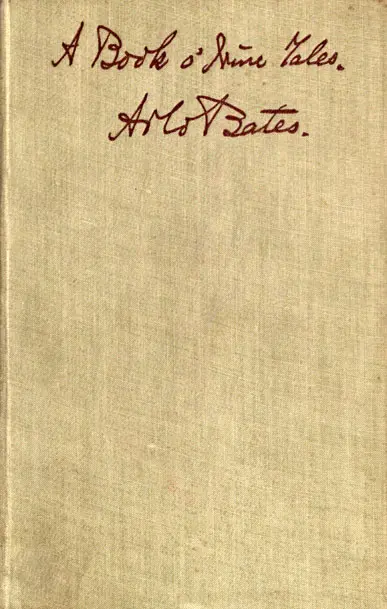
THE CLASSIC COLLECTION · 1891
"A Book o' Nine Tales" by Arlo Bates is a collection of short stories written in the late 19th century. The book opens with a tale about a mysterious wounded man found on the shore after a shipwreck, who struggles with amnesia regarding his identity. The narrative explores themes of memory, love, and the mystery of personal history through the eyes of Columbine Dysart, the young woman caring for him, as well as the stranger's perplexing past. At the start of the book, the reader meets a sick and delirious man lying in bed, unable to remember anything about himself, while a kind young nurse named Columbine tends to him. Their interactions reveal the girl's curiosity about his identity, which she weaves into her imagination as a romantic fantasy. As the man begins to regain consciousness and the light of reason in his eyes, he expresses confusion about his very existence, asking who he is. The opening sets the stage for an exploration of the characters’ evolving relationship, the poignant search for belonging, and the layers of mystery surrounding the stranger’s life.
Introduction adapted from the source catalogue; source summaries may be automatically generated.
Free to read · English · 60,213 words · No account needed
MAKE TIME FOR A GOOD BOOK
On by default. Untick to stop anonymous reading totals. Each page counts after 10 seconds in view. How this works.
Anonymous counting is on unless you have switched it off.
"Monday, April 7.--Meeting called to order by the president. The records read and approved. There being no quorum present, it was unanimously voted to hold the next meeting on Thursday, as that day is more convenient for the ladies. On motion of Mrs. Percy Browne, voted to appoint a committee of one to take charge of the Art Department of the fair. Mrs. Browne kindly volunteered to serve as that committee. Adjourned."
The records having been approved, the president remarked that there was so much business to come before the meeting that she really could not tell where to begin, and she should be glad if some one would make a motion, just to start things.
"A motion to put things in motion," murmured Miss Keene, looking around with the smile which everybody knew meant that she had made a joke.
Everybody smiled also, although nobody saw the point until the president echoed, with a pleased air of discovery, "Motion,--motion! Very good, Miss Keene."
Then they all smiled once again, and Miss Gray told of an excellent jest made by a cousin in Boston:--
"My cousin in Boston--that is, she isn't my real cousin, but a step-cousin by marriage--was at a concert once, and she made an awfully good joke. I don't remember exactly now what it was, but it was awfully funny. It was something about music, and we all laughed."
"It doesn't seem to me," spoke up Miss Sharp, acidly, "that Boston jokes will help the fair much; and I move you, Mrs. President,--if I don't make a motion, I'm sure I don't know who ever will,--that the fair be held on the 20th of April."
"I second the motion," promptly spoke up Miss Snob, who always seconded
everything.
"It is moved and seconded," said the president, "that the fair be held on the 20th of April; but I'm sure the 23d would suit me a great deal better."
"Why not have it the 17th?" asked Miss Keene; "that seems to me quite
late enough."
"Oh, dear, no," interrupted Mrs. Percy Browne, "I never could get half the things done for my department by that time. I move we have it the 30th."
"Second the motion," promptly responded Miss Snob.
"It is moved and seconded," propounded Mrs. Smithe from the chair, "that the fair be held on the 30th. That seems to me an excellent time. If it be your minds, you will please to signify it. It is a vote."
"I still stick to the 20th," declared Miss Sharp, viciously. "I shall open my candy-table then, whether the rest of the fair is ready or not."
Your reading position is saved on this browser. Take it to another device with a library code. Reading pages adapt to text, rather than matching a printed edition.
Arlo Bates

Arlo Bates

Arlo Bates

Arlo Bates
BEHIND THE BOOK
This eBook is for the use of anyone anywhere in the United States and most other parts of the world at no cost and with almost no restrictions whatsoever. You may copy it, give it away or re-use it under the terms of the Project Gutenberg License included with this eBook or online at www.gutenberg.org. If you are not located in the United States, you will have to check the laws of the country where you are located before using this eBook. Read the source licence.
The original source file, including credits and licence, is retained by this library. Request an original-format copy at no charge. Please include the book title and Project Gutenberg identifier #41189.
KEEP YOUR CURIOSITY GOING
Coulson Kernahan

Maurice Baring
Frances Wright
Cécile Tormay

Frederic Jesup Stimson

W. H. P. (William Henry Pope) Jarvis