
List, Ye Landsmen! A Romance of Incident
William Clark Russell
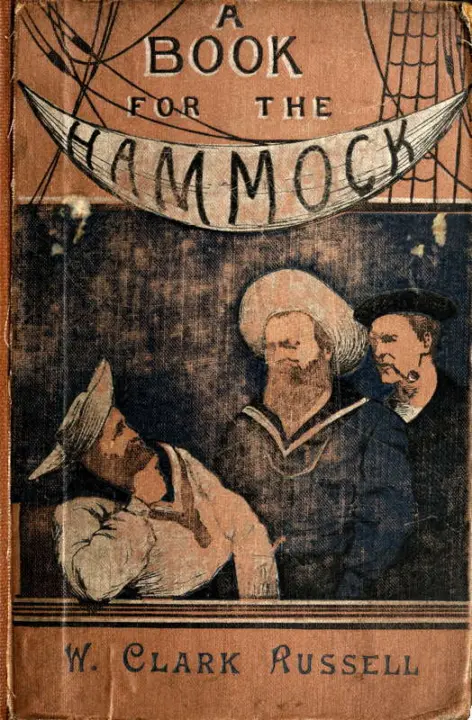
THE CLASSIC COLLECTION · 1887
"A Book for the Hammock" by William Clark Russell is a collection of nautical essays written in the late 19th century. The work reflects on the romanticism of sea life, contrasting past maritime adventures with the mechanized, prosaic realities of modern naval experiences. The essays explore themes of nostalgia for traditional seamanship, the loss of poetic engagement with the ocean, and the whimsical culture of sailors, including superstitions and life at sea. The opening of the book introduces readers to Russell's reflections on the decline of the "old romance of the sea" amid the advancements of steam-powered travel. He paints a vivid picture of a modern sailor's experience aboard a ship, pondering the beauty and mystery once associated with ocean voyages that seems lost in the face of progress. Russell laments the absence of wonder in contemporary maritime life, as sailors now rush through journeys stripped of the exploratory spirit that once characterized their trade. Through his contemplative prose, he creates a sense of longing for a bygone era filled with adventure and folklore, suggesting that the magic of the ocean has faded alongside the traditional ways of seafaring.
Introduction adapted from the source catalogue; source summaries may be automatically generated.
Free to read · English · 93,636 words · No account needed
MAKE TIME FOR A GOOD BOOK
On by default. Untick to stop anonymous reading totals. Each page counts after 10 seconds in view. How this works.
Anonymous counting is on unless you have switched it off.
Henry Fielding, when he started on his voyage to Lisbon, left his house on Wednesday, June 26, 1754. He arrived at Rotherhithe in two hours, and immediately went on board, expecting to sail next morning. On Sunday, June 30, the ship “fell down” to Gravesend. Next day she got as far as the Nore, and brought up. Tuesday, July 2, they again set sail, and anchored off Deal; weighed on the 4th, and after a short struggle anchored again off Deal. Started on the 6th, and on the 11th “came to an anchor at a place called Ryde.” On the 22nd they fell down to St. Helen’s, and on the 25th were off the island of Portland, “so famous for the smallness and sweetness of its mutton,” and anchored in Torbay. Started again August 1. On the 3rd the captain took an observation, and discovered that Ushant bore some leagues northward from him. So that it took Fielding thirty-eight days to sail from Rotherhithe to Ushant! The voyage to New Zealand is now performed in two days less.[46]
Footnote 46:
It does not seem that the Lisbon Packet forty-eight years later was much superior to the vessel described by Fielding, to judge from Byron’s verses written in 1809.
“Hey day! call you that a cabin? Why ’tis hardly three feet square! Not enough to stow Queen Mab in: Who the deuce can harbour there? ‘Who, sir? plenty— Nobles twenty Did at once my vessel fill’— Did they? Jesus, How you squeeze us! Would to God they did so still! Then I’d ’scape the heat and racket Of the good ship Lisbon Packet.”
But the singular slowness of this journey down the Channel is by no means the strangest feature of Fielding’s voyage, in respect, I mean, of the contrasts established by the great master’s narrative. A man proposing a trip to Lisbon nowadays, can, if he likes, choose as a ship a fabric of above three thousand tons, with a spacious and richly decorated saloon illuminated by electric lights, a table as elegantly and hospitably furnished as that of any first-rate hotel ashore, numerous waiters to fly at his bidding, a comfortable bedroom fitted with a wire-wove mattrass and a hair bed. He may quench his thirst with choice of twenty refreshing drinks at a bar. The captain and officers are as much distinguished for their courtesy as for their seafaring qualities. The ship is despatched with the punctuality of a mail train; there is nothing in head winds or boisterous weather to detain her, and she commonly arrives at her destination before she is due. Fielding’s ship was a vessel not at all unlike one of the scores of sailing colliers which to this day go on staggering down the North Sea, laden with coals from Newcastle or Sunderland. Her master was so great a ruffian that Fielding has drawn the figure of no completer character of that kind in any of his novels, not excepting “Jonathan Wild.” When the novelist ventured mildly to complain of the long detention at Rotherhithe, this brutal skipper, in whose mouth every other word was an oath, declared that had he known Mr. and Mrs. Fielding were not to be pleased he would not have carried them for five hundred pounds. “He added,” says Fielding, “many asseverations that he was a gentleman, and despised money, not forgetting several hints of the presents which had been made him for his cabin, of twenty, thirty, and forty guineas, by several gentlemen, over and above the sum for which they had contracted.” The size and comfort of the accommodation may be conjectured from what Fielding says of the captain’s snoring: “he loved to indulge himself in morning slumbers, which were attended with a wind-music much more agreeable to the performer than to the hearers, especially such as have, as I had, the privilege of sitting in the orchestra.” The passage money was five pounds a head, and it was expected that passengers fed themselves. Fielding provided tea and wine, hams and tongues, and a number of live chickens and sheep; in truth, says he, “treble the quantity of provisions which could have supported the persons I took with me.” A sample is given of the captain’s politeness. I omit the wicked words. Fielding had objected to his cabin being littered with bottles. “Your cabin!” repeated he many times; “no, ’tis my cabin! Your cabin! I have brought my hogs to a fair market. I suppose, indeed, you think it your cabin and your ship, by your commanding in it! but I will command in it! I will show the world I am the commander, and nobody but I! Did you think I sold you the command of the ship for that pitiful thirty pounds? I wish I had not seen you nor your thirty pounds aboard of her.” To appreciate all this it is necessary the reader should imagine himself dying of dropsy as Fielding was, seeking in poverty a brief prolongation of life in a more genial climate than that of England, his wife prostrated with sea-sickness and the agonies of tooth-ache! It is well that those days are dead and gone. Hundreds of us are every year going abroad for health;—think of embarking on that painful quest as the invalid of a century ago did—in a ship of probably a hundred tons burden, commanded by a pitiless, foul-mouthed bully, and worked by men who, to use Fielding’s own expression, seemed “to glory in the language and behaviour of savages!”
Your reading position is saved on this browser. Take it to another device with a library code. Reading pages adapt to text, rather than matching a printed edition.
William Clark Russell

William Clark Russell
William Clark Russell

William Clark Russell
BEHIND THE BOOK
This eBook is for the use of anyone anywhere in the United States and most other parts of the world at no cost and with almost no restrictions whatsoever. You may copy it, give it away or re-use it under the terms of the Project Gutenberg License included with this eBook or online at www.gutenberg.org. If you are not located in the United States, you will have to check the laws of the country where you are located before using this eBook. Read the source licence.
The original source file, including credits and licence, is retained by this library. Request an original-format copy at no charge. Please include the book title and Project Gutenberg identifier #61207.
KEEP YOUR CURIOSITY GOING
Wilfrid Scawen Blunt
Wilfrid Scawen Blunt

E. W. (Edgar Watson) Howe

David Patterson (Spirit) Hatch

David Patterson (Spirit) Hatch

David Patterson (Spirit) Hatch