
List, Ye Landsmen! A Romance of Incident
William Clark Russell
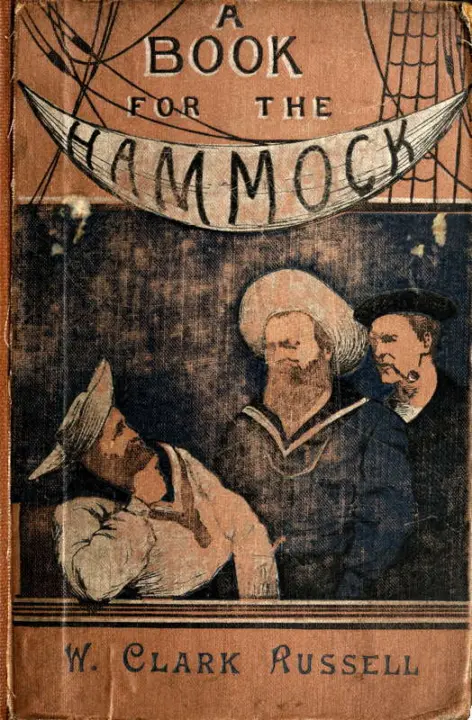
THE CLASSIC COLLECTION · 1887
"A Book for the Hammock" by William Clark Russell is a collection of nautical essays written in the late 19th century. The work reflects on the romanticism of sea life, contrasting past maritime adventures with the mechanized, prosaic realities of modern naval experiences. The essays explore themes of nostalgia for traditional seamanship, the loss of poetic engagement with the ocean, and the whimsical culture of sailors, including superstitions and life at sea. The opening of the book introduces readers to Russell's reflections on the decline of the "old romance of the sea" amid the advancements of steam-powered travel. He paints a vivid picture of a modern sailor's experience aboard a ship, pondering the beauty and mystery once associated with ocean voyages that seems lost in the face of progress. Russell laments the absence of wonder in contemporary maritime life, as sailors now rush through journeys stripped of the exploratory spirit that once characterized their trade. Through his contemplative prose, he creates a sense of longing for a bygone era filled with adventure and folklore, suggesting that the magic of the ocean has faded alongside the traditional ways of seafaring.
Introduction adapted from the source catalogue; source summaries may be automatically generated.
Free to read · English · 93,636 words · No account needed
MAKE TIME FOR A GOOD BOOK
On by default. Untick to stop anonymous reading totals. Each page counts after 10 seconds in view. How this works.
Anonymous counting is on unless you have switched it off.
Few features of those chronicles of adventure which are included in the collections of Hakluyt, Purchas, Churchill, Harris, and others are more interesting than the descriptions given of the tonnage, arms, and crews of the vessels which discovered the Indies, penetrated the great South Sea, gave names to capes and headlands of the vast but still shadowy continent of New Holland; coasted the bleak shores of Newfoundland, and searched the ice of the Frozen Ocean for the North-west Passage. Of course, the measurements of those days are not the measurements of these. A tun might signify a capacity for different kinds of freight without reference to cubical dimensions. The capacity of some vessels in those days was measured by the number of pipes of wine which could be stowed in them. Even in recent times there is a considerable difference between old and new measurements, the old representing less than the new. Nevertheless it is impossible to read about the ships in which the early navigators sailed—it is impossible to think of their tub-like forms, their enormous top-hamper, the astonishing clumsiness of their yards and gear, their castellated poops and rampart-like quarters, without wondering how on earth such structures managed to roll in safety over the stormy ocean, and to push their way, however slowly, against opposing winds and adverse tides. Certain expressions have changed their meaning, and on reading the old voyages one is often puzzled with names given to craft which, to modern experience, do not in the least degree correspond with their titles. For instance, the galley in our times is known as a long rowing boat, mounting so many oars. But in former days by the term galley was meant a vessel whose complement of men was one thousand or twelve hundred. She mounted a good show of ordnance, had three masts and thirty-two banks of oars, every bank containing two oars, and every oar being handled by five or six men. Equally perplexing are those names of shallops, skiffs, pinnaces, lighters, and so forth, which are met in abundance in the old stories, and which express fabrics very different indeed from the kinds of craft they now designate. For Drake’s glorious voyage five ships were equipped. The Hind was one hundred tons, the Elizabeth eighty tons, the Marigold thirty tons, the Swan fifty tons, and the Christopher fifteen tons. The captain of this fifteen-ton pinnace was Thomas Moon, and we hear of her disappearing in great storms and reappearing in fine weather, to the general joy of the rest of the fleet. Such an old skipper as this must have made noble company over a mug of strong beer, and would have been able to tell of things even more wonderful than trees with oysters growing upon them. Schouten, who discovered and named Cape Horn, put to sea in vessels which in these days would class amongst small, inferior coasters; yet the Unity managed to carry nineteen pieces of cannon and twelve swivels and a company of sixty-five men. How those ancient mariners contrived to stow themselves away in their dark ’tweendecks and black forecastles, how in their little holds they could find room for sufficient provisions and water to last them for months, not to mention the gunpowder and cannon balls which they carried, surpasses modern marine comprehension. Among the ships William Funnell writes about, in a narrative that is commonly taken to be William Dampier’s, was the Cinque Ports galley, for ever memorable as the craft in which Alexander Selkirk sailed. This vessel, that was equipped for a buccaneering cruise in little known waters against towering and powerful galleons, was ninety tons, a burthen which in these days would about fit a pleasure yacht intended for the blue skies and summer seas of the holiday period. Or take Sir Humphrey Gilbert’s expedition, which included the Golden Hind of forty tons, the Swallow of forty tons, and the Squirrel of ten tons. “The resolution of the proprietors was that the fleet should begin its course northerly, and follow as directly as they could the trade-way to Newfoundland.” Think of a ten-ton boat starting on such an expedition as this! Yet Sir Humphrey took command of her when her master deserted, with this sequel: that when off Cape Race homeward bound, “the storms and swellings of the seas increasing, he (namely, Sir Humphrey) was again pressed to leave the frigate (that is, the Squirrel), but his answer was, ‘We are as near to Heaven by sea as by land.’ About midnight, the Squirrel being ahead of the Golden Hind, her lights were at once extinguished, which those in the Hind seeing cried out ‘Our general is lost!’ and it is supposed she sank that instant, for she was never more heard of.” Lord Byron exclaims:
Your reading position is saved on this browser. Take it to another device with a library code. Reading pages adapt to text, rather than matching a printed edition.
William Clark Russell

William Clark Russell
William Clark Russell

William Clark Russell
BEHIND THE BOOK
This eBook is for the use of anyone anywhere in the United States and most other parts of the world at no cost and with almost no restrictions whatsoever. You may copy it, give it away or re-use it under the terms of the Project Gutenberg License included with this eBook or online at www.gutenberg.org. If you are not located in the United States, you will have to check the laws of the country where you are located before using this eBook. Read the source licence.
The original source file, including credits and licence, is retained by this library. Request an original-format copy at no charge. Please include the book title and Project Gutenberg identifier #61207.
KEEP YOUR CURIOSITY GOING
Wilfrid Scawen Blunt
Wilfrid Scawen Blunt

E. W. (Edgar Watson) Howe

David Patterson (Spirit) Hatch

David Patterson (Spirit) Hatch

David Patterson (Spirit) Hatch