
List, Ye Landsmen! A Romance of Incident
William Clark Russell
THE CLASSIC COLLECTION · 1887
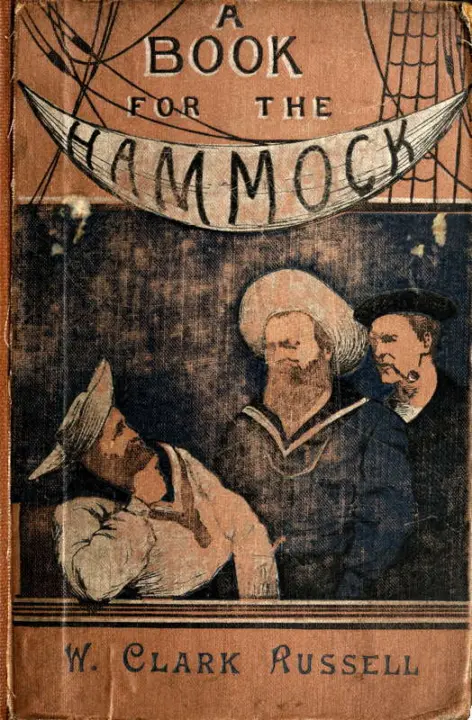
"A Book for the Hammock" by William Clark Russell is a collection of nautical essays written in the late 19th century. The work reflects on the romanticism of sea life, contrasting past maritime adventures with the mechanized, prosaic realities of modern naval experiences. The essays explore themes of nostalgia for traditional seamanship, the loss of poetic engagement with the ocean, and the whimsical culture of sailors, including superstitions and life at sea. The opening of the book introduces readers to Russell's reflections on the decline of the "old romance of the sea" amid the advancements of steam-powered travel. He paints a vivid picture of a modern sailor's experience aboard a ship, pondering the beauty and mystery once associated with ocean voyages that seems lost in the face of progress. Russell laments the absence of wonder in contemporary maritime life, as sailors now rush through journeys stripped of the exploratory spirit that once characterized their trade. Through his contemplative prose, he creates a sense of longing for a bygone era filled with adventure and folklore, suggesting that the magic of the ocean has faded alongside the traditional ways of seafaring.
Introduction adapted from the source catalogue; source summaries may be automatically generated.
Free to read · English · 93,636 words · No account needed
MAKE TIME FOR A GOOD BOOK
On by default. Untick to stop anonymous reading totals. Each page counts after 10 seconds in view. How this works.
Anonymous counting is on unless you have switched it off.
In 1609 Hugo Grotius wrote a book, which he called “Mare Liberum.” It is heavy reading in these times of Wilkie Collins and Miss Braddon, and the heavier, perhaps, for being in Latin. But it was deemed a treatise of very great eloquence, especially by the Dutch, to whose ocean-rights it specially referred. In short, the object of Grotius was to prove the weakness of our title to the sovereignty of the seas, the deep, in his opinion, being a gift from God and common to all nations. This was answered by John Selden, the most amazing scholar that any age or country ever produced, of so candid and great-hearted a nature, as is particularly exhibited in his Table-Talk, that it is difficult to read his astonishing answer to Grotius without wishing that his patriotism had dealt with a subject more answerable to his convictions than this question of sea rights. But his “Mare Clausum” is a volume that one would think must be of abounding and enduring interest to Englishmen. It was translated into English by special command by Marchmont Nedham (as he spells his name), and published in that form in 1652. It probably has few readers now. Yet such was the opinion of its potency as a sustained argument that it was believed, to use the language of Nedham, “had he (i.e. Selden) persisted with the same firm resolution in this honourable business of the sea, as he did in other things that were destructive to the nation’s interest, the Netherlanders had been prevented from spinning out their long opportunitie to an imaginarie claim of prescription; so that they would have had less pretence to act those insolencies now which in former times never durst enter the thoughts of their predecessors.”
The book pre-eminently concerns the honour of our flag, of our dominion over the seas, more particularly in regard to the right of our kings and queens to grant licences to foreigners to fish in the sea, and of the obligation on all ships of what denomination soever to strike their topsails to our flag, or in other words to salute the symbol of Britannia’s sovereignty wherever they shall encounter it. For how many centuries this act of courtesy has been exacted as a right by the monarchs of England you must read Selden’s book to discover. Writing in James I.’s reign, he shows how he traces it back for above four hundred years by this: That at Hastings it was decreed by King John, in the second year of his reign, with the assent of the peers, “if the governor or commander of the King’s navie, in his naval expeditions (which were all in that age upon the Southern Sea) shall meet any ship whatsoever by sea, either laden or empty, that shall refuse to strike their sails at the command of the King’s Governor or admiral or his lieutenant, but make resistance against them which belong to his fleet; That then they are to bee reputed enemies if they may bee taken, yea, and their ships and goods be confiscated as the goods of enemies.” He points out that it was accounted treason in any man who omitted to acknowledge the King of England in his own sea by striking sail; nor would the circumstance of his country being friendly with that of the transgressor protect him. Another illustration of the antiquity of this custom, or exaction rather, Selden finds in a gold rose-noble,[21] that was coined in the reign of Edward III. The stamp on one side of it represented a ship floating on the sea, and a king, armed with sword and shield, sitting on the ship as on a throne, the device being obviously intended to represent the maritime dominion of the ocean. All that Selden has to say about fishing in the sea is full of interest. He points out that Henry VI. gave leave to the French, and other foreigners, to fish, sometimes for six months, sometimes for a year; but this leave “was granted under the name even of a passport or safe conduct; yea, and a size or proportion was prescribed to their fishing boats or busses that they should not be above thirty tons.” The French had to obtain leave from the English admiral to fish for soles for the table of their own king (Henri Quatre), and such boats as were caught fishing without a licence were seized as trespassers. In the Eastern waters the Hollanders and Zealanders were forced to seek permission to fish from the Governor of Scarborough Castle, and Selden quotes Camden’s expression of wonder at the vast sum of money the Hollanders made by this fishing upon our coast and at the apathy of the English, “who have ever granted them leave to fish, reserving alwaies the honour and privilege to themselves, but through a kindle of negligence resigning the profit to strangers.” It is on the mass of evidence as to the antiquity of the British claim to the sovereignty of the seas that Dr. Campbell, the historian, bases his opinion respecting the naval power of the Early Britons, who are generally considered as a race of painted wild men, who speared fish or crossed their rivers and creeks in wicker boats covered with hides.
Your reading position is saved on this browser. Take it to another device with a library code. Reading pages adapt to text, rather than matching a printed edition.
William Clark Russell

William Clark Russell
William Clark Russell

William Clark Russell
BEHIND THE BOOK
This eBook is for the use of anyone anywhere in the United States and most other parts of the world at no cost and with almost no restrictions whatsoever. You may copy it, give it away or re-use it under the terms of the Project Gutenberg License included with this eBook or online at www.gutenberg.org. If you are not located in the United States, you will have to check the laws of the country where you are located before using this eBook. Read the source licence.
The original source file, including credits and licence, is retained by this library. Request an original-format copy at no charge. Please include the book title and Project Gutenberg identifier #61207.
KEEP YOUR CURIOSITY GOING
Wilfrid Scawen Blunt
Wilfrid Scawen Blunt

E. W. (Edgar Watson) Howe

David Patterson (Spirit) Hatch

David Patterson (Spirit) Hatch

David Patterson (Spirit) Hatch