
List, Ye Landsmen! A Romance of Incident
William Clark Russell
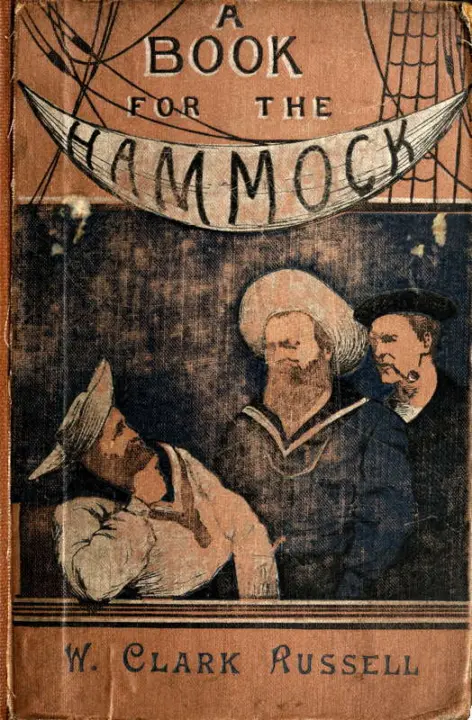
THE CLASSIC COLLECTION · 1887
"A Book for the Hammock" by William Clark Russell is a collection of nautical essays written in the late 19th century. The work reflects on the romanticism of sea life, contrasting past maritime adventures with the mechanized, prosaic realities of modern naval experiences. The essays explore themes of nostalgia for traditional seamanship, the loss of poetic engagement with the ocean, and the whimsical culture of sailors, including superstitions and life at sea. The opening of the book introduces readers to Russell's reflections on the decline of the "old romance of the sea" amid the advancements of steam-powered travel. He paints a vivid picture of a modern sailor's experience aboard a ship, pondering the beauty and mystery once associated with ocean voyages that seems lost in the face of progress. Russell laments the absence of wonder in contemporary maritime life, as sailors now rush through journeys stripped of the exploratory spirit that once characterized their trade. Through his contemplative prose, he creates a sense of longing for a bygone era filled with adventure and folklore, suggesting that the magic of the ocean has faded alongside the traditional ways of seafaring.
Introduction adapted from the source catalogue; source summaries may be automatically generated.
Free to read · English · 93,636 words · No account needed
MAKE TIME FOR A GOOD BOOK
On by default. Untick to stop anonymous reading totals. Each page counts after 10 seconds in view. How this works.
Anonymous counting is on unless you have switched it off.
“How on earth did the builders manage to get that cruelly ill-built vessel passed?” was asked not long since.
“Why, sir,” was the answer, “by taking care that the surveyor saw her through no other medium than a bottle of champagne.”
A glass of liquor may cost a hundred lives; but the surveyor still keeps his place, and draws his little salary, and goes on passing bad work, with every shipwright in his district sniggering over the man’s complaisance. Is it a system proper to denounce? I think it is; and no disinterested person who is in the secret but must deplore it as deeply dishonouring to the highest and most opulent and fertile branch of British industry, and as a species of legalized and truly rank conspiracy against the lives of passengers and sailors.
I have briefly referred to the case of the Clan Macduff; it will serve my purpose to give a more particular instance of marine surveying as I found it reported at length in one of the shipping journals. The brig Scio was a wooden vessel built in 1839, and she was still afloat in 1881. She was the property of a Mr. Blumer Bushell, of South Shields, who had purchased her for £110, probably quite as much as she was worth. She was docked and repaired at a cost of £336. Her first start, after leaving the doctor’s hands, was unfortunate, for she went ashore at Kunda and damaged her keel. This was repaired, £84 being spent upon her. Next voyage she went to sea with a crew of eight hands, and a load of four hundred and twenty-nine tons of coal, her registered tonnage being a trifle over two hundred and sixty-five. Scarcely was she at sea when she was found to be making water. The master’s attention was engrossed by the job of pumping, in the midst of which the wind breezed up hard, the vessel fell off, the mainboom jibed and broke in halves, one piece of which, falling upon a boy, struck him down dead. The leak increased, and the crew compelled the master to run for Leith Roads. Here the vessel was placed on the mud, and caulked as high as nine feet of water around her would let the irons go. Thus soldered, she started once more, and plumped on to Inchkeith. She was towed off after discharging fifteen tons of cargo, and was docked with four hundred and fourteen tons of coal in her bottom. A portion of her crew now refused to share any more of her fortunes, so they were discharged and others shipped in their room. Once more this noble brig proceeded, but had not put fifteen miles betwixt her and the land when the crew came aft in a body, swore that the water was coming in fast and must presently drown the ship, and begged the master to put back. This he did, in the face of a strong head wind, which obliged him to beat up the Firth of Forth in short tacks. By-and-by a squall came along and blew the lower fore-top-sail out of the bolt-ropes. Soon afterwards the Scio struck on some sands off Buckhaven, but managed to beat over them. The master said he now wanted to haul his brig off the land, but that the men refused to turn to. The crew denied this, but, let the truth be what it would, not long after the vessel had beaten over the sands she went ashore somewhere north of Kirkcaldy, on which the crew very sensibly got out. Such is the picturesque history of a brig which no man will believe could by any possibility have been found afloat in these days of the stringent Merchant Shipping Act, and of surveyors appointed by the Board of Trade to stop rotten vessels from proceeding to sea. It was declared at the re-hearing—for a good deal of litigation was generated by this dismal old brig—that two shipwright surveyors, who were officers of the Board of Trade, inspected the vessel whilst under repairs, visiting her several times and pointing out what should be done. Yet you will have observed that the Scio never quitted the dock without all hands going to the pumps, only to knock off in order to come aft and request the skipper to put back to save their lives. And, as if this most unimpeachable testimony to the value of Board of Trade surveying was not of sufficient weight, there comes a Mr. Turner into court with samples of the timbers and planks of the wreck which he had inspected on the beach, and this gentleman deliberately declares—pointing to the samples as he speaks—that, from the survey he made of the wretched old hooker’s remains, she was unseaworthy.
Your reading position is saved on this browser. Take it to another device with a library code. Reading pages adapt to text, rather than matching a printed edition.
William Clark Russell

William Clark Russell
William Clark Russell

William Clark Russell
BEHIND THE BOOK
This eBook is for the use of anyone anywhere in the United States and most other parts of the world at no cost and with almost no restrictions whatsoever. You may copy it, give it away or re-use it under the terms of the Project Gutenberg License included with this eBook or online at www.gutenberg.org. If you are not located in the United States, you will have to check the laws of the country where you are located before using this eBook. Read the source licence.
The original source file, including credits and licence, is retained by this library. Request an original-format copy at no charge. Please include the book title and Project Gutenberg identifier #61207.
KEEP YOUR CURIOSITY GOING
Wilfrid Scawen Blunt
Wilfrid Scawen Blunt

E. W. (Edgar Watson) Howe

David Patterson (Spirit) Hatch

David Patterson (Spirit) Hatch

David Patterson (Spirit) Hatch