
List, Ye Landsmen! A Romance of Incident
William Clark Russell
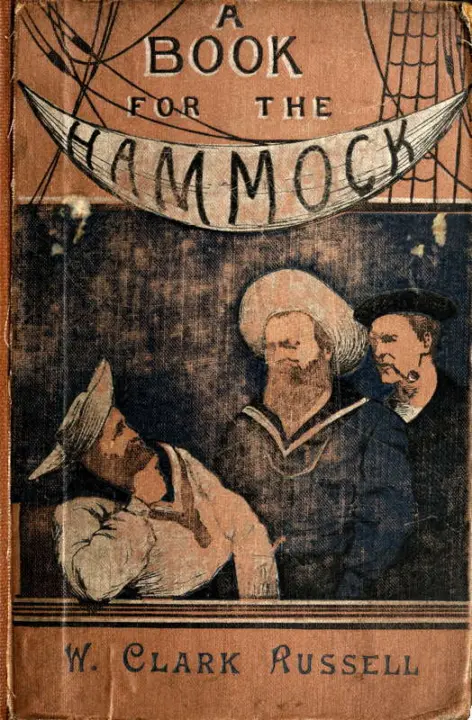
THE CLASSIC COLLECTION · 1887
"A Book for the Hammock" by William Clark Russell is a collection of nautical essays written in the late 19th century. The work reflects on the romanticism of sea life, contrasting past maritime adventures with the mechanized, prosaic realities of modern naval experiences. The essays explore themes of nostalgia for traditional seamanship, the loss of poetic engagement with the ocean, and the whimsical culture of sailors, including superstitions and life at sea. The opening of the book introduces readers to Russell's reflections on the decline of the "old romance of the sea" amid the advancements of steam-powered travel. He paints a vivid picture of a modern sailor's experience aboard a ship, pondering the beauty and mystery once associated with ocean voyages that seems lost in the face of progress. Russell laments the absence of wonder in contemporary maritime life, as sailors now rush through journeys stripped of the exploratory spirit that once characterized their trade. Through his contemplative prose, he creates a sense of longing for a bygone era filled with adventure and folklore, suggesting that the magic of the ocean has faded alongside the traditional ways of seafaring.
Introduction adapted from the source catalogue; source summaries may be automatically generated.
Free to read · English · 93,636 words · No account needed
MAKE TIME FOR A GOOD BOOK
On by default. Untick to stop anonymous reading totals. Each page counts after 10 seconds in view. How this works.
Anonymous counting is on unless you have switched it off.
I had been talking with an old seaman about the races between an English and an American yacht. My companion was a man who had spent the greater part of his life at sea, and was a sailor in the sense that includes not only smartness, alertness, and skill in those duties expected of seamen, but thorough knowledge of all that concerns ships, both in the fabrics of their hulls, and in their masts, yards, rigging, and canvas. He said to me that he was not sorry the Yankee had beaten the Englishman, because it might cause yachtsmen to see that beam must still be regarded as a condition of speed, and that the notion that swiftness was to be obtained by a shape that answered to Euclid’s definition of a line had been carried considerably too far. One thing leading to another, he spoke of schooner yachts, and said that, so far as racing was concerned, he fancied that the schooner rig was gradually sliding out of date.
“And yet,” said he, “I’m certain that if the prejudices of yachting skippers and yachting crews could be overcome, and owners induced to see the thing in its right light, the schooner yacht could be rendered a faster craft than the most splashing and frothing of the yawls or cutters which now seem capable of sailing round them. It was only the other day I was looking at a yacht race. There was a middling breeze blowing. I turned the glass upon a schooner that was in the race; she was ratching through it with spars almost erect, whilst the yawls lay down till their rail looked to be under. Why was that? Would not you say because the schooner hadn’t canvas enough? She was showing all she had; but she wanted more, and if more had been given her she would have been leading instead of hanging in the wake of the toys that were swirling ahead of her. What other canvas would I give her? Why, of course, I’d give her a fore-yard and a top-sail and a topgallant yard. Consider what a square sail would have done for that schooner. I’ve been sailing in a vessel of that rig when we’ve taken the square top-sail off her, and the moment that bit of canvas was clewed up you might have felt the way deadened in her as if she’d lost her life—as if all impulse was gone. The yachting skippers have got a prejudice against square canvas. It comes, in my opinion, in a good many cases, from the feeling that if they were shipmates with a top-sail-yard they wouldn’t quite know what to do with it. I’ve spoken to a good many of them upon the subject, and asked how it is that they don’t recommend their gents to rig their vessels with square yards forward; but their regular answer is, ‘Pooh! we don’t want no square sails. Who’s going to be bothered with bracing yards about and mucking up aloft after shipshape bunts when gaffs and booms ’ll blow us along as fast as we need to go?’ That’s what it comes to. ‘Who’s going to be bothered?’ A skipper said to me: ‘Take a vessel in stays. You’ve got your top-sail aback, and instead of shooting ahead as a fore-and-after will, she stops dead while she slowly comes round.’ That shows his ignorance. I’ve been ratching down the Mersey in a clipper schooner, and such way did she get from her square canvas, and such little notice did she take of her top-sail coming aback, that I’ve seen the skipper head her for the shore with a slow putting down of his helm to let her edge along, and I’ve watched her run for a good spell parallel with the shore before she came round on the other tack. The increased way the square canvas gives a schooner counterbalances whatever loss of way an aback top-sail is supposed to cause her. My own opinion of the advantage of that canvas is such that I’d undertake to fit a schooner yacht with a square rig forward on these terms: That I was allowed to sail her first; that if she beat I was to receive double pay for my services, and if she lost what I’d done should be at my own expense, and I’d restore her to her old rig free. Only fancy in ratching the pulling power you’d be giving to a schooner. Your foreyard is suspended by a truss, and if you choose you could sweat it fore and aft if you liked. There’s nothing in square canvas to prevent a schooner from lying up as close as if she was fore-and-aft rigged. Naturally schooners ’ll go to leeward and be lost sight of as racers if the canvas they compete under is out of all proportion with the canvas that yawls and cutters spread. This is my notion, anyway, and such is my faith in my own opinion that I’m willing to stand or fall by it on the terms I’ve given you, if so be any owner of a schooner yacht is agreeable to give me the chance.”
Your reading position is saved on this browser. Take it to another device with a library code. Reading pages adapt to text, rather than matching a printed edition.
William Clark Russell

William Clark Russell
William Clark Russell

William Clark Russell
BEHIND THE BOOK
This eBook is for the use of anyone anywhere in the United States and most other parts of the world at no cost and with almost no restrictions whatsoever. You may copy it, give it away or re-use it under the terms of the Project Gutenberg License included with this eBook or online at www.gutenberg.org. If you are not located in the United States, you will have to check the laws of the country where you are located before using this eBook. Read the source licence.
The original source file, including credits and licence, is retained by this library. Request an original-format copy at no charge. Please include the book title and Project Gutenberg identifier #61207.
KEEP YOUR CURIOSITY GOING
Wilfrid Scawen Blunt
Wilfrid Scawen Blunt

E. W. (Edgar Watson) Howe

David Patterson (Spirit) Hatch

David Patterson (Spirit) Hatch

David Patterson (Spirit) Hatch