
List, Ye Landsmen! A Romance of Incident
William Clark Russell
THE CLASSIC COLLECTION · 1887
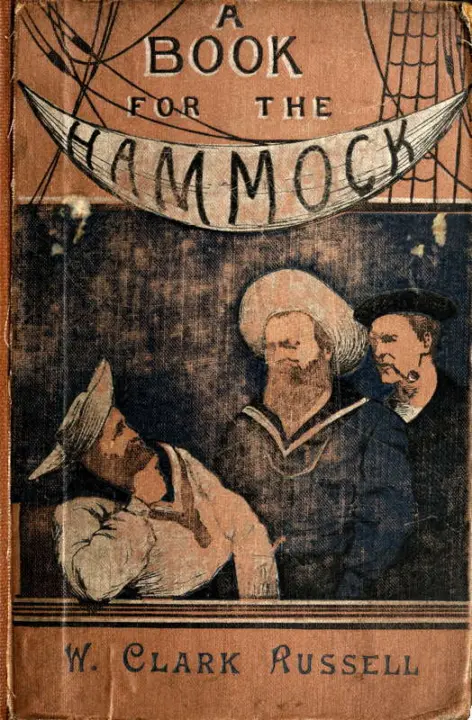
"A Book for the Hammock" by William Clark Russell is a collection of nautical essays written in the late 19th century. The work reflects on the romanticism of sea life, contrasting past maritime adventures with the mechanized, prosaic realities of modern naval experiences. The essays explore themes of nostalgia for traditional seamanship, the loss of poetic engagement with the ocean, and the whimsical culture of sailors, including superstitions and life at sea. The opening of the book introduces readers to Russell's reflections on the decline of the "old romance of the sea" amid the advancements of steam-powered travel. He paints a vivid picture of a modern sailor's experience aboard a ship, pondering the beauty and mystery once associated with ocean voyages that seems lost in the face of progress. Russell laments the absence of wonder in contemporary maritime life, as sailors now rush through journeys stripped of the exploratory spirit that once characterized their trade. Through his contemplative prose, he creates a sense of longing for a bygone era filled with adventure and folklore, suggesting that the magic of the ocean has faded alongside the traditional ways of seafaring.
Introduction adapted from the source catalogue; source summaries may be automatically generated.
Free to read · English · 93,636 words · No account needed
MAKE TIME FOR A GOOD BOOK
On by default. Untick to stop anonymous reading totals. Each page counts after 10 seconds in view. How this works.
Anonymous counting is on unless you have switched it off.
There were Customs’ seizures, too, such as we never hear the like of now. You read of an officer of Excise at Falmouth seizing on board a ship twenty-seven thousand five hundred and twenty-nine pounds of tea, and nine thousand gallons of brandy! “The officer by this gets £3000. It is the greatest seizure of tea ever known.” Or, “Arrived, the Providence, smuggling lugger, of Palferro, with nine hundred and seventy ankers of brandy and thirteen tons of tobacco, sent in by l’Oiseau, of thirty-six guns, Captain Linzee.” The old reports teem with examples of this kind.
Yet, spite of rich prizes, smuggling captures, and the like, Jack was always hard up, and by impecuniosity in a chronic state of being “forced from home and all its pleasures.” There was alive in 1790 an old man, one John Holmes, the only survivor of the crew who accompanied Anson round the world. He was in the most distressing poverty. He would tell the story of the fight between the Centurion and the galleon, and of the prize-money that fell to the men’s shares; but when asked what he had done with the substantial sum which had come to him, his answer was, “Alas! sir, I was a sailor.” Sir George Rooke put it more nobly, if less pathetically. When he was making his will, some friends who were present expressed their surprise that he had not more to bequeath. “I do not leave much,” answered the old heart of oak, “but what I do leave was honestly acquired; it never cost a sailor a tear or my country a farthing.”
The wonder is that ships went so richly laden in those war times. If it was thought proper to convoy vessels of comparatively small value, it was surely desirable to guard against the cruisers and the privateers the vast accumulations of money and plate which were to be met with in Spanish, French, and Dutch bottoms in the corsair-infested Narrow Seas, in Biscayan parallels, and in the wide Pacific Ocean. Anson’s galleon was, indeed, a powerful ship for those times, yet she proved no match for the slender and crippled company of men who attacked her. Had she been convoyed, had she been in company with other vessels of her nation, the British commodore must have languished in vain for the immense treasure in her. The need of a guard, an auxiliary, of some protection to supplement her own powder and shot seems to us, gazing backwards with clear perception of the issues which followed, essential to the safety of the plate or treasure ship in times when it would appear that the stoutest-hearted of Spanish or French captains were unable to rally their men when the English colours at the masthead acquainted them with the nationality of the foe. For example: On November 6, 1799, there arrived at Dartmouth a Spanish ship, of six hundred tons burden, named the N.S. de Piedat, prize to a privateer called the Dart. She mounted sixteen carriage guns, carried seventy men, and was fitted up for close quarters, that is to say, she was furnished with “barricadoes” as a refuge for her crew in case of being boarded. She struck to the privateer, however, after firing only two guns, though the Englishmen mounted but fourteen four-pounders. Nevertheless, seventy seamen—Spanish sailors—in a ship of six hundred tons seem a feeble company to send along with such wealth as lay in the N.S. de Piedat’s hold. Here is her value: one hundred and forty-two thousand one hundred and seventeen silver dollars, thirty-eight thousand nine hundred and forty-nine dollars in gold doubloons, thirty-one ingots of gold, five ingots of silver, forty-two bales of fine beaver, twenty-one thousand and sixty-one hides in the hair, three bales of fine wool, one bale of fine fur. The rest of the cargo, exclusive of the gold and silver, was valued at £80,000. The Dart carried sixty seamen. What conceivable chance would seventy Spaniards have against such a crew as the Dart could oppose to them—fellows whose living depended upon plunder, and who could almost count upon the enemy’s striking after the first hail or after the first two shots? It was a very cosy haul for the Dart’s people. Small wonder that the privateer should have formed an abounding ocean element, when the character of the prey and the quality of the baggings are considered. “Eight ships long expected from New Spain, and another from Buenos Ayres, arrived at Cadiz the 21st of this month. The cargoes of these ships are valued at eleven millions of dollars, of which the registered gold and silver amount to near nine millions.” Such paragraphs are again and again to be met with in the news sheets of old times.
Your reading position is saved on this browser. Take it to another device with a library code. Reading pages adapt to text, rather than matching a printed edition.
William Clark Russell

William Clark Russell
William Clark Russell

William Clark Russell
BEHIND THE BOOK
This eBook is for the use of anyone anywhere in the United States and most other parts of the world at no cost and with almost no restrictions whatsoever. You may copy it, give it away or re-use it under the terms of the Project Gutenberg License included with this eBook or online at www.gutenberg.org. If you are not located in the United States, you will have to check the laws of the country where you are located before using this eBook. Read the source licence.
The original source file, including credits and licence, is retained by this library. Request an original-format copy at no charge. Please include the book title and Project Gutenberg identifier #61207.
KEEP YOUR CURIOSITY GOING
Wilfrid Scawen Blunt
Wilfrid Scawen Blunt

E. W. (Edgar Watson) Howe

David Patterson (Spirit) Hatch

David Patterson (Spirit) Hatch

David Patterson (Spirit) Hatch