
List, Ye Landsmen! A Romance of Incident
William Clark Russell
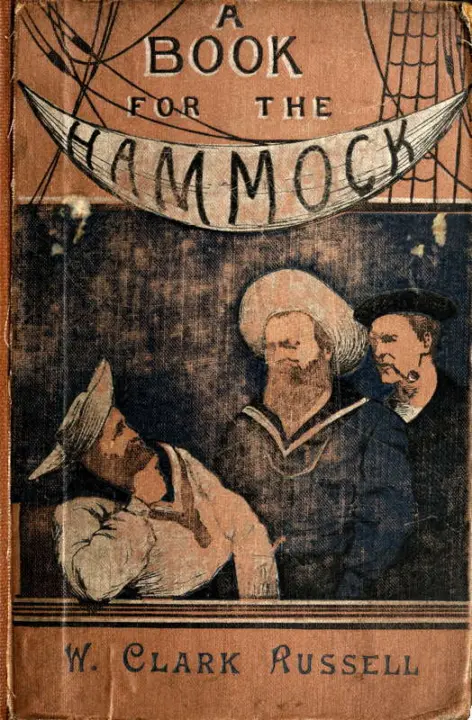
THE CLASSIC COLLECTION · 1887
"A Book for the Hammock" by William Clark Russell is a collection of nautical essays written in the late 19th century. The work reflects on the romanticism of sea life, contrasting past maritime adventures with the mechanized, prosaic realities of modern naval experiences. The essays explore themes of nostalgia for traditional seamanship, the loss of poetic engagement with the ocean, and the whimsical culture of sailors, including superstitions and life at sea. The opening of the book introduces readers to Russell's reflections on the decline of the "old romance of the sea" amid the advancements of steam-powered travel. He paints a vivid picture of a modern sailor's experience aboard a ship, pondering the beauty and mystery once associated with ocean voyages that seems lost in the face of progress. Russell laments the absence of wonder in contemporary maritime life, as sailors now rush through journeys stripped of the exploratory spirit that once characterized their trade. Through his contemplative prose, he creates a sense of longing for a bygone era filled with adventure and folklore, suggesting that the magic of the ocean has faded alongside the traditional ways of seafaring.
Introduction adapted from the source catalogue; source summaries may be automatically generated.
Free to read · English · 93,636 words · No account needed
MAKE TIME FOR A GOOD BOOK
On by default. Untick to stop anonymous reading totals. Each page counts after 10 seconds in view. How this works.
Anonymous counting is on unless you have switched it off.
The sudden emergence or subsidence of land would also help to confirm the ancient mariner in his belief in magic isles, and in their controlment by spells of necromancy. In an old nautical magazine, dated 1802, I find the following: “On the seventh of June, 1790, the Seahorse, Captain Mayo, of Boston, from the coast of Africa, saw (in lat. 73 south) a large point of land sink in one moment into the unfathomable deep! As soon as the crew recovered from the inexpressible horror which so tremendous a spectacle must have impressed on their minds, they steered to some ships catching whales, and found that their men had been spectators of the same awful scene. The seamen involuntarily dropped down upon their knees and thanked God for their escape, having been on the same point of land a short time before its sudden disappearance.”
They saw the land disappear; but suppose no other vessels had been in company, and it had chanced that none of the crew had seen the land sink, you have then the seeds of an amazing relation. Figure a dead calm, all hands below at dinner, and nobody on deck but the man at the wheel nodding drowsily over the spokes. The land was plain enough in sight, a mile distant, perhaps, when the crew left the deck; when they return it has vanished. Had it been a ship they would, of course, suppose that she had foundered. But land! is it possible that a tall, substantial mass of land shall vanish on a sudden like a wreath of tobacco smoke? Had the vessel been whirled away out of sight of it by a fierce current? Had she been insensibly blown some leagues along by a stout breeze of wind? No. The man at the wheel is questioned; he rubs his eyes, stares; it is the same marvel to him as to the others. Knowing something of the sailor’s character, I will venture to say that had not those men of the Seahorse actually seen the land go down, two-thirds of them would have gone to their graves persuaded that there had been witchcraft in the business. But put the date back three centuries, into the period of the real Ancient Mariner. He shall behold the cliff founder, if you please, and yet land at Plymouth or Erith with an imagination charged to bursting point with this obvious Satanic engorgement. I think I see him telling the story. Can his hearers, gazing upon his mahogany face, doubt that there are islands which rise and sink? and how can they rise or sink without magical possession, without being under the government of something to direct them? The ancient mariner may, indeed, be beforehand with a solution by importing, let me say, one jaw of a monstrous fish that did “suck ye londe down to ye admiration of ye beholders.” But failing some such explanation, the reason must be sought for devil-wards. The island or cliff easily becomes the abode of demons or of ocean-spirits, who use their dominions as a sort of ship, and who, when they desire a change of air or scene, alter their latitude and longitude by the easy expedient of a submarine excursion. Such a solution could not long miss of confirmation. For presently arrives some Elizabeth-Jonah, or some Ascension, of London, or Jesus, of Hull, with an extraordinary and incredible report: to wit, that being about fifty leagues to the westwards of the island of Madeira, there did happen a mighty commotion in the sea; the water boiled furiously, and out of the midst of it there arose a great flame that was followed by a thick black coil of smoke which emitted a most detestable stench. This, rising, did overspread the heavens with a sable canopy, through which the sun, that had before been ardent, glowed ruefully with a most affrighting face. When the atmosphere had somewhat cleared, and the sea fallen flat again, they observed a great heap of black land floating just where the flame had been; but now, to their great joy, a small gale happening, they hastily trimmed their sails to it and departed, with hearty thanksgiving for their merciful deliverance from a hideous and diabolic spot. There would be to the full as much truth in this as in the account of the subsidence. In every century there have been submarine volcanic disturbances which have dislodged or uphove points of land, rocks, little and even big islands. Suppose what these cheery old mariners beheld was, instead of land, a body of compacted weed; or, not impossibly, a dead whale. No matter! home with the thrilling story; and let any man be pilloried who shall dare to doubt that the rock that came up is not the very identical rock that went down!
Your reading position is saved on this browser. Take it to another device with a library code. Reading pages adapt to text, rather than matching a printed edition.
William Clark Russell

William Clark Russell
William Clark Russell

William Clark Russell
BEHIND THE BOOK
This eBook is for the use of anyone anywhere in the United States and most other parts of the world at no cost and with almost no restrictions whatsoever. You may copy it, give it away or re-use it under the terms of the Project Gutenberg License included with this eBook or online at www.gutenberg.org. If you are not located in the United States, you will have to check the laws of the country where you are located before using this eBook. Read the source licence.
The original source file, including credits and licence, is retained by this library. Request an original-format copy at no charge. Please include the book title and Project Gutenberg identifier #61207.
KEEP YOUR CURIOSITY GOING
Wilfrid Scawen Blunt
Wilfrid Scawen Blunt

E. W. (Edgar Watson) Howe

David Patterson (Spirit) Hatch

David Patterson (Spirit) Hatch

David Patterson (Spirit) Hatch