
List, Ye Landsmen! A Romance of Incident
William Clark Russell
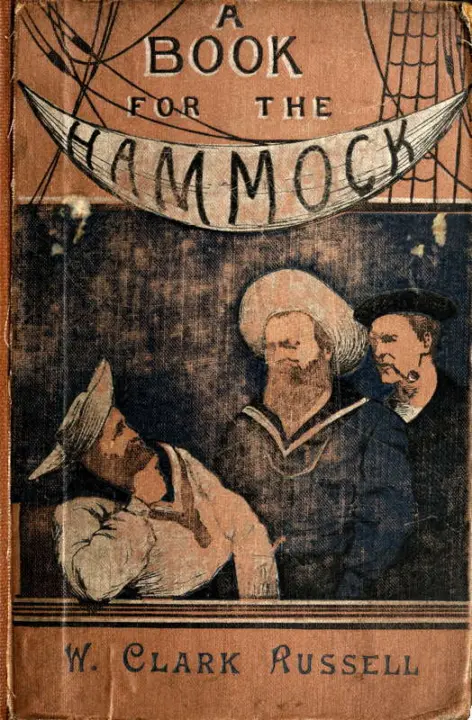
THE CLASSIC COLLECTION · 1887
"A Book for the Hammock" by William Clark Russell is a collection of nautical essays written in the late 19th century. The work reflects on the romanticism of sea life, contrasting past maritime adventures with the mechanized, prosaic realities of modern naval experiences. The essays explore themes of nostalgia for traditional seamanship, the loss of poetic engagement with the ocean, and the whimsical culture of sailors, including superstitions and life at sea. The opening of the book introduces readers to Russell's reflections on the decline of the "old romance of the sea" amid the advancements of steam-powered travel. He paints a vivid picture of a modern sailor's experience aboard a ship, pondering the beauty and mystery once associated with ocean voyages that seems lost in the face of progress. Russell laments the absence of wonder in contemporary maritime life, as sailors now rush through journeys stripped of the exploratory spirit that once characterized their trade. Through his contemplative prose, he creates a sense of longing for a bygone era filled with adventure and folklore, suggesting that the magic of the ocean has faded alongside the traditional ways of seafaring.
Introduction adapted from the source catalogue; source summaries may be automatically generated.
Free to read · English · 93,636 words · No account needed
MAKE TIME FOR A GOOD BOOK
On by default. Untick to stop anonymous reading totals. Each page counts after 10 seconds in view. How this works.
Anonymous counting is on unless you have switched it off.
Any reference to such a subject as the curiosities of marine disaster must include this amazing narrative, thrice told as it may be. As an escape there is nothing to be compared to it in the maritime annals, though to be sure there is no lack of examples of miraculous salvation from capsizals. The spot where the Nerina struck is Porthellick, in St. Mary’s, Scilly. Two incidents in connection with this wreck increase the wonder of it. First, the want of fresh air threatening the men with death by suffocation, the mate worked with the desperation of a dying man almost incessantly for two days and one night to cut a hole with his knife through the hull. The knife broke; but for this the hole would have been made, with the result that the vessel must have instantly foundered owing to the liberation of the air that alone kept her buoyant. Second, it was afterwards shown that during the afternoon of Wednesday, the 18th, the wreck had been fallen in with, at about five miles from the island, by two pilot boats which towed her for an hour, but the ropes parting, the night approaching, and the weather looking dirty, they abandoned her, little conceiving that there were human beings alive in her hold. Had the vessel not been towed, the set of the current would have carried the wreck clear of the islands into the Atlantic!
The relater of this remarkable story states in a note that the account was furnished to him by Mr. Richard Pearce, Consular Agent for France. “As this gentleman,” he adds, “took great care in his examination of the case, there cannot be a doubt of its correctness throughout.”
The invention of a small fabric that sinks under water and rises to the surface at the will of her occupants should indicate a large approach towards the perfecting of the whole theory and practice of submarine warfare. Such a deadly, dangerous engine of destruction has been tried and not found wanting. Unhappily, I think; for unless the murderous inventions of our times are ultimately to render warfare impossible, by occasioning a common dread because of the swiftness and magnitude of the butchery—a probability not to be contemplated—one cannot but wish that the patentee would suffer some of the old elements of manhood to dignify and animate the conflicts of fleets and armies, by a succession of failures in the direction of a hidden and annihilating machinery. “So violent it is,” writes honest old Camden, of the cannon, “in breaking, tearing, bruising, renting, razing, and ruinating walles, towers, castles, ramparts, and all that it encountereth; that it might seem to have been invented by practice of the Devill to the destruction of mankinde as the onely enemy of true valour and manfull couragiousness, by murthering afar off.” Murthering afar off! very different, indeed, as a means of exemplifying courage from the hand-to-hand conflict of the sword and the spear. So Camden implies, speaking of the cannon of his time, a weapon that even the long-tailed guardians of the Taku forts twenty-five years ago would have disdained for their own jingalls. But what would that mostly learned Clarenceux, King of Arms, have found to say on the subject of “true valour and manfull couragiousness” had his theme, instead of the primitive engine whereof the effects as he himself describes were “destruction, violence, fury, and roaring crack,” been an electric boat in which men could go about their duties whilst under water, in which they could softly and hiddenly sneak under the keel of an ironclad of twelve thousand tons, containing a company of perhaps a thousand souls, and attach to her a machine that—after they had withdrawn, still under water, to a safe distance—would blow her and her people into fragments? This craft is no mere fancy; she is an accomplished fact, as the French say. It is not long since that the inventors tested her in the West India Docks. She is a cigar-shaped boat, sixty feet long, and displaces about fifty tons. They sank and raised her readily, kept her under water for some time, and then propelled her. I read that a supply of air—of fresh air—large enough to last for three days, may be stored in this terrible boat, so that the Jonahs who man her will be perhaps better off in the matter of oxygen or ozone than are the occupants of the common above-sea forecastle, even when their hatch is open.
Your reading position is saved on this browser. Take it to another device with a library code. Reading pages adapt to text, rather than matching a printed edition.
William Clark Russell

William Clark Russell
William Clark Russell

William Clark Russell
BEHIND THE BOOK
This eBook is for the use of anyone anywhere in the United States and most other parts of the world at no cost and with almost no restrictions whatsoever. You may copy it, give it away or re-use it under the terms of the Project Gutenberg License included with this eBook or online at www.gutenberg.org. If you are not located in the United States, you will have to check the laws of the country where you are located before using this eBook. Read the source licence.
The original source file, including credits and licence, is retained by this library. Request an original-format copy at no charge. Please include the book title and Project Gutenberg identifier #61207.
KEEP YOUR CURIOSITY GOING
Wilfrid Scawen Blunt
Wilfrid Scawen Blunt

E. W. (Edgar Watson) Howe

David Patterson (Spirit) Hatch

David Patterson (Spirit) Hatch

David Patterson (Spirit) Hatch