THE CLASSIC COLLECTION✦A dead man’s diaryCLASSIC FREE BOOKS
A dead man’s diary
Coulson Kernahan
THE CLASSIC COLLECTION · 1896
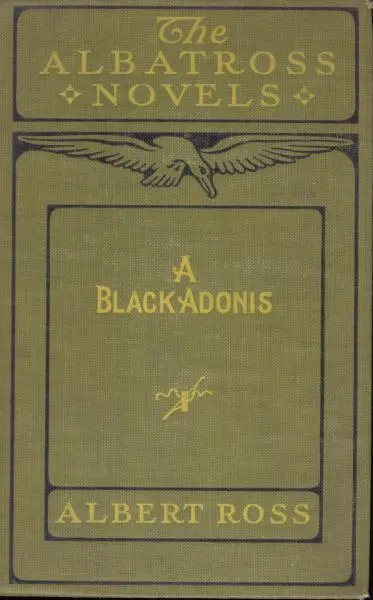
"A Black Adonis" by Albert Ross is a novel written in the late 19th century. The story centers on Shirley Roseleaf, a young aspiring author grappling with rejection from a prestigious publishing house, Cutt & Slashem, which he believes has overlooked his talent. The book explores themes of ambition, love, and the search for artistic validity against societal expectations. The opening of the novel introduces Shirley as he anxiously awaits a response from the publishers regarding his manuscript. When he receives a letter of rejection, he is devastated, yet it stirs a powerful sense of indignation and determination within him. The narrative quickly transitions from his despair to his confrontational visit to the publishing firm, revealing not only his emotional turmoil but also the contrasting views on his literary aspirations between him and the more pragmatic, business-minded characters he encounters. Alongside this journey, the introduction of Millicent Fern, another aspiring writer whose bold manuscript is also rejected, sets the stage for intertwining plots centered around love, literature, and self-discovery.
Introduction adapted from the source catalogue; source summaries may be automatically generated.
Free to read · English · 80,673 words · No account needed
MAKE TIME FOR A GOOD BOOK
On by default. Untick to stop anonymous reading totals. Each page counts after 10 seconds in view. How this works.
Anonymous counting is on unless you have switched it off.
This conversation only served to infuriate still more the visitor who stood waiting to pour out his wrath. Were these men wasting time over fractions of a cent in the price of stock, just after they had rejected one of the greatest romances of modern times!
With the precision of a duplex machine both partners finally looked up from the table at the young man.
"Mr. Shirley Roseleaf?" said Mr. Slashem, interrogatively, glancing at the card that the office boy had brought.
"Yes, sir!" was the sharp and disdainful reply.
"We need nothing in your line," interrupted Mr. Cutt. "I suppose Mr. Trimm has our other order well under way?"
The look of indignant protest that appeared in Roseleaf's face caused
Mr. Slashem to speak.
"This is not Mr. Roseberg," he explained. "My partner took you for an agent of our bookbinder," he added.
The novelist thought his skin would burst.
"I am quite complimented," he said, in an icy tone. "Let me introduce myself. I am the author of 'Evelyn's Faith.'"
The partners consulted each other.
"The similarity of names confused me," said Mr. Cutt. "Is your book one
that we have published?"
Saints and angels!
"It is one that was sent to you for publication," replied Roseleaf, with much heat, "and has been returned this morning--rejected!"
"Ah!" said Mr. Cutt.
"We have nothing to do with that department," said Mr. Slashem, coming to the rescue. "You should see Mr. Gouger, on the second floor above; though if he has rejected your story a visit would be quite useless. He never decides a matter without sufficient reason."
"Oh, dear, no!" added Mr. Cutt, feeling again of the paper samples.
Shirley Roseleaf listened with wild incredulity.
"Do you mean to tell me," he said, "that you, the members of the firm of Cutt & Slashem, have rejected my story without even reading it?"
The partners glanced at each other again.
"We never read books," said Mr. Cutt.
"Never," said Mr. Slashem, kindly. "We have things much more important to attend to. We pay Mr. Gouger a large salary. Why, my young friend, there are probably a dozen manuscripts received at our office every week. If we were to try to read them, who do you think would attend to the essential points of our business?"
Roseleaf's contempt for the concern was increasing at lightning speed. He did not care to mince his words, for it could make no difference now.
"I should imagine that the selection of the books you are to print would be at least as important as the paper you are to use," he retorted.
Mr. Cutt looked at him in great astonishment.
Your reading position is saved on this browser. Take it to another device with a library code. Reading pages adapt to text, rather than matching a printed edition.
BEHIND THE BOOK
This eBook is for the use of anyone anywhere in the United States and most other parts of the world at no cost and with almost no restrictions whatsoever. You may copy it, give it away or re-use it under the terms of the Project Gutenberg License included with this eBook or online at www.gutenberg.org. If you are not located in the United States, you will have to check the laws of the country where you are located before using this eBook. Read the source licence.
The original source file, including credits and licence, is retained by this library. Request an original-format copy at no charge. Please include the book title and Project Gutenberg identifier #26599.
KEEP YOUR CURIOSITY GOING
Coulson Kernahan

Maurice Baring
Frances Wright
Cécile Tormay

Frederic Jesup Stimson

W. H. P. (William Henry Pope) Jarvis