THE CLASSIC COLLECTION✦A dead man’s diaryCLASSIC FREE BOOKS
A dead man’s diary
Coulson Kernahan
THE CLASSIC COLLECTION · 1896
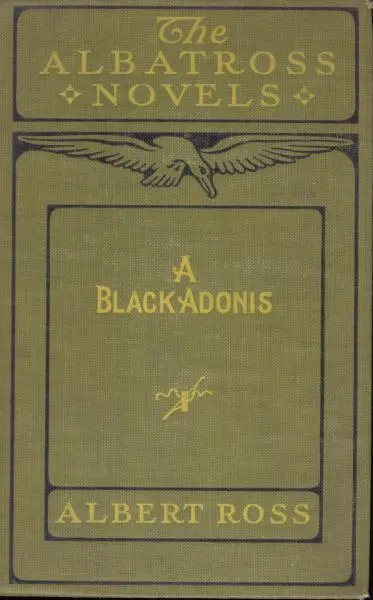
"A Black Adonis" by Albert Ross is a novel written in the late 19th century. The story centers on Shirley Roseleaf, a young aspiring author grappling with rejection from a prestigious publishing house, Cutt & Slashem, which he believes has overlooked his talent. The book explores themes of ambition, love, and the search for artistic validity against societal expectations. The opening of the novel introduces Shirley as he anxiously awaits a response from the publishers regarding his manuscript. When he receives a letter of rejection, he is devastated, yet it stirs a powerful sense of indignation and determination within him. The narrative quickly transitions from his despair to his confrontational visit to the publishing firm, revealing not only his emotional turmoil but also the contrasting views on his literary aspirations between him and the more pragmatic, business-minded characters he encounters. Alongside this journey, the introduction of Millicent Fern, another aspiring writer whose bold manuscript is also rejected, sets the stage for intertwining plots centered around love, literature, and self-discovery.
Introduction adapted from the source catalogue; source summaries may be automatically generated.
Free to read · English · 80,673 words · No account needed
MAKE TIME FOR A GOOD BOOK
On by default. Untick to stop anonymous reading totals. Each page counts after 10 seconds in view. How this works.
Anonymous counting is on unless you have switched it off.
"Don't think too badly of me because I happen to know what is clear to every man," he said, impressively.
"To every one?" she answered. "To your friend, Mr. Roseleaf?"
"Ah! He is an exception to all rules. And yet, Gouger says he can never write a successful book till he is more conversant with life than he is at present."
She looked troubled.
"With life?" she echoed. "With sin, do you mean?"
"With the ordinary things that men know, and that most of them at some
time experience."
Her bright eyes were temporarily clouded.
"What a pity!" she exclaimed.
"Yes," he said, for it was his humor to agree with her. "It is a pity."
There was a pause of a minute, and then she asked if she had read enough for one evening. He answered that as it was now past ten o'clock it would not be easy to get much farther and that he would come again whenever she chose to set the time.
"You do not say much about my work," she said, anxiously, as he prepared
to go.
"Silence is approval," he responded. "I can talk it over with you better when you have reached the end. I have things to say, and I shall not hesitate to say them then."
"When is it most convenient to you to come?" she inquired.
"Any time," he answered. "I don't do much that is really useful. But wait till you see Shirley. He will atone for the shortcomings you find in me."
She repeated the word "Shirley," as if to test its sound.
"You are your father's only child, are you not?" he asked, thoughtfully.
"No. I have a sister, Daisy, a little younger than I."
"And has she a literary turn, also?"
"Not in the least."
Archie arose, and Miss Millicent accompanied him to the front door. The tall negro came to open the portal, but Miss Fern told him, with the same quality of dislike in her tone which Weil had noticed before, that he need not wait.
"He is really a magnificent piece of humanity," said Archie, when the man had disappeared. "I never saw anything quite like him."
"You admire negroes, then?" said the young lady, almost impolitely.
"I like representatives of every race," he answered, as if not noticing her. "There are interesting specimens in all. I number among my acquaintances several Chinamen, a Moor, a Mexican, Jews, Portuguese and Russians innumerable. If that fellow was not in your employ I would engage him to-morrow, merely as a study."
Miss Fern took the hand he held out to her and set the next meeting for Saturday evening. Then she said:
Your reading position is saved on this browser. Take it to another device with a library code. Reading pages adapt to text, rather than matching a printed edition.
BEHIND THE BOOK
This eBook is for the use of anyone anywhere in the United States and most other parts of the world at no cost and with almost no restrictions whatsoever. You may copy it, give it away or re-use it under the terms of the Project Gutenberg License included with this eBook or online at www.gutenberg.org. If you are not located in the United States, you will have to check the laws of the country where you are located before using this eBook. Read the source licence.
The original source file, including credits and licence, is retained by this library. Request an original-format copy at no charge. Please include the book title and Project Gutenberg identifier #26599.
KEEP YOUR CURIOSITY GOING
Coulson Kernahan

Maurice Baring
Frances Wright
Cécile Tormay

Frederic Jesup Stimson

W. H. P. (William Henry Pope) Jarvis