THE CLASSIC COLLECTION✦A dead man’s diaryCLASSIC FREE BOOKS
A dead man’s diary
Coulson Kernahan
THE CLASSIC COLLECTION · 1896
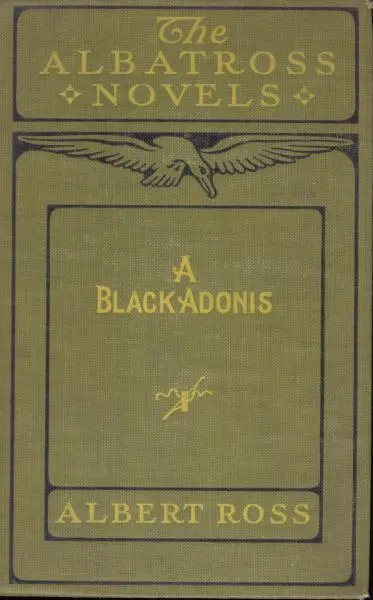
"A Black Adonis" by Albert Ross is a novel written in the late 19th century. The story centers on Shirley Roseleaf, a young aspiring author grappling with rejection from a prestigious publishing house, Cutt & Slashem, which he believes has overlooked his talent. The book explores themes of ambition, love, and the search for artistic validity against societal expectations. The opening of the novel introduces Shirley as he anxiously awaits a response from the publishers regarding his manuscript. When he receives a letter of rejection, he is devastated, yet it stirs a powerful sense of indignation and determination within him. The narrative quickly transitions from his despair to his confrontational visit to the publishing firm, revealing not only his emotional turmoil but also the contrasting views on his literary aspirations between him and the more pragmatic, business-minded characters he encounters. Alongside this journey, the introduction of Millicent Fern, another aspiring writer whose bold manuscript is also rejected, sets the stage for intertwining plots centered around love, literature, and self-discovery.
Introduction adapted from the source catalogue; source summaries may be automatically generated.
Free to read · English · 80,673 words · No account needed
MAKE TIME FOR A GOOD BOOK
On by default. Untick to stop anonymous reading totals. Each page counts after 10 seconds in view. How this works.
Anonymous counting is on unless you have switched it off.
The authoress was so delighted with this announcement that she conquered the slight wound to her pride. It would be herself still who had drawn the picture, who had put the coloring into it; all that the other would have to do might be described as varnishing. She took up the first sheet of her writing, and turned up an oil lamp that stood upon the table at her elbow, the better to see the lines.
"Are you ready?" she asked.
"Quite ready," smiled Mr. Weil.
In a voice that trembled a little, and yet not unpleasantly to the listener, Miss Fern began to read her manuscript. The opening chapter introduced the heroine and two gentlemen, either one of whom might be the hero. As the book is now so well known it is needless to transfer its features to these pages.
Presently the authoress paused and seemed to wait for her guest's
criticism.
"That is one chapter," she said.
"Yes. I remember. And the second one is where Algernon begins to disclose a very little of his true nature. Shall we not have that now?"
"As you like. I thought perhaps you would give me advice as we
proceeded, some fault-finding here and there, a suggestion of
alterations."
He shook his head affably.
"Not yet," he answered. "Up to this point I see nothing that requires
condemnation."
"Nor praise, perhaps?" she said, in a low tone.
"That might be true, also," he replied. "The first chapter of a novel is only the laying of the cloth and the placing of a few dishes. The viands that form the meal are still in the kitchen."
She smiled at the simile.
"But even the laying of the cloth is important," she said.
"Your cloth is laid most admirably," he answered. "And now we will have the castor, which in this case, I believe, contains a certain quantity of mustard and red pepper."
At this she laughed the more, and glanced through a few of the sheets in her hands before she spoke again.
"Did you form any opinion about--about me--from this story?" she asked, constrainedly. "Did you, in brief, think it had taken a bold girl to write it?"
He hesitated a moment.
"Yes," he said, at last. "A bold girl, a daring girl, a brave girl. Not one, however, whose own conduct would necessarily be like that of the woman she has delineated."
She was so pleased that she put down the MSS. and leaned toward him with both hands clasped together.
"You are very, very kind," she said, impressively.
Your reading position is saved on this browser. Take it to another device with a library code. Reading pages adapt to text, rather than matching a printed edition.
BEHIND THE BOOK
This eBook is for the use of anyone anywhere in the United States and most other parts of the world at no cost and with almost no restrictions whatsoever. You may copy it, give it away or re-use it under the terms of the Project Gutenberg License included with this eBook or online at www.gutenberg.org. If you are not located in the United States, you will have to check the laws of the country where you are located before using this eBook. Read the source licence.
The original source file, including credits and licence, is retained by this library. Request an original-format copy at no charge. Please include the book title and Project Gutenberg identifier #26599.
KEEP YOUR CURIOSITY GOING
Coulson Kernahan

Maurice Baring
Frances Wright
Cécile Tormay

Frederic Jesup Stimson

W. H. P. (William Henry Pope) Jarvis