THE CLASSIC COLLECTION✦A dead man’s diaryCLASSIC FREE BOOKS
A dead man’s diary
Coulson Kernahan
THE CLASSIC COLLECTION · 1896
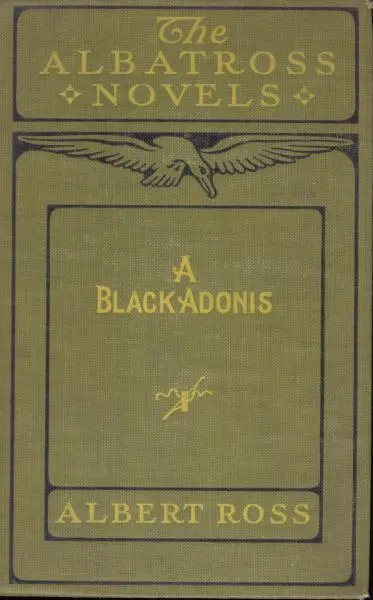
"A Black Adonis" by Albert Ross is a novel written in the late 19th century. The story centers on Shirley Roseleaf, a young aspiring author grappling with rejection from a prestigious publishing house, Cutt & Slashem, which he believes has overlooked his talent. The book explores themes of ambition, love, and the search for artistic validity against societal expectations. The opening of the novel introduces Shirley as he anxiously awaits a response from the publishers regarding his manuscript. When he receives a letter of rejection, he is devastated, yet it stirs a powerful sense of indignation and determination within him. The narrative quickly transitions from his despair to his confrontational visit to the publishing firm, revealing not only his emotional turmoil but also the contrasting views on his literary aspirations between him and the more pragmatic, business-minded characters he encounters. Alongside this journey, the introduction of Millicent Fern, another aspiring writer whose bold manuscript is also rejected, sets the stage for intertwining plots centered around love, literature, and self-discovery.
Introduction adapted from the source catalogue; source summaries may be automatically generated.
Free to read · English · 80,673 words · No account needed
MAKE TIME FOR A GOOD BOOK
On by default. Untick to stop anonymous reading totals. Each page counts after 10 seconds in view. How this works.
Anonymous counting is on unless you have switched it off.
"I can endure anything now," he said. "You love me, Daisy--can it be true? I will go in with you--and I will wait. But not too long, my sweetheart; do not make me wait too long. Repent your confession, indeed! If you do, it will be from no fault of mine. Daisy!"
As he said these things they were gradually nearing the piazza, where the negro was taking in the chairs.
"I have something pleasant to tell you," whispered Daisy. "You don't like Hannibal. Well, he is going away soon."
Roseleaf assumed surprise.
"Has your father discharged him?" he asked.
"No, he intends to leave of his own accord. He believes himself fitted for better work. Hush! He may hear you."
As they passed the servant, Daisy said, "Good-evening, Hannibal." It was her invariable custom, and she spoke with the greatest courtesy. But in this case the negro did not raise his eyes, nor turn his head toward her, nor make the slightest sign to show that he heard.
It was too much for Roseleaf, and he stopped.
"Did you hear Miss Daisy address you?" he demanded, sharply.
Hannibal looked up, with a curious mixture of amusement, contempt and
hate in his dark face.
"I did," he answered.
"Why did you not answer?"
"Because I did not choose."
Daisy threw herself in front of Roseleaf, just in time to prevent
Hannibal's receiving a blow.
"Oh, stop!" she exclaimed, "I beg you!"
The noise and the sound of raised voices brought Mr. Fern and his other daughter, with Archie Weil, to the door. Mr. Fern took in the situation at a glance, and his troubled face grew more distressed.
"Mr. Roseleaf," he said, speaking as if the words choked him, "I am surprised--that you should--hold an altercation like this--in my daughter's presence."
Roseleaf did not know what to do or say. Daisy's pleading eyes decided him, much against his judgment, to drop the matter where it was, galling to his pride though it might be. He escorted his sweetheart into the parlor, where the entire party followed, in a most uncomfortable state of mind.
"How can you permit that negro to insult your guests?" demanded Millicent, as soon as the door was closed. "It is beyond belief. If he is master of this house it is time the rest of us left it. I am certain Mr. Roseleaf did not act without great provocation."
Before Mr. Fern could answer, Daisy had spoken.
"It is over now, and there is nothing to be said. Hannibal is going away in a few days, and that will end your trouble."
Your reading position is saved on this browser. Take it to another device with a library code. Reading pages adapt to text, rather than matching a printed edition.
BEHIND THE BOOK
This eBook is for the use of anyone anywhere in the United States and most other parts of the world at no cost and with almost no restrictions whatsoever. You may copy it, give it away or re-use it under the terms of the Project Gutenberg License included with this eBook or online at www.gutenberg.org. If you are not located in the United States, you will have to check the laws of the country where you are located before using this eBook. Read the source licence.
The original source file, including credits and licence, is retained by this library. Request an original-format copy at no charge. Please include the book title and Project Gutenberg identifier #26599.
KEEP YOUR CURIOSITY GOING
Coulson Kernahan

Maurice Baring
Frances Wright
Cécile Tormay

Frederic Jesup Stimson

W. H. P. (William Henry Pope) Jarvis