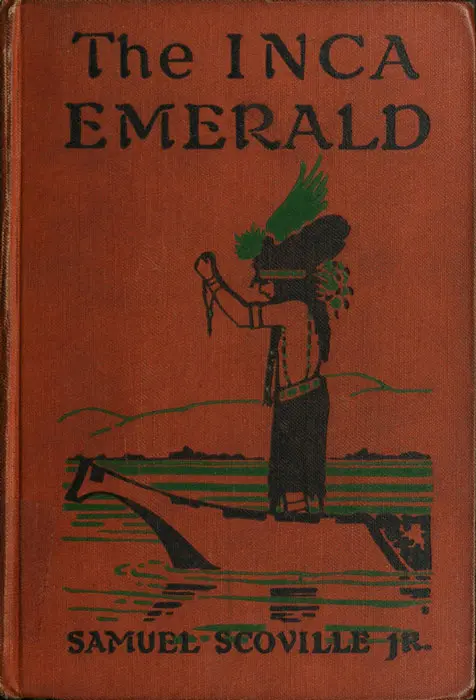
The Inca Emerald
Samuel Scoville
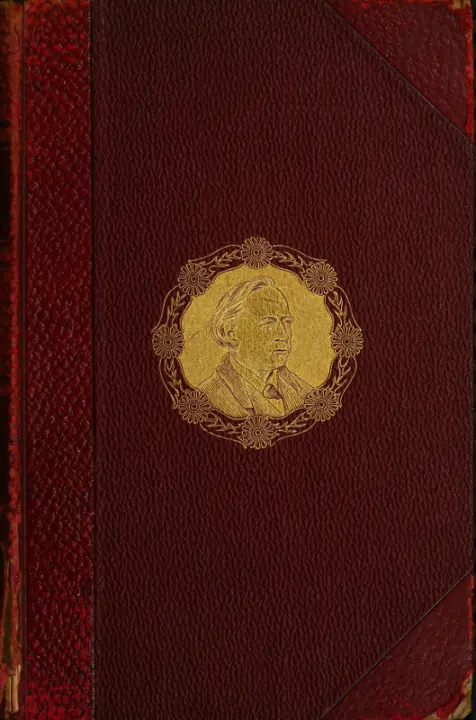
THE CLASSIC COLLECTION · 1888
"A Biography of Rev. Henry Ward Beecher" by Wm. C. Beecher and Rev. Samuel Scoville is a historical account written in the late 19th century. This biography recounts the life and influential career of Henry Ward Beecher, a prominent preacher and social reformer known for his passionate advocacy against slavery and his significant role in American religious life. The narrative captures not only Beecher's personal journey but also the societal transformations he engaged with throughout his life. The opening of the biography introduces readers to Beecher’s ancestry and his family's background, highlighting the strong moral and intellectual influences of both his father, Lyman Beecher, a noted preacher, and his mother, Roxana Foote. The authors detail the early environment in which Henry was raised, emphasizing both the personal qualities he inherited and the familial context that shaped his future perspectives and ambitions. Through rich descriptions of his childhood experiences in the picturesque town of Litchfield, the narrative sets the stage for understanding how these early influences would later fuel his passions and drive him in his efforts for reform and social justice.
Introduction adapted from the source catalogue; source summaries may be automatically generated.
Free to read · English · 279,799 words · No account needed
MAKE TIME FOR A GOOD BOOK
On by default. Untick to stop anonymous reading totals. Each page counts after 10 seconds in view. How this works.
Anonymous counting is on unless you have switched it off.
“If I had had the influence of a discreet, sympathetic Christian person to brood over and help and encourage me, I should have been a Christian child from my mother’s lap, I am persuaded; but I had no such influence. The influences of a Christian family were about me, to be sure, but they were generic; and I revolved in these speculative experiences, my strong religious habitudes taking the form of speculation all through my childhood. I recollect that from the time that I was about ten years old I began to have periods when my susceptibilities were so profoundly impressed that the outward manifestations of my nature were changed. I remember that when my brother George—who was next older than I, and who was beginning to be my helpful companion, to whom I looked up—became a Christian, being awakened and converted in college, it seemed as though a gulf had come between us, and as though he was a saint on one side of it while I was a little reprobate on the other side. It was awful to me. If there had been a total eclipse of the sun I should not have been in more profound darkness outwardly than I was inwardly. I did not know whom to go to; I did not dare to go to my father; I had no mother that I ever went to at such a time; I did not feel like going to my brother; and I did not go to anybody. I felt that I must try to wrestle out my own salvation.
“Once, on coming home, I heard the bell toll, and I learned that it was for the funeral of one of my companions with whom I had been accustomed to play, and with whom I had grown up. I did not know that he had been sick, but he had dropped into eternity; and the ringing, swinging, booming of that bell, if it had been the sound of an angel trumpet of the last day, would not have seemed to me more awful. I went into an ecstasy of anguish. At intervals, for days and weeks, I cried and prayed. There was scarcely a retired place in the garden, in the wood-house, in the carriage-house, or in the barn that was not a scene of my crying and praying. It was piteous that I should be in such a state of mind, and that there should be nobody to help me and lead me out into the light. I do not recollect that to that day one word had been said to me, or one syllable had been uttered in the pulpit, that led me to think there was any mercy in the heart of God for a sinner like me. For a sinner that had repented it was thought there was pardon; but how to repent was the very thing I did not know. A converted sinner might be saved, but for a poor, miserable, faulty boy, that pouted, and got mad at his brothers and sisters, and did a great many naughty things, there was no salvation so far as I had learned. My innumerable shortcomings and misdemeanors were to my mind so many pimples that marked my terrible depravity; and I never had the remotest idea of God except that he was a Sovereign who sat with a sceptre in his hand and had his eye on me, and said: ‘I see you, and I am after you.’ So I used to live in perpetual fear and dread, and often I wished myself dead. I tried to submit and lay down the weapons of my rebellion, I tried to surrender everything; but it did not seem to do any good, and I thought it was because I did not do it right. I tried to consecrate myself to God, but all to no purpose. I did everything, so far as I could, that others did who professed to be Christians, but I did not feel any better. I passed through two or three revivals. I remember, when Mr. Nettleton was preaching in Litchfield, going to carry a note to him from father; and for a sensitive, bashful boy like me it was a severe ordeal. I went to the room where he was speaking, with the note in my trembling hand, and had to lay it on the desk beside him. Before I got half-way across the floor I was dazed and everything seemed to swim around me; but I made out to get the note to him, and he said: ‘That’s enough; go away, boy,’ and I sort of backed and stumbled toward the door (I was always stumbling and blundering in company), and sat down. He was preaching in those whispered tones which always seem louder than thunder to the conscience, although they are only whispers in the ear. He had not uttered more than three sentences before my feelings were excited, and the more I listened the more awful I felt; and I said to myself: ‘I will stay to the inquiry meeting.’ I heard Mr. Nettleton talk about souls writhing under conviction, and I thought my soul was writhing under conviction. I had heard father say that after persons had writhed under conviction a week or two they began to come out, and I said: ‘Perhaps I will get out’; and that thought produced in me a sort of half-exhilaration of joy. I stayed to the inquiry meeting, felt better, and trotted home with the hope that I was on the way toward conversion. I went through this revival with that hope strengthened; but it did not last long.”
Your reading position is saved on this browser. Take it to another device with a library code. Reading pages adapt to text, rather than matching a printed edition.
Samuel Scoville
Samuel Scoville
Samuel Scoville
BEHIND THE BOOK
This eBook is for the use of anyone anywhere in the United States and most other parts of the world at no cost and with almost no restrictions whatsoever. You may copy it, give it away or re-use it under the terms of the Project Gutenberg License included with this eBook or online at www.gutenberg.org. If you are not located in the United States, you will have to check the laws of the country where you are located before using this eBook. Read the source licence.
The original source file, including credits and licence, is retained by this library. Request an original-format copy at no charge. Please include the book title and Project Gutenberg identifier #55330.
KEEP YOUR CURIOSITY GOING

David Patterson (Spirit) Hatch

David Patterson (Spirit) Hatch

David Patterson (Spirit) Hatch
Cécile Tormay

Moritz Busch
John L. Ransom