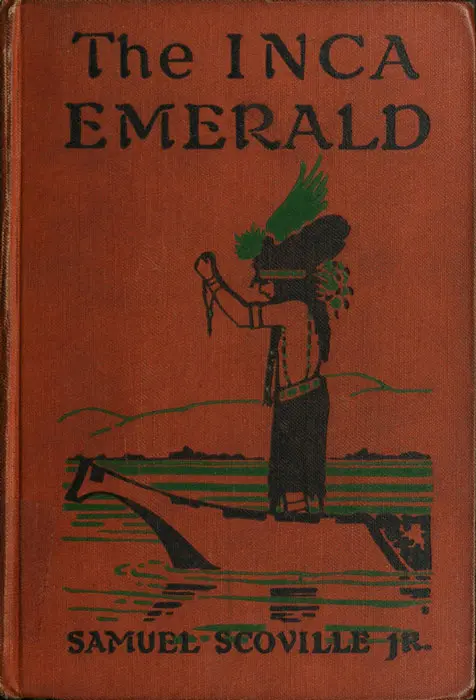
The Inca Emerald
Samuel Scoville
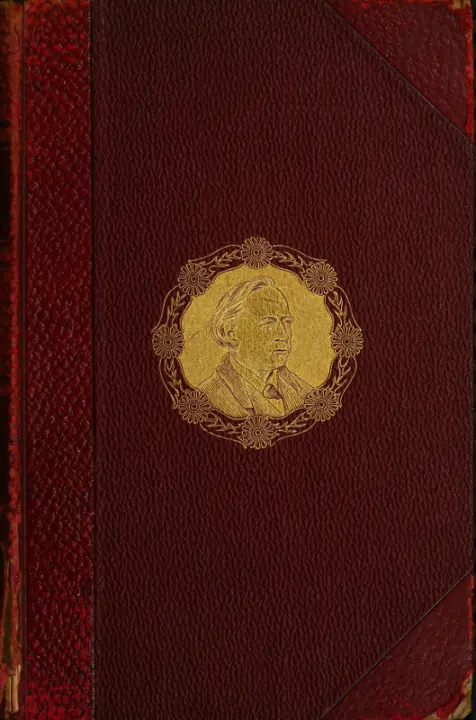
THE CLASSIC COLLECTION · 1888
"A Biography of Rev. Henry Ward Beecher" by Wm. C. Beecher and Rev. Samuel Scoville is a historical account written in the late 19th century. This biography recounts the life and influential career of Henry Ward Beecher, a prominent preacher and social reformer known for his passionate advocacy against slavery and his significant role in American religious life. The narrative captures not only Beecher's personal journey but also the societal transformations he engaged with throughout his life. The opening of the biography introduces readers to Beecher’s ancestry and his family's background, highlighting the strong moral and intellectual influences of both his father, Lyman Beecher, a noted preacher, and his mother, Roxana Foote. The authors detail the early environment in which Henry was raised, emphasizing both the personal qualities he inherited and the familial context that shaped his future perspectives and ambitions. Through rich descriptions of his childhood experiences in the picturesque town of Litchfield, the narrative sets the stage for understanding how these early influences would later fuel his passions and drive him in his efforts for reform and social justice.
Introduction adapted from the source catalogue; source summaries may be automatically generated.
Free to read · English · 279,799 words · No account needed
MAKE TIME FOR A GOOD BOOK
On by default. Untick to stop anonymous reading totals. Each page counts after 10 seconds in view. How this works.
Anonymous counting is on unless you have switched it off.
Moulton, Frank, assurances of, to H. W. Beecher, 496, 497;
urges him to write to Mrs. Tilton, 507;
urges letter from, clearing Tilton, 515;
letter to, June 1, 1873, 517;
innocence of, affirms, 518.
Conspiracy against Mr. Beecher, joins, 494.
Indicted by Grand Jury, 533.
Investigating Committee, fails to attend, 529.
Part of, in $5,000 to Tilton, 519.
Tilton’s cause, advocacy of, 505.
Wife of, dropped by Plymouth, results, 534.
Montague, George, recollections by, of H. W. Beecher, 93, 95.
Mount Pleasant Institute, appearance of, in 1849, 107;
Beecher, H. W., enters, 93;
lotteries at, 118;
standing of, 94.
Mount Tom Hill (Litchfield), 30;
signal station at, ancient, 31.
Music, H. W. Beecher’s early work in, 92, 124, 138, 139, 144;
church music, an old method of, 363,
reform in, 365;
“Plymouth Collection,” compilation of, 363–366;
hymn-music, H. W. Beecher’s views on, 366–367;
organ, value of, to H. W. Beecher, 600.
Napoleon III., Mexican campaign of, sympathy with Confederacy, 399.
Negroes, H. W. Beecher on help to fugitive, 240, 241,
on return of, 252;
on social ostracism of, 247;
on treatment of, at North, 247, 248, 303;
on freedom given to eight, 263;
on benefits to, from admission of South, 463, 467;
suffrage refused to, 474.
Nettleton, Mr., revival by, at Litchfield, 77, 80.
Newell, Constantine, character of, 106;
covenant of, with H. W. Beecher, 104;
history of, 105.
New England, H. W. Beecher a product of, 25, 26;
influence of, on the nation, 25;
slavery in, Mr. Beecher on, 250.
New Jersey, slave erased from Prayer-Book of, 254.
New York, law of, as to slaves, 251.
New York City, corrupt judiciary of (1867–71), 572.
North, the, admission of Southern States, fear from, 466, 467;
blockade by, in 1863, 399;
feeling at, against Compromise, 235, 236,
for Compromise, 238;
Fugitive Slave Law, abhorrence of, 239, 240;
industry in, universal, 418;
merchants at, black-listed, 247;
political parties in, in 1863, 398;
population and intelligence of country resident in, 413;
Rebellion, military ardor in, in 1861, 314, 315,
desolation from, 315,
unity of, not to be broken by, 327,
conflicting schemes in, 330,
army of, in 1863, 397;
slavery at, abolition of, 251;
soldiers of, on exclusion of South, 461, 462;
Sumter, Fort, excitement over fall of, 314;
workingman, doctrine as to (1863), 419.
Norwich, N. Y., H. W. Beecher on, 389.
“Nutplains,” Roxana Foote at, 22–24, 26, 27.
Omnibus Bill, Clay’s, 236.
Omnibuses of New York and negroes, 247, 248.
Ostend Manifesto, the, 280.
Oxford Presbytery, rule of, as to licenses, 159, 166; H. W. Beecher examined by, 161, 162, 166.
Paris, France, H. W. Beecher’s visit to, its art-galleries, 346–348.
Parker, Theodore, H. W. Beecher on, 380, 381.
Parker, Dr. (London), tribute of, to Mr. Beecher, 669.
Parker, — (Litchfield), reminiscence of, 37.
Parker controversy, the, 257–262.
Peekskill, N. Y., farm at, 383;
description, 619, 620;
cottage at, 620;
old apple-tree at, 621;
products of, 623;
flowers at, 626;
new house at, 628–630,
decoration of, 630;
trees and shrubs at, 630, 632;
fowls at, 634,
the patent hatcher, 635;
cattle at, 636;
bees at, 636, 637;
dogs at, 637,
“Tommy,” 638.
Phillips, Wendell, experiences of, in Brooklyn, 246.
Phrenology, H. W. Beecher’s adoption of, 130.
Pierce, Pres., Ostend Manifesto inspired by, 280;
peace, hopes for, 265;
qualifications of, for office, 257.
Pierce, Misses, ladies’ school of, at Litchfield, 34;
reminiscence of, 36.
“Pinky,” freedom of, bought at Plymouth, 294–296.
Your reading position is saved on this browser. Take it to another device with a library code. Reading pages adapt to text, rather than matching a printed edition.
Samuel Scoville
Samuel Scoville
Samuel Scoville
BEHIND THE BOOK
This eBook is for the use of anyone anywhere in the United States and most other parts of the world at no cost and with almost no restrictions whatsoever. You may copy it, give it away or re-use it under the terms of the Project Gutenberg License included with this eBook or online at www.gutenberg.org. If you are not located in the United States, you will have to check the laws of the country where you are located before using this eBook. Read the source licence.
The original source file, including credits and licence, is retained by this library. Request an original-format copy at no charge. Please include the book title and Project Gutenberg identifier #55330.
KEEP YOUR CURIOSITY GOING

David Patterson (Spirit) Hatch

David Patterson (Spirit) Hatch

David Patterson (Spirit) Hatch
Cécile Tormay

Moritz Busch
John L. Ransom