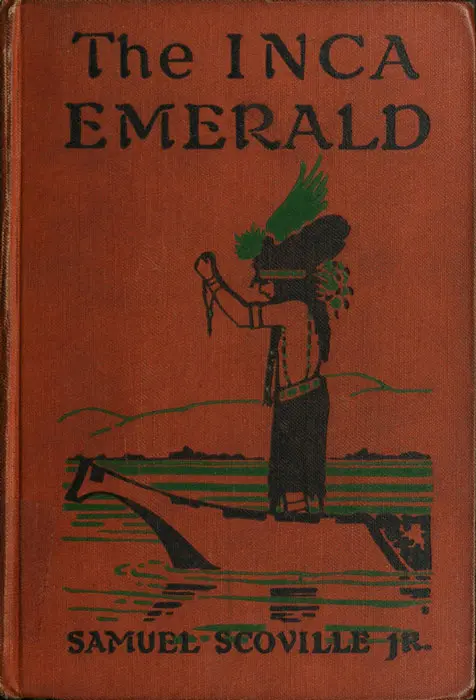
The Inca Emerald
Samuel Scoville
THE CLASSIC COLLECTION · 1888
"A Biography of Rev. Henry Ward Beecher" by Wm. C. Beecher and Rev. Samuel Scoville is a historical account written in the late 19th century. This biography recounts the life and influential career of Henry Ward Beecher, a prominent preacher and social reformer known for his passionate advocacy against slavery and his significant role in American religious life. The narrative captures not only Beecher's personal journey but also the societal transformations he engaged with throughout his life. The opening of the biography introduces readers to Beecher’s ancestry and his family's background, highlighting the strong moral and intellectual influences of both his father, Lyman Beecher, a noted preacher, and his mother, Roxana Foote. The authors detail the early environment in which Henry was raised, emphasizing both the personal qualities he inherited and the familial context that shaped his future perspectives and ambitions. Through rich descriptions of his childhood experiences in the picturesque town of Litchfield, the narrative sets the stage for understanding how these early influences would later fuel his passions and drive him in his efforts for reform and social justice.
Introduction adapted from the source catalogue; source summaries may be automatically generated.
Free to read · English · 279,799 words · No account needed
MAKE TIME FOR A GOOD BOOK
On by default. Untick to stop anonymous reading totals. Each page counts after 10 seconds in view. How this works.
Anonymous counting is on unless you have switched it off.
Freedmen—see Negroes.
Freedom of speech, H. W. Beecher on, 243–245;
on stifling of, in Kansas, 284.
Fremont, John C., marriage of, used against him, 290;
nominated for President, 288;
religion of, 291.
Garrison, William L., H. W. Beecher on, 267.
Gettysburg, victory at, effect in England, 406.
Glasgow, Scotland, H. W. Beecher’s speech in, in 1863, 414–419.
Gould, Judge, law-school of, at Litchfield, 34, 37;
reminiscence of, 36.
Grant, Gen., and Mr. Beecher’s military titles, 663.
Guilford, Conn., 22, 23.
Hall, Rev. Charles H., friendship of, for H. W. Beecher, 677;
preaches at his death, 678.
Hanks, S. W., reminiscence by, of H. W. Beecher, 114.
Harrington, Moody, a religious helper to H. W. Beecher, 120, 121.
Haven, John, reminiscence by, of H. W. Beecher, 113.
Hopkinton, Mass., H. W. Beecher’s school at, 129.
Hubbard, Aunt Mary, 38;
death of, 42.
Independent, the, H. W. Beecher’s early contributions to, 320, 488,
editor of, 321, 488,
editorials in (1862), 322–336,
assailed in, for Cleveland letters, 469, 491, 501;
conduct of, protest against, 491;
influence of, early, 490;
purpose of, 321;
rivals of, 491, 492;
Tilton, Theodore, editor of, 490,
resigns, 492.
Independent Republicans, H. W. Beecher on, 561, 583.
Indianapolis, Ind., H. W. Beecher called to, 179, 181,
his churches at, 181, 183,
departure from, 216;
condition of, in 1839, 181, 206;
railroad train from, the first, 207, 216.
Indians, antiquities of, at Litchfield, 31;
Lyman Beecher’s labors among, 27.
Ingersoll, Mrs., reminiscence of, 72.
Investigating Committee (in Conspiracy), asked for, by Mr. Beecher,
528;
report of, 530.
Ireland, American sympathy for, 265.
Johnson, Pres., plan of, as to reconstruction, 458,
H. W. Beecher to, 460;
course of, Northern anger against, 462, 469–471.
Jones, Mr., part of, in “Temple Melodies,” 363, 364.
Journal of Commerce, New York, H. W. Beecher’s criticism on, 334.
Kansas, H. W. Beecher on the contest in, 283, 301;
Brown, John, in, 300;
emigrants to, rush of, 279,
H. W. Beecher on, 284;
forces in, opposing, 280;
freedom, personal, endangered in, 284;
governors of, deposed, 282;
importance of, in slavery contest, 277;
Lecompton Constitution, adoption of, 278,
rejected by the people, 282;
Legislatures of, the two, 279, 280;
rifles sent to, by Mr. Beecher, 283, 286;
situation in, in 1855, 278;
slave-laws of, 278, 284;
Topeka Constitution, adoption of, 279;
war in, beginning of, 271,
deeds committed in, 279,
results of, 282, 300.
Kilbourne, “Ma’am,” H.W. Beecher’s first teacher, 50.
Kossuth, Louis, sketch of, visit to America, 256, 352.
Landon, Sheriff, reminiscence of, 37.
Lane Seminary, Ohio, Lyman Beecher president of, 136,
gives earnest tone to, 137;
object of, 136;
slavery question at, 137.
Langdon, Mr., school of, attended by H. W. Beecher, 72;
teaching, method of, 74.
Lawrenceburg, Ind., H. W. Beecher called to, 157,
residence at, 174, 176,
success at, 173, 176;
church of, independent, 162, 167;
description of, 158, 159.
“Lectures to Young Men,” purpose of, 200;
publishing of, 201.
Lecture-room talks of H. W. Beecher:
Conversion of Philippian Jailer (1858), 376;
Division in Presbyterian Church, 163;
Emancipation Proclamation, 337;
Love to Enemies, 311.
Lenox, Mass., H. W. Beecher’s farm at, 359, 360, 618;
residence at, given up, 372.
Leopold, King, receives H. W. Beecher, suggests compromise in
Rebellion, 404;
Mr. Beecher’s advice to, on Mexico, 405.
Your reading position is saved on this browser. Take it to another device with a library code. Reading pages adapt to text, rather than matching a printed edition.
Samuel Scoville
Samuel Scoville
Samuel Scoville
BEHIND THE BOOK
This eBook is for the use of anyone anywhere in the United States and most other parts of the world at no cost and with almost no restrictions whatsoever. You may copy it, give it away or re-use it under the terms of the Project Gutenberg License included with this eBook or online at www.gutenberg.org. If you are not located in the United States, you will have to check the laws of the country where you are located before using this eBook. Read the source licence.
The original source file, including credits and licence, is retained by this library. Request an original-format copy at no charge. Please include the book title and Project Gutenberg identifier #55330.
KEEP YOUR CURIOSITY GOING

David Patterson (Spirit) Hatch

David Patterson (Spirit) Hatch

David Patterson (Spirit) Hatch
Cécile Tormay

Moritz Busch
John L. Ransom