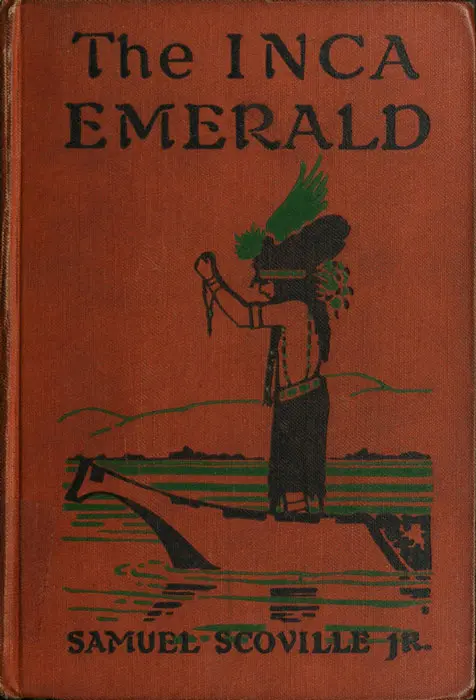
The Inca Emerald
Samuel Scoville
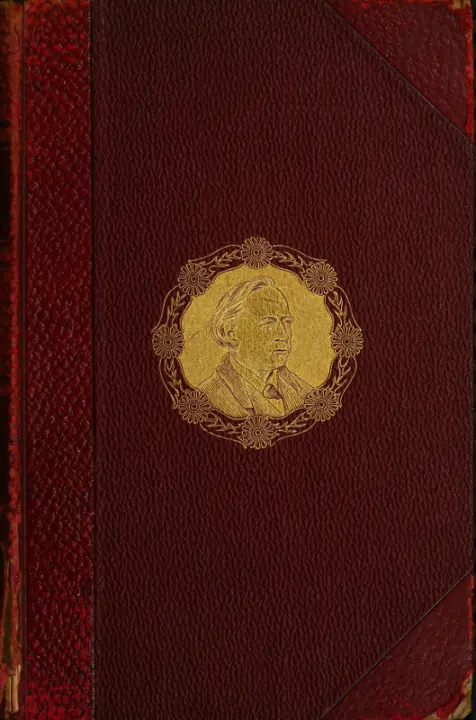
THE CLASSIC COLLECTION · 1888
"A Biography of Rev. Henry Ward Beecher" by Wm. C. Beecher and Rev. Samuel Scoville is a historical account written in the late 19th century. This biography recounts the life and influential career of Henry Ward Beecher, a prominent preacher and social reformer known for his passionate advocacy against slavery and his significant role in American religious life. The narrative captures not only Beecher's personal journey but also the societal transformations he engaged with throughout his life. The opening of the biography introduces readers to Beecher’s ancestry and his family's background, highlighting the strong moral and intellectual influences of both his father, Lyman Beecher, a noted preacher, and his mother, Roxana Foote. The authors detail the early environment in which Henry was raised, emphasizing both the personal qualities he inherited and the familial context that shaped his future perspectives and ambitions. Through rich descriptions of his childhood experiences in the picturesque town of Litchfield, the narrative sets the stage for understanding how these early influences would later fuel his passions and drive him in his efforts for reform and social justice.
Introduction adapted from the source catalogue; source summaries may be automatically generated.
Free to read · English · 279,799 words · No account needed
MAKE TIME FOR A GOOD BOOK
On by default. Untick to stop anonymous reading totals. Each page counts after 10 seconds in view. How this works.
Anonymous counting is on unless you have switched it off.
During this spring the Secretary was in constant telegraphic communication with Mr. Beecher, keeping him informed of each victory or successful move of our army as it occurred.
This led to a thrilling incident in Plymouth Church. During the month of March of this year it became very plain that the war was surely drawing to a close. Lee, hemmed in by Grant, Sherman, and Sheridan, obviously could not hold out very much longer.
The whole country watched and waited with almost breathless interest as slowly but surely the end drew on, the intensity of feeling growing stronger as the end seemed nearer. It was in this condition of the public mind, and on Sunday, April 2, that, just after Mr. Beecher had finished his sermon and had given out a hymn, a telegram was handed up to him on the platform.
Catching the feeling in the air that something of importance had happened, every eye was turned to the platform and a silence like death fell upon the three thousand gathered there. Eagerly the telegram was opened, and as the flash of joy lit up Mr. Beecher’s face a thrill ran through the congregation, instantly hushed as he said:
“The congregation will turn to ‘America’ while I read the following
telegram:
“‘WAR DEPARTMENT, WASHINGTON, “‘April 2, 1865.
“‘TO REV. H. W. BEECHER, Brooklyn:
“‘A despatch just received from General Grant’s adjutant-general at City Point announces the triumphant success of our armies after three days of hard fighting, during which the forces on both sides exhibited unsurpassed valor:
“‘CITY POINT, VA., April 2, 1865, “‘5.30 A.M.
“‘A despatch from General Grant states that General Sheridan, commanding cavalry and infantry, has carried everything before him. He captured three brigades of infantry, a wagon-train, and several batteries of artillery. The prisoners captured will amount to several thousand.
“‘(Signed) T. S. BOWERS, A. A. G.
“‘EDWIN M. STANTON, “‘Secretary of War.’”
As he ceased speaking the great throng rose and, as one man, with streaming eyes joined in the triumphant anthem,
“My country, ’tis of thee!”
The organist drew the trumpet stops, and turned the full power of the great organ into the hymn, but it was drowned by the voices raised in solemn thanksgiving. Not a voice was silent, not an eye was dry. As the last notes of the hymn died out many a strong man dropped into his seat and sobbed with thankfulness. The beginning of the end had come.
On the 8th of April the Arago sailed from New York for Charleston. The day after she sailed came the surrender of Lee’s army.
Of course no word of the news was received aboard the Arago until she arrived off Charleston Harbor.
Your reading position is saved on this browser. Take it to another device with a library code. Reading pages adapt to text, rather than matching a printed edition.
Samuel Scoville
Samuel Scoville
Samuel Scoville
BEHIND THE BOOK
This eBook is for the use of anyone anywhere in the United States and most other parts of the world at no cost and with almost no restrictions whatsoever. You may copy it, give it away or re-use it under the terms of the Project Gutenberg License included with this eBook or online at www.gutenberg.org. If you are not located in the United States, you will have to check the laws of the country where you are located before using this eBook. Read the source licence.
The original source file, including credits and licence, is retained by this library. Request an original-format copy at no charge. Please include the book title and Project Gutenberg identifier #55330.
KEEP YOUR CURIOSITY GOING

David Patterson (Spirit) Hatch

David Patterson (Spirit) Hatch

David Patterson (Spirit) Hatch
Cécile Tormay

Moritz Busch
John L. Ransom