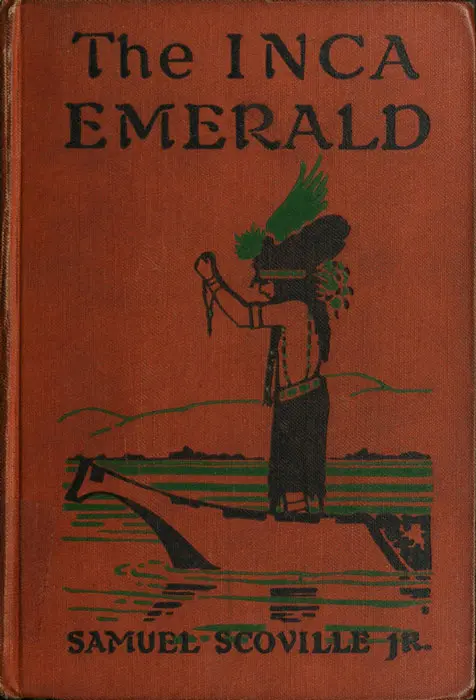
The Inca Emerald
Samuel Scoville
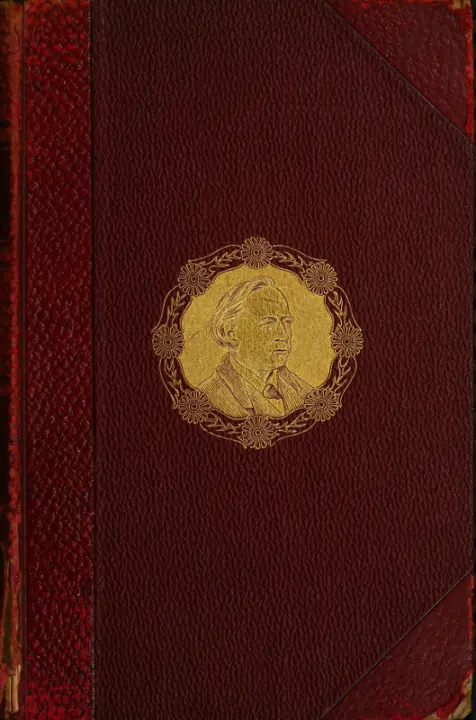
THE CLASSIC COLLECTION · 1888
"A Biography of Rev. Henry Ward Beecher" by Wm. C. Beecher and Rev. Samuel Scoville is a historical account written in the late 19th century. This biography recounts the life and influential career of Henry Ward Beecher, a prominent preacher and social reformer known for his passionate advocacy against slavery and his significant role in American religious life. The narrative captures not only Beecher's personal journey but also the societal transformations he engaged with throughout his life. The opening of the biography introduces readers to Beecher’s ancestry and his family's background, highlighting the strong moral and intellectual influences of both his father, Lyman Beecher, a noted preacher, and his mother, Roxana Foote. The authors detail the early environment in which Henry was raised, emphasizing both the personal qualities he inherited and the familial context that shaped his future perspectives and ambitions. Through rich descriptions of his childhood experiences in the picturesque town of Litchfield, the narrative sets the stage for understanding how these early influences would later fuel his passions and drive him in his efforts for reform and social justice.
Introduction adapted from the source catalogue; source summaries may be automatically generated.
Free to read · English · 279,799 words · No account needed
MAKE TIME FOR A GOOD BOOK
On by default. Untick to stop anonymous reading totals. Each page counts after 10 seconds in view. How this works.
Anonymous counting is on unless you have switched it off.
The attempt to “break Beecher down at his first speech” signally failed. He had beaten the mob. He had made himself heard, and the full reports of his speech were scattered throughout the entire kingdom. Many crude misconceptions were corrected, not a few of his opponents were converted, while many others were forced to admit that they had received some new ideas respecting the North and the United States government. On the 13th he spoke in Glasgow, where the blockade-runners were being built, and where the laboring-classes were in some sense bribed by their occupation in the shipyards. Here were discussed the effects of slavery upon the welfare of the working-classes the world over, showing the condition of work or labor necessitated by any profitable system of slavery, demonstrating that it brought labor into contempt, affixing to it the badge of degradation; that a struggle to extend servile labor across the American continent interests every free workingman on the globe, and that the Southern cause was the natural enemy of free labor and the free laborer all the world over.
A strong Southern sentiment existed here, and the same attempt was made as in Manchester to break the speaker down. The City Hall was crowded to its utmost limits with friends and opponents. The opposition here was neither so determined nor prolonged as at Manchester. His success there had encouraged him while it discouraged them.
His opening sentences established a kindly bond between the hearers, so devotedly attached to their own country, and the speaker. Their kindly interest once aroused, it was not difficult to gain and keep their sympathy throughout the speech. The unruly element was soon put down, but little disturbance occurring after the first half-hour.
“No one who has been born and reared in Scotland can know the feeling with which, for the first time, such a one as I have visited this land, classic in song and in history. I have been reared in a country whose history is brief. So vast is it that one might travel night and day for all the week, and yet scarcely touch historic ground. Its history is yet to be written; it is yet to be acted. But I come to this land, which, though small, is as full of memories as the heaven is of stars, and almost as bright. There is not the most insignificant piece of water that does not make my heart thrill with some story of heroism or some remembered poem; for not only has Scotland had the good fortune to have had men that knew how to make heroic history, but she has reared those bards who have known how to sing her histories.... I come to Scotland, almost as a pilgrim would go to Jerusalem, to see those scenes whose stories had stirred my imagination from my earliest youth; and I can pay no higher compliment than to say that, having seen some part of Scotland, I am satisfied; and permit me to say that if, when you know me, you are a thousandth part as satisfied with me as I am with you, we shall get along very well together. And yet, although I am not of a yielding mood nor easily daunted, I have some embarrassment in speaking to you to-night. I know very well that there are not a few things which prevent my doing good work among you. I differ greatly from many of you. I respect, although I will not adopt, your opinions. I can only ask as much from you for myself. I am aware that a personal prejudice has been diligently excited against me.... It is not a pleasant avenue to a speech for a man to walk through himself. But since every pains is taken to misrepresent me, let me once for all deal with that matter. In my own land I have been the subject of misrepresentation and abuse so long that when I did not receive it I felt as though something was wanting in the atmosphere. I have been the object of misrepresentation at home simply and only because I have been arrayed, ever since I had a voice to speak and a heart to feel—body and soul I have been arrayed, without regard to consequences, and to my own reputation or my own ease, against that which I consider the damning sin of my country and the shame of human nature—slavery. I thought I had a right, when I came to Great Britain, to expect a different reception; but I found that the insidious correspondence of men in America had poisoned the British mind, and that representations had been made that I had indulged in the most offensive language and had threatened all sorts of things against Great Britain. Now, allow me to say that, having examined that interesting literature, so far as I have seen it published in British newspapers, I here declare that ninety-nine out of one hundred parts of those things that I am charged with saying I never said and never thought—they are falsehoods wholly and in particular. Allow me next to say that I have been accustomed freely and at all times, at home, to speak what I thought to be sober truth both of blame and of praise of Great Britain, and if you do not want to hear a man express his honest sentiments fearlessly, then I do not want to speak to you. If I never spared my own country, if I never spared the American Church, nor the government, nor my own party, nor my personal friends, did you expect I would spare you?... I have heard the voice of my Master, saying, ‘If any man come unto Me and hate not father, and mother, and brother, and sister, yea, and his own life also, he is not worthy of Me.’ When, therefore, the cause of truth and justice is put in the scale against my own country, I would disown country for the sake of truth; and when the cause of truth and justice is put in the scale against Great Britain, I would disown her rather than betray what I understood to be the truth. We are bound to establish liberty, regulated Christian liberty, as the law of the American Continent. This is our destiny, this is that towards which the education of the rising generation has been more and more assiduously directed as the peculiar glory of America—to destroy slavery and root it out of our land, and to establish in its place a discreet, intelligent, constitutional, regulated Christian liberty.... I call your attention to a few propositions, then, in reference to slavery as it exists in the extreme Southern States. And, first, the system of slavery requires ignorance in the slave, and not alone intellectual but moral and social ignorance. Anybody who is a slaveholder will find that there are reasons which will compel him to keep slaves in ignorance, if he is going to keep them at all. Not because intelligence is more difficult to govern; for with an intelligent people government is easier.... The slave would not be less easily governed if he were educated. If the slaveholder taught him to read and write, if he made him to know what he ought to know as one of God’s dear children, the South would not be so much endangered by insurrection as she is now. There is nothing so terrible as explosive ignorance. Men without an idea, striking blindly and passionately, are the men to be feared. Even if the slaves were educated they would be better slaves. What is the reason, then, that slaves must be kept in ignorance? The real reason is one of expense. In order to make slave labor profitable you must reduce the cost of the slave; for the difference between the profit and the loss turns upon the halfpenny per pound. If the price of slaves goes up and cotton goes down a shade in price, in ordinary times, the planters lose. The rule is, therefore, to reduce the cost of the man; and the slave, to be profitable, must be simply a working creature. What does a man cost that is a slave? Just a little meal and a little pork, a small measure of the coarsest cloth and leather—that is all he costs. Because that is all he needs—the lowest fare and the scantiest clothing. He is a man with two hands, and two feet, and a belly. That is all there is of a profitable slave. But every new development within him which religion shall make—the sense of fatherhood, the wish for a home, the desire to rear his children well, the wish to honor and comfort his wife, every taste, every sentiment, every aspiration—will demand some external thing to satisfy it. His being augments. He demands more time.... Profitable slaveholding requires only so much intelligence as will work well, and only so much religion as will make men patient under suffering and abuse. More than that—more conscience, more ambition, more divine ideas of human nature, of men’s dignity, of household virtue, of Christian refinement—only makes the slave too costly in his tastes. Not only does the degradation of the slave pass over to his work, but it affects all labor, even when performed by free white men. Throughout the South there is the most marked public disesteem of honest homely industry.... But even in the most favored portions of the South manual labor is but barely redeemed from the taint of being a slave’s business, and nowhere is it honored as it is in the great and free North. Whereas, in the richer and more influential portions of the South, labor is so degraded that men are ashamed of it. It is a badge of dishonor. The poor and shiftless whites, unable to own slaves, unwilling to work themselves, live in a precarious and wretched manner but a little removed from barbarism, relying upon the chase for much of their subsistence, and affording a melancholy spectacle of the condition into which the reflex influence of slavery throws the neighboring poor whites. Having turned their own industry over to slaves, and established the province and duties of a gentleman to consist of indolence and politics, it is not strange that they hold the people of the North in great contempt. The North is a vast hive of universal industry. Idleness there is as disreputable as is labor in the South. The child’s earliest lesson is faithful industry. The boy works, the man works. Everywhere through all the North men earn their own living by their own industry and ingenuity. They scorn to be dependent. They revolt at the dishonor of living upon the unrequited labor of others. Honest labor is that highway along which the whole body of the Northern people travel towards wealth and usefulness. From Northern looms the South is clothed, from their anvils come all Southern implements of labor, from their shops all modern ware, from their lasts Southern shoes. The North is growing rich by its own industry. No wonder, then, that Southerners have been wont to deride the free workmen of the North. Governor Hammond only gave expression to the universal contempt of Southern slaveholders for work and workmen when he called the Northern laborer the ‘mudsill of society,’ and stigmatized the artisan as the ‘greasy mechanic.’ The North and South alike live by work: the North by their own work, the South by that of their slaves! Which is the more honorable? I have a right to demand of the workmen of Glasgow that they should refuse their sympathy to the South, and should give their hearty sympathy to those who are, like themselves, seeking to make work honorable and to give to the workman his true place in society. Disguise it as they will, distract your attention from it as they may, it cannot be concealed that the American question is the workingman’s question all over the world! The slavemaster’s doctrine is that capital should own labor—that the employers should own the employed. This is Southern doctrine and Southern practice. Northern doctrine and Northern practice is that the laborer should be free, intelligent, clothed with full citizen’s rights, with a share of the political duties and honors. The North has from the beginning crowned labor with honor. Nowhere else on earth is it so honorable.”
Your reading position is saved on this browser. Take it to another device with a library code. Reading pages adapt to text, rather than matching a printed edition.
Samuel Scoville
Samuel Scoville

Samuel Scoville
BEHIND THE BOOK
This eBook is for the use of anyone anywhere in the United States and most other parts of the world at no cost and with almost no restrictions whatsoever. You may copy it, give it away or re-use it under the terms of the Project Gutenberg License included with this eBook or online at www.gutenberg.org. If you are not located in the United States, you will have to check the laws of the country where you are located before using this eBook. Read the source licence.
The original source file, including credits and licence, is retained by this library. Request an original-format copy at no charge. Please include the book title and Project Gutenberg identifier #55330.
KEEP YOUR CURIOSITY GOING

David Patterson (Spirit) Hatch

David Patterson (Spirit) Hatch

David Patterson (Spirit) Hatch
Cécile Tormay

Moritz Busch
John L. Ransom