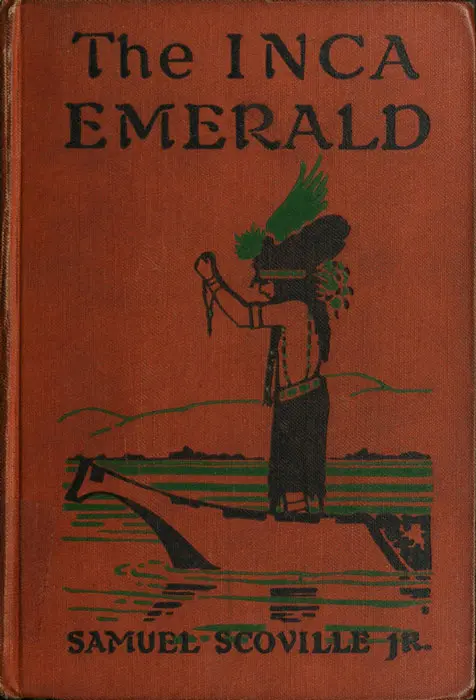
The Inca Emerald
Samuel Scoville
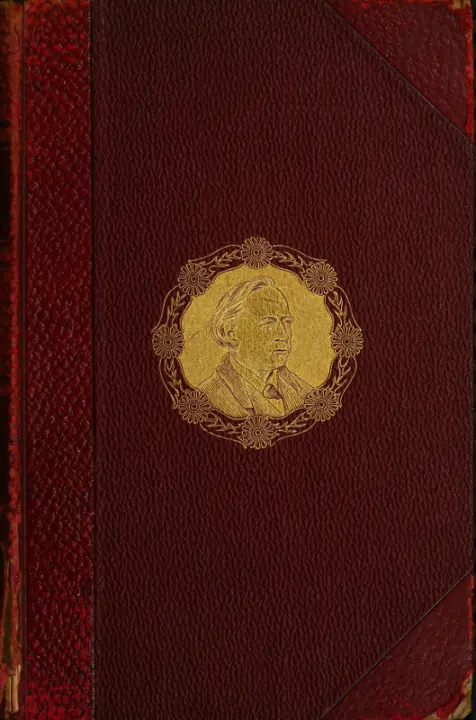
THE CLASSIC COLLECTION · 1888
"A Biography of Rev. Henry Ward Beecher" by Wm. C. Beecher and Rev. Samuel Scoville is a historical account written in the late 19th century. This biography recounts the life and influential career of Henry Ward Beecher, a prominent preacher and social reformer known for his passionate advocacy against slavery and his significant role in American religious life. The narrative captures not only Beecher's personal journey but also the societal transformations he engaged with throughout his life. The opening of the biography introduces readers to Beecher’s ancestry and his family's background, highlighting the strong moral and intellectual influences of both his father, Lyman Beecher, a noted preacher, and his mother, Roxana Foote. The authors detail the early environment in which Henry was raised, emphasizing both the personal qualities he inherited and the familial context that shaped his future perspectives and ambitions. Through rich descriptions of his childhood experiences in the picturesque town of Litchfield, the narrative sets the stage for understanding how these early influences would later fuel his passions and drive him in his efforts for reform and social justice.
Introduction adapted from the source catalogue; source summaries may be automatically generated.
Free to read · English · 279,799 words · No account needed
MAKE TIME FOR A GOOD BOOK
On by default. Untick to stop anonymous reading totals. Each page counts after 10 seconds in view. How this works.
Anonymous counting is on unless you have switched it off.
“I have not come to England to be surprised that those men whose cause cannot bear the light are afraid of free speech. I have had practice of more than twenty-five years, in the presence of tumultuous assemblies, opposing those very men whose representatives now attempt to forestall free speech. Little by little, I doubt not, I shall be permitted to speak to-night. Little by little I have been permitted in my own country to speak, until at last the day has come there, when nothing but the utterance of speech for freedom is popular. You have been pleased to speak of me as one connected with the great cause of civil and religious liberty. I covet no higher honor than to have my name joined to the list of that great company of noble Englishmen from whom we derived our doctrines of liberty. For although there is some opposition to what are here called American ideas, what are these American ideas? They are simply English ideas bearing fruit in America. We bring back American sheaves, but the seed corn we got in England; and if, on a larger sphere and under circumstances of unobstruction, we have reared mightier harvests, every sheaf contains the grain that has made Old England rich for a hundred years....
“Allusion has been made by one of the gentlemen to words or deeds of mine that might be supposed to be offensive to Englishmen. I am sure that in the midst of this mighty struggle at home, which has taxed every power and energy of our people, I have never stopped to measure and to think whether my words, spoken in truth and with fidelity to duty, would be liked in this shape or in that shape, by one or another person, either in England or America. I have had one simple, honest purpose, which I have pursued ever since I have been in public life, and that was, with all the strength that God has given to me, to maintain the cause of the poor and of the weak in my own country. And if, in the height and heat of conflict, some words have been over-sharp and some positions have been taken heedlessly, are you the men to call one to account? What if some exquisite dancing-master, standing on the edge of a battle where Richard Cœur de Lion swung his axe, criticised him by saying that ‘his gestures and postures violated the proprieties of polite life’? When dandies fight they think how they look, but when men fight they think only of deeds. But I am not here either on trial or on defence. Here I am before you, willing to tell you what I think about England or any person in it. The same agencies which have been at work to misrepresent good men in our country to you, have been at work to misrepresent to us good men here; and when I say to my friends in America that I have attended such a meeting as this, received such an address, and beheld such enthusiasm, it will be a renewed pledge of amity. I have never ceased to feel that war, or even unkind feelings between two such great nations, would be one of the most unpardonable and atrocious offences that the world ever beheld, and I have regarded everything, therefore, which needlessly led to those feelings out of which war comes, as being in itself wicked. The same blood is in us. We hold the same substantial doctrines. We have the same mission amongst the nations of the earth. Never were mother and daughter set forth to do so queenly a thing in the kingdom of God’s glory as England and America. Do you ask why we are so sensitive, and why have we hewn England with our tongue as we have? I will tell you why. There is no man who can offend you so deeply as the one you love most.... Now (whether we interpreted it aright or not is not the question), when we thought England was seeking opportunity to go with the South against us of the North, it hurt us as no other nation’s conduct could hurt us on the face of the globe; and if we spoke some words of intemperate heat, we spoke them in the mortification of disappointed affection. It has been supposed that I have aforetime urged or threatened war with England. Never! This I have said—and this I repeat now and here—that the cause of constitutional government, and of universal liberty as associated with it, in our country, was so dear, so sacred that, rather than betray it, we would give the last child we had; that we would not relinquish this conflict though other States rose and entered into a league with the South; and that, if it were necessary, we would maintain this great doctrine of representative government in America against the armed world—against England and France.... We ask no help and no hindrance. We do not ask for material aid. We shall be grateful for moral sympathy; but if you cannot give us moral sympathy we shall still endeavor to do without it. All that we say is, Let France keep away, let England keep hands off; if we cannot manage this rebellion by ourselves, then let it not be managed at all. We do not allow ourselves to doubt the issue of this conflict. It is only a question of time. For such inestimable principles as are at stake—of self-government, of representative government, of any government at all, of free institutions rejected because they inevitably will bring liberty to slaves unless subverted, of national honor, and fidelity to solemn national trusts—for all these war is waged; and if by war these shall be secured, not one drop of blood will be wasted, not one life squandered. The suffering will have purchased a glorious future of inconceivable peace and happiness! Nor do we deem the result doubtful. The population is in the North and West. The wealth is there. The popular intelligence of the country is there. THERE only is there an educated common people. The right doctrines of civil government are with the North. It will not be long before one thing more will be with the North—victory. Men on this side are impatient at the long delay; but if we can bear it, can’t you? You are quite at ease; we are not. You are not materially affected in any such degree as many parts of our own land are. But if the day shall come in one year, in two years, or in ten years hence, when the old stars and stripes shall float over every State of America; if the day shall come when that which was the accursed cause of this dire and atrocious war—slavery—shall be done away; if the day shall have come when through all the Gulf States there shall be liberty of speech, as there never has been; when there shall be liberty of the press, as there never has been; when men shall have common schools to send their children to, which they never have had in the South; in short, if the day shall come when the simple ordinances, the fruition and privileges, of civil liberty, shall prevail in every part of the United States—it will be worth all the dreadful blood and tears and woe. You are impatient; and yet God dwelleth in eternity, and has an infinite leisure to roll forward the affairs of men, not to suit the hot impatience of those who are but children of a day and cannot wait or linger long, but according to the infinite circle on which He measures time and events!...
Your reading position is saved on this browser. Take it to another device with a library code. Reading pages adapt to text, rather than matching a printed edition.
Samuel Scoville
Samuel Scoville

Samuel Scoville
BEHIND THE BOOK
This eBook is for the use of anyone anywhere in the United States and most other parts of the world at no cost and with almost no restrictions whatsoever. You may copy it, give it away or re-use it under the terms of the Project Gutenberg License included with this eBook or online at www.gutenberg.org. If you are not located in the United States, you will have to check the laws of the country where you are located before using this eBook. Read the source licence.
The original source file, including credits and licence, is retained by this library. Request an original-format copy at no charge. Please include the book title and Project Gutenberg identifier #55330.
KEEP YOUR CURIOSITY GOING

David Patterson (Spirit) Hatch

David Patterson (Spirit) Hatch

David Patterson (Spirit) Hatch
Cécile Tormay

Moritz Busch
John L. Ransom