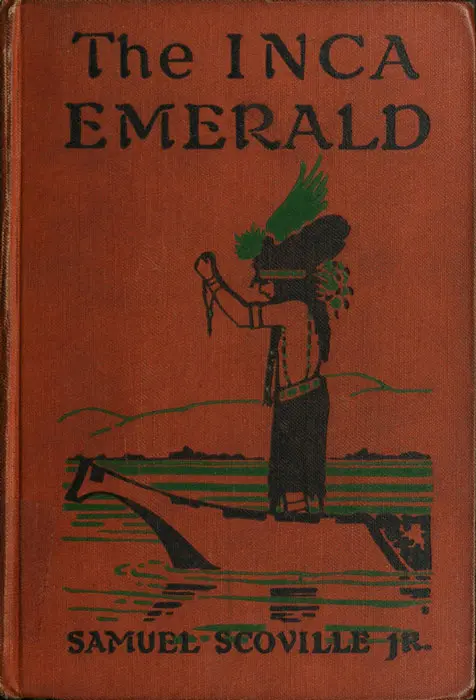
The Inca Emerald
Samuel Scoville
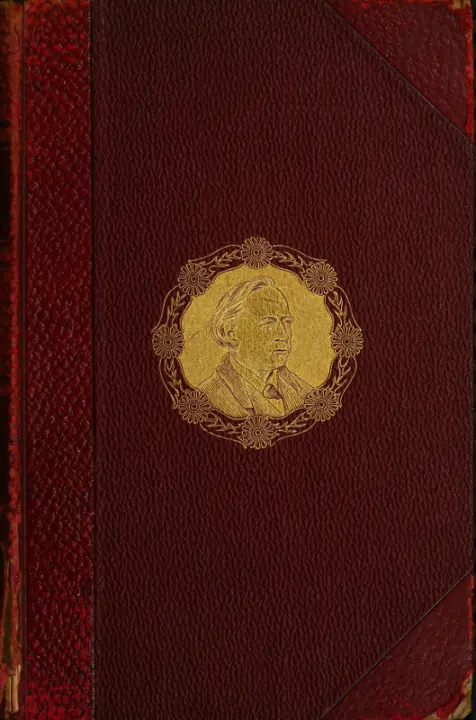
THE CLASSIC COLLECTION · 1888
"A Biography of Rev. Henry Ward Beecher" by Wm. C. Beecher and Rev. Samuel Scoville is a historical account written in the late 19th century. This biography recounts the life and influential career of Henry Ward Beecher, a prominent preacher and social reformer known for his passionate advocacy against slavery and his significant role in American religious life. The narrative captures not only Beecher's personal journey but also the societal transformations he engaged with throughout his life. The opening of the biography introduces readers to Beecher’s ancestry and his family's background, highlighting the strong moral and intellectual influences of both his father, Lyman Beecher, a noted preacher, and his mother, Roxana Foote. The authors detail the early environment in which Henry was raised, emphasizing both the personal qualities he inherited and the familial context that shaped his future perspectives and ambitions. Through rich descriptions of his childhood experiences in the picturesque town of Litchfield, the narrative sets the stage for understanding how these early influences would later fuel his passions and drive him in his efforts for reform and social justice.
Introduction adapted from the source catalogue; source summaries may be automatically generated.
Free to read · English · 279,799 words · No account needed
MAKE TIME FOR A GOOD BOOK
On by default. Untick to stop anonymous reading totals. Each page counts after 10 seconds in view. How this works.
Anonymous counting is on unless you have switched it off.
When they separated at the close of their school-days, one to enter college and the other to go into business in Boston, the above covenant was written, admirable only as it illustrates what has been called Mr. Beecher’s genius for friendship. Returning to his native land in 1842, Constantine died very suddenly of cholera. But even then the old friendship was not forgotten. Years after Mr. Beecher gave to one of his sons “Constantine” as a middle name, that he might have in his family one who should always remind him of the friend so greatly beloved.
We close this chapter with a letter of reminiscence of Mount Pleasant
days.
“AMHERST, MASS., May 17, 1849.
“Here am I in this memorable place. It is now fifteen years since you received a letter from me dated as is this one. It is twenty-three years since I first put my foot on the village sod! It gives my head a whirl to look back so far, or to hear myself, with my young-looking face and younger-acting one, talking of things that happened to me at such long distances of time.... Arrived at Northampton about four o’clock; took stage for Amherst, mounted on top for sight-seeing. Rode through the old town along by the ploughed fields to the bridge of memorable history. All our experiences came very freshly back. I thought I could tell the very places where I kissed you in our ride home....
“After emerging from this old town (Hadley) the colleges shone out from afar; then Mount Pleasant gradually, and one by one the various prominent dwellings in the village. I put up at the Baltwoods’ old tavern.... I first went to the college; walked up and down and around in the various entries, in the grove, by the well, in the chapel, in each recitation-room. Then I went to each of the rooms which I occupied in college. I sought out the spots which had a very melancholy interest from events in my morbid religious history. I then turned my steps to Mount Pleasant. I cannot tell the emotions that I had when I once more trod the grassy ascent where my opening manhood first fairly dawned. As I walked up the long slope I almost thought that I should see the crowd of boys break forth from some door. I stopped on the terrace where for three years I mustered with more than a hundred boys, and whence we marched to chapel, to meals, to church, etc. As I stood there Constantine seemed to rise up to greet me, as he never will greet me; Hunt, Pomeroy, French, Burt, Thayer, Tilghman, Dwight, Van Lennep, Fitzgerald, and scores of others. The wings of the building, the chapel, the kitchen, etc., were all taken away, so that the places where most I roomed, and the veranda in which I used to sit and muse and feel the rise and swell of yearnings the meaning of which I did not know, are all swept away. Here I spent the half-ideal and half-emotive, dreamy hours in which I used to look across the beautiful Connecticut River valley, and at the blue mountains that hedged it in, until my heart swelled and my eyes filled with tears; why, I could not tell. Then I would push out into the woods and romp with the wildest of them. I visited the grove, once beautiful, now meagre and forlorn. I went into the rear building; each room brought up some forgotten scene, some face remembered for good or ill. I went to the room where I roomed early in my course. The boys were at supper, and so I sat down and meditated awhile. The room in which I lived with Fitzgerald was not to be found, some changes in the interior of the house having shut it out from the entry where I formerly found it. It was a strange mixture of old things found again and old things not to be found—of surprise and disappointment, of things painful and of things joyful. All my favorites, the little fellows that I used to love and cherish, their faces looked out at me at every turn. I tried to find the trees, growing three from a root, on which I made steps and built a slat house up among the branches; where I used to sit wind-rocked and read or muse, cry and laugh, just as the fancy took me. It was gone. There are twenty-five boys here at a select school. They were playing down on the old football ground, and the voices and shouts, quips and jokes, were so natural that I could hardly help plunging down the hill, catching up a club, and going into the game of ball with all my old ardor. But they would have no remembrances to meet mine. I should not have been Hank Beecher to them.... Good-by, dear wife.
Your reading position is saved on this browser. Take it to another device with a library code. Reading pages adapt to text, rather than matching a printed edition.
Samuel Scoville
Samuel Scoville
Samuel Scoville
BEHIND THE BOOK
This eBook is for the use of anyone anywhere in the United States and most other parts of the world at no cost and with almost no restrictions whatsoever. You may copy it, give it away or re-use it under the terms of the Project Gutenberg License included with this eBook or online at www.gutenberg.org. If you are not located in the United States, you will have to check the laws of the country where you are located before using this eBook. Read the source licence.
The original source file, including credits and licence, is retained by this library. Request an original-format copy at no charge. Please include the book title and Project Gutenberg identifier #55330.
KEEP YOUR CURIOSITY GOING

David Patterson (Spirit) Hatch

David Patterson (Spirit) Hatch

David Patterson (Spirit) Hatch
Cécile Tormay

Moritz Busch
John L. Ransom