THE CLASSIC COLLECTION✦A dead man’s diaryCLASSIC FREE BOOKS
A dead man’s diary
Coulson Kernahan
THE CLASSIC COLLECTION · 1912
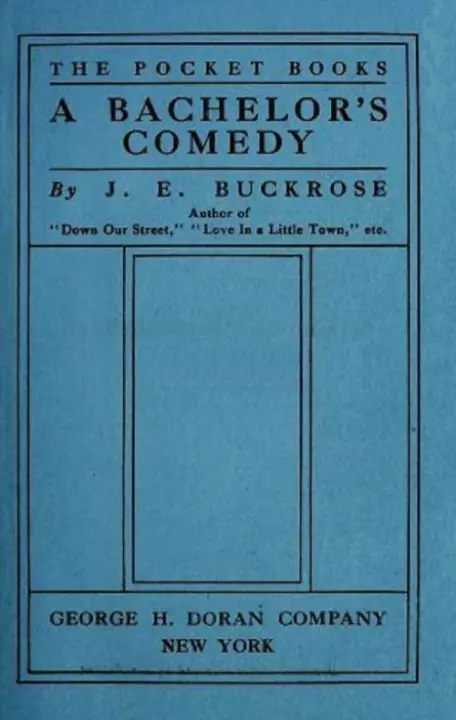
"A Bachelor's Comedy" by J. E. Buckrose is a novel written in the early 20th century. The story centers around the Reverend Andrew Deane, a young vicar navigating his new life in the quaint village of Gaythorpe-on-the-Marsh. As he attempts to establish himself, he grapples with the perception of his youthfulness and the burdens of his clerical responsibilities, all while encountering the charming eccentricities of his new parish's residents. The opening of the novel introduces Andrew as he travels to Gaythorpe, filled with hope and anxiety about his new role. He arrives at the station and is met by the churchwarden, Mr. Thorpe, as they make their way through the pastoral landscape. Andrew is determined to shed his boyish nickname "Andy" and take on the dignity of his position. The narrative unfolds with his interactions at the Vicarage, where he faces the challenge of maintaining discipline with his staff, notably the drunken gardener Sam Petch, while showing kindness to the endearing but needy villagers. This balance of humor, introspection, and the complexities of clerical life lays the groundwork for the deeper themes of community, expectation, and personal growth that will follow in Andrew's journey.
Introduction adapted from the source catalogue; source summaries may be automatically generated.
Free to read · English · 72,222 words · No account needed
MAKE TIME FOR A GOOD BOOK
On by default. Untick to stop anonymous reading totals. Each page counts after 10 seconds in view. How this works.
Anonymous counting is on unless you have switched it off.
“Policeman never take baby boys like Jimmy. Never!” said Elizabeth
quickly.
Sally said nothing—that policeman was a secret part of her life—and she felt vaguely that Elizabeth knew nothing of the realities of existence.
But, queerly enough, she was happier than most children can be, as she plodded up the sand-hills to her mother with no less a sum than three and ninepence halfpenny in her handkerchief.
Andy and Elizabeth watched her for a moment, and then turned towards a gap in the sand-hills whence a road ran into the open country.
“This way seems pleasanter,” said Andy.
“The sands are rather heavy,” agreed Elizabeth.
And thus fortified they walked rather quickly until they reached a turning where a great sheet of mustard-seed in flower stretched, pure blazing yellow, beneath a cloudless blue.
It was like an unexecuted flare of silver trumpets on a still and joyous day, and Andy felt the sudden, triumphant exhilaration of it.
“Elizabeth——” he began—face shining—eyes alight.
Then the aunt and cousins who were not expected in Marshaven until the following week came round the corner, and the Vicar of Gaythorpe used an expression in the presence of the lady he adored which, one second earlier, he would have deemed himself absolutely incapable of using in the presence of any lady at all. “I beg your pardon,” he added hastily.
But Elizabeth may have felt obliged to him.
“These,” said Andy, muddling the introduction in the agitation of his feelings—“these are my cousins and aunt—at least my aunt, Mrs. Dixon and the Webster girls—Miss Elizabeth Atterton.”
Then he openly mopped his brow—anybody would—even the most refined.
“How do you do? I have heard Mr. Deane speak of you very often,” said Elizabeth, with a heightened colour but surprising composure.
Andy stared at her in astonishment, unable to understand how she did it, for that is a thing no man can understand until he has been married for at least a year.
“Delighted to meet any of Andy’s friends,” said Mrs. Dixon.
Andy scowled. So here was the adored learning the undignified name when he wished her always to think of him as Andrew. That was the worst of relatives.
“Yes, we quite look on Andy as a brother, though he is no real relation,” added Irene Webster, swinging her sunshade with an air of great fashion.
“Quite a nice little place—Marshaven—if you want to get away from the rush,” said Phyllis. “You can fancy yourself a tripper, and lead the simple life.”
Your reading position is saved on this browser. Take it to another device with a library code. Reading pages adapt to text, rather than matching a printed edition.
BEHIND THE BOOK
This eBook is for the use of anyone anywhere in the United States and most other parts of the world at no cost and with almost no restrictions whatsoever. You may copy it, give it away or re-use it under the terms of the Project Gutenberg License included with this eBook or online at www.gutenberg.org. If you are not located in the United States, you will have to check the laws of the country where you are located before using this eBook. Read the source licence.
The original source file, including credits and licence, is retained by this library. Request an original-format copy at no charge. Please include the book title and Project Gutenberg identifier #49861.
KEEP YOUR CURIOSITY GOING
Coulson Kernahan

Maurice Baring
Frances Wright
Cécile Tormay

Frederic Jesup Stimson

W. H. P. (William Henry Pope) Jarvis