THE CLASSIC COLLECTION✦A dead man’s diaryCLASSIC FREE BOOKS
A dead man’s diary
Coulson Kernahan
THE CLASSIC COLLECTION · 1912
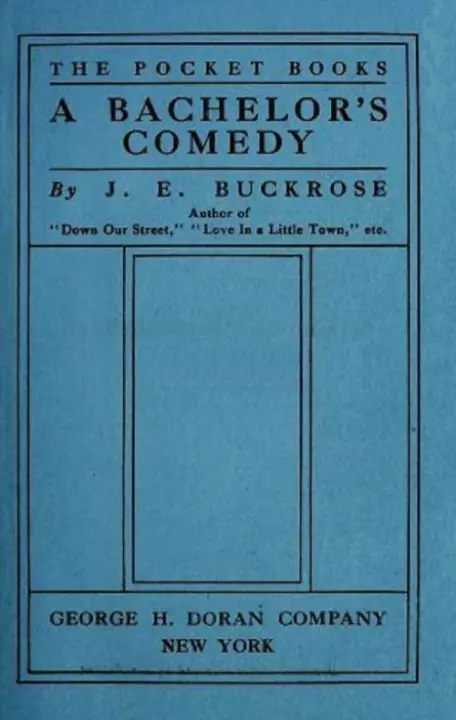
"A Bachelor's Comedy" by J. E. Buckrose is a novel written in the early 20th century. The story centers around the Reverend Andrew Deane, a young vicar navigating his new life in the quaint village of Gaythorpe-on-the-Marsh. As he attempts to establish himself, he grapples with the perception of his youthfulness and the burdens of his clerical responsibilities, all while encountering the charming eccentricities of his new parish's residents. The opening of the novel introduces Andrew as he travels to Gaythorpe, filled with hope and anxiety about his new role. He arrives at the station and is met by the churchwarden, Mr. Thorpe, as they make their way through the pastoral landscape. Andrew is determined to shed his boyish nickname "Andy" and take on the dignity of his position. The narrative unfolds with his interactions at the Vicarage, where he faces the challenge of maintaining discipline with his staff, notably the drunken gardener Sam Petch, while showing kindness to the endearing but needy villagers. This balance of humor, introspection, and the complexities of clerical life lays the groundwork for the deeper themes of community, expectation, and personal growth that will follow in Andrew's journey.
Introduction adapted from the source catalogue; source summaries may be automatically generated.
Free to read · English · 72,222 words · No account needed
MAKE TIME FOR A GOOD BOOK
On by default. Untick to stop anonymous reading totals. Each page counts after 10 seconds in view. How this works.
Anonymous counting is on unless you have switched it off.
Then they all started again. Again the young laughter pealed out over the quiet graves, saying “Life’s a jolly thing!” and there was, in that moment, an atmosphere in the room which seemed made up of beauty and hope and simple merriment.
Oddly enough, Andy himself suddenly thought of the grave beyond the yew hedge. It was almost as if Gulielmus had answered back that message of laughter with a splendid, “And death’s also jolly.”
But, of course, all this passed sub-consciously through Andy’s mind, and the only definite thought that reached him was embodied in his casual—
“There was another bachelor vicar here in 1687. A man called Will Ford.”
“I wonder if he gave luncheon parties,” laughed Elizabeth.
“Oh, he’d give anything that was going, would Will Ford,” said Andy,
smiling back at her.
But, oddly enough, he felt as if he were talking of his friend to the
woman he loved.
“I’ve had a splendid lunch,” said Mrs. Stamford, rising. “Haven’t eaten so much for years.”
“I’d no idea bread and butter and cheese were so delicious,” said Elizabeth. “It shows we always eat them at the wrong end of a meal.”
“Never enjoyed a luncheon-party so much in my life,” said Bill. “Hate ’em as a rule,” he added, rather dimming the compliment.
“Great sport,” condescended Dick Stamford, helping Elizabeth on with her coat. He did not talk much to her, but he was usually somewhere near her.
Andy stood, looking from one to the other, half proud and half dubious.
“I’m glad—if you really did—awfully good of you to be so kind about
it.”
“And now,” said Norah, “we shall have a most delightfully ghoulish reputation in Gaythorpe village. The bone-eaters—to be seen almost any day free of charge—ladies and gentlemen—please walk up!”
“I shall inform Mrs. Jebb,” began Andy anxiously.
“If you do, I’ll never speak to you again—nor Elizabeth either,” she added, with something far too delicate to be called a wink—and yet—
Andy blushed.
“Of course—if you’d rather not——”
Then he remembered he had said that to Elizabeth about the parrot secret, and blushed still more deeply, and could have kicked himself for blushing at all.
Norah’s lips curled in that odd little smile of hers that did not show her teeth, and her eyes twinkled maliciously.
“I should be greatly annoyed, and I’m sure you wouldn’t annoy me for the world, would you, Mr. Deane?”
“N-no,” said Andy, puzzled what on earth she was driving at.
Your reading position is saved on this browser. Take it to another device with a library code. Reading pages adapt to text, rather than matching a printed edition.
BEHIND THE BOOK
This eBook is for the use of anyone anywhere in the United States and most other parts of the world at no cost and with almost no restrictions whatsoever. You may copy it, give it away or re-use it under the terms of the Project Gutenberg License included with this eBook or online at www.gutenberg.org. If you are not located in the United States, you will have to check the laws of the country where you are located before using this eBook. Read the source licence.
The original source file, including credits and licence, is retained by this library. Request an original-format copy at no charge. Please include the book title and Project Gutenberg identifier #49861.
KEEP YOUR CURIOSITY GOING
Coulson Kernahan

Maurice Baring
Frances Wright
Cécile Tormay

Frederic Jesup Stimson

W. H. P. (William Henry Pope) Jarvis