THE CLASSIC COLLECTION✦A dead man’s diaryCLASSIC FREE BOOKS
A dead man’s diary
Coulson Kernahan
THE CLASSIC COLLECTION · 1912
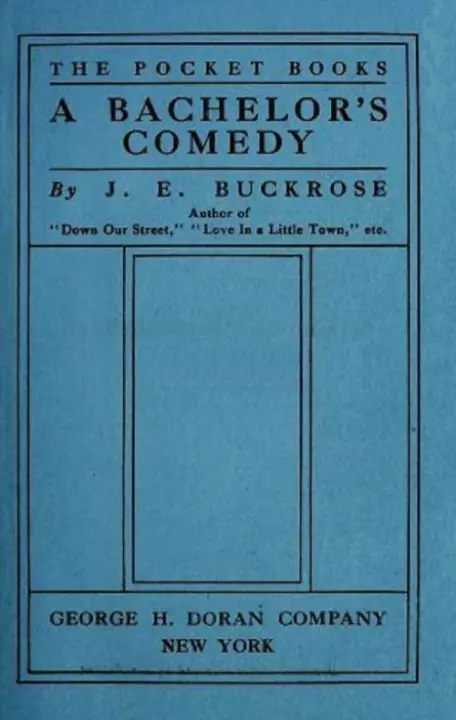
"A Bachelor's Comedy" by J. E. Buckrose is a novel written in the early 20th century. The story centers around the Reverend Andrew Deane, a young vicar navigating his new life in the quaint village of Gaythorpe-on-the-Marsh. As he attempts to establish himself, he grapples with the perception of his youthfulness and the burdens of his clerical responsibilities, all while encountering the charming eccentricities of his new parish's residents. The opening of the novel introduces Andrew as he travels to Gaythorpe, filled with hope and anxiety about his new role. He arrives at the station and is met by the churchwarden, Mr. Thorpe, as they make their way through the pastoral landscape. Andrew is determined to shed his boyish nickname "Andy" and take on the dignity of his position. The narrative unfolds with his interactions at the Vicarage, where he faces the challenge of maintaining discipline with his staff, notably the drunken gardener Sam Petch, while showing kindness to the endearing but needy villagers. This balance of humor, introspection, and the complexities of clerical life lays the groundwork for the deeper themes of community, expectation, and personal growth that will follow in Andrew's journey.
Introduction adapted from the source catalogue; source summaries may be automatically generated.
Free to read · English · 72,222 words · No account needed
MAKE TIME FOR A GOOD BOOK
On by default. Untick to stop anonymous reading totals. Each page counts after 10 seconds in view. How this works.
Anonymous counting is on unless you have switched it off.
“T-that’s William!” interrupted Mrs. Petch, pointing to the parrot; then she laughed hysterically and burst into tears. “We get five shillings a week from an old mistress of mine as long as the parrot lives. And for that my poor husband is to lose his place. Oh, it’s hard—it’s cruel hard.”
Andy stood up, rather upset, but determined now to go through with it.
“Look here,” he said. “That’s not the only reason. I gather that your husband is addicted to drink.” Andy paused and elevated his chin. “A clergyman’s household must be above reproach.”
“It’s not true,” said Mrs. Petch eagerly. “He’s always so much livelier than the other men at Gaythorpe that when he gets a glass and is a bit livelier still, they think he’s drunk.”
“Give me a chance, sir,” said Sam Petch, in a low tone, speaking at
last.
And of all the winged words in any language which he could have chosen to shoot straight at Andy’s heart, those were most sure to hit the core of it.
A chance!
Oh, Andy’s young soul had been wrung during those two years in London by the sight of thousands who had never had a chance, or who had missed it, or had wilfully wasted it. The ragged horde of them with haggard eyes and dirty soft hands seemed to press about him in the flowery silence of the cottage doorway.
“All right,” he said, drawing a long breath. “I’ll give you a chance.”
“You shan’t have cause to regret it, sir,” said Sam Petch quietly, with a simple manliness that pleased Andy.
All the same, on leaving the cottage, he felt bound to pause at the door in order to deliver a further warning.
“I must ask you to adhere to the strict truth in all our dealings together,” he remarked austerely.
“He always does,” said Mrs. Petch, before her husband could reply.
“I shall be glad to find it so,” said Andy.
“Only,” added Sam Petch, scratching his head, “it’s so hard to tell the difference. A lie—well, often it isn’t exactly a lie——”
“What else can it be?” demanded Andy.
“A lie——” repeated Sam. “Well, it’s often”—he searched the ceiling and derived inspiration from a string of onions—“it’s often the truth the other way out.”
“The difference between truth and falsehood is always perfectly clear and distinct,” said Andy, opening the door. And, really, he was still young enough to think so.
Sam Petch accompanied him with a sort of subdued dignity to the Thorpes’, and there said farewell.
Your reading position is saved on this browser. Take it to another device with a library code. Reading pages adapt to text, rather than matching a printed edition.
BEHIND THE BOOK
This eBook is for the use of anyone anywhere in the United States and most other parts of the world at no cost and with almost no restrictions whatsoever. You may copy it, give it away or re-use it under the terms of the Project Gutenberg License included with this eBook or online at www.gutenberg.org. If you are not located in the United States, you will have to check the laws of the country where you are located before using this eBook. Read the source licence.
The original source file, including credits and licence, is retained by this library. Request an original-format copy at no charge. Please include the book title and Project Gutenberg identifier #49861.
KEEP YOUR CURIOSITY GOING
Coulson Kernahan

Maurice Baring
Frances Wright
Cécile Tormay

Frederic Jesup Stimson

W. H. P. (William Henry Pope) Jarvis