THE CLASSIC COLLECTION✦The way the world is goingCLASSIC FREE BOOKS
The way the world is going
H. G. (Herbert George) Wells
THE CLASSIC COLLECTION · 1897
"Thirty Strange Stories" by H. G. Wells is a collection of short stories written in the late 19th century. The anthology showcases Wells's talent for weaving imaginative tales that explore various aspects of human experience through a fantastical lens. The stories feature a range of characters, such as the shy orchid enthusiast Winter-Wedderburn from "The Strange Orchid," who finds himself in a bizarre and potentially perilous situation. The opening of "Thirty Strange Stories" introduces us to Winter-Wedderburn, a lonely man who is passionate about orchids and enjoys attending plant sales in hopes of finding something rare and remarkable. After purchasing an unidentified orchid that had been collected under tragic circumstances, he becomes increasingly captivated by its peculiar growth, which seems to hold a promise of wonder. However, as he tends to his new acquisition, unsettling hints suggest that this orchid may not be as benign as it appears, culminating in a chilling event that forces his housekeeper to rescue him from the strange plant's grasp. This opening sets the stage for themes of curiosity, danger, and the unknown throughout the collection.
Introduction adapted from the source catalogue; source summaries may be automatically generated.
Free to read · English · 117,719 words · No account needed
MAKE TIME FOR A GOOD BOOK
On by default. Untick to stop anonymous reading totals. Each page counts after 10 seconds in view. How this works.
Anonymous counting is on unless you have switched it off.
That was the culmination of Jane’s happiness. When she returned, “Mr. Maynard has been talking to William, ma’am,” she said, “and he is to serve customers, just like the young shop gentlemen, during the next sale. And if he gets on, he is to be made an assistant, ma’am, at the first opportunity. He has got to be as gentlemanly as he can, ma’am; and if he ain’t, ma’am, he says it won’t be for want of trying. Mr. Maynard has took a great fancy to him.”
“He is getting on, Jane,” said my wife.
“Yes, ma’am,” said Jane, thoughtfully, “he is getting on.”
And she sighed.
That next Sunday, as I drank my tea, I interrogated my wife. “How is this Sunday different from all other Sundays, little woman? What has happened? Have you altered the curtains, or rearranged the furniture, or where is the indefinable difference of it? Are you wearing your hair in a new way without warning me? I clearly perceive a change in my environment, and I cannot for the life of me say what it is.”
Then my wife answered in her most tragic voice: “George,” she said, “that—that William has not come near the place to-day! And Jane is crying her heart out upstairs.”
There followed a period of silence. Jane, as I have said, stopped singing about the house, and began to care for our brittle possessions, which struck my wife as being a very sad sign indeed. The next Sunday, and the next, Jane asked to go out, “to walk with William;” and my wife, who never attempts to extort confidences, gave her permission, and asked no questions. On each occasion Jane came back looking flushed and very determined. At last one day she became communicative.
“William is being led away,” she remarked abruptly, with a catching of the breath, apropos of table-cloths. “Yes, m’m. She is a milliner, and she can play on the piano.”
“I thought,” said my wife, “that you went out with him on Sunday.”
“Not out with him, m’m—after him. I walked along by the side of them, and told her he was engaged to me.”
“Dear me, Jane, did you? What did they do?”
“Took no more notice of me than if I was dirt. So I told her she should
suffer for it.”
“It could not have been a very agreeable walk, Jane.”
“Not for no parties, ma’am.
Your reading position is saved on this browser. Take it to another device with a library code. Reading pages adapt to text, rather than matching a printed edition.
H. G. (Herbert George) Wells
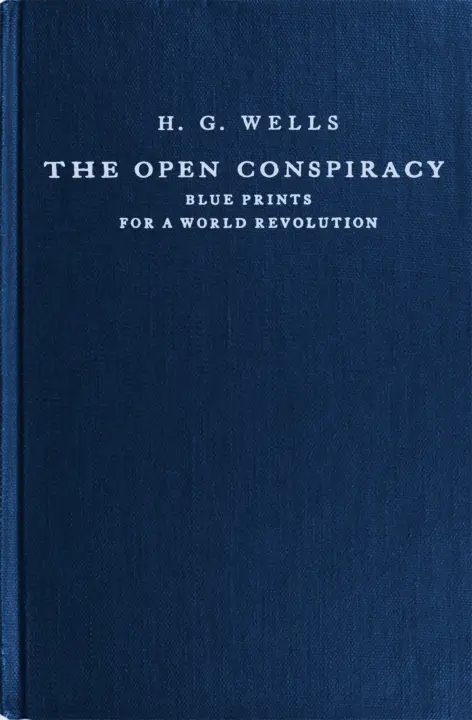
H. G. (Herbert George) Wells
H. G. (Herbert George) Wells
H. G. (Herbert George) Wells
BEHIND THE BOOK
This eBook is for the use of anyone anywhere in the United States and most other parts of the world at no cost and with almost no restrictions whatsoever. You may copy it, give it away or re-use it under the terms of the Project Gutenberg License included with this eBook or online at www.gutenberg.org. If you are not located in the United States, you will have to check the laws of the country where you are located before using this eBook. Read the source licence.
The original source file, including credits and licence, is retained by this library. Request an original-format copy at no charge. Please include the book title and Project Gutenberg identifier #59774.
KEEP YOUR CURIOSITY GOING
Coulson Kernahan

Maurice Baring
Frances Wright
Cécile Tormay
Francis Greenleaf Allinson & Anne C. E. (Anne Crosby Emery) Allinson

Frederic Jesup Stimson