THE CLASSIC COLLECTION✦The way the world is goingCLASSIC FREE BOOKS
The way the world is going
H. G. (Herbert George) Wells
THE CLASSIC COLLECTION · 1897
"Thirty Strange Stories" by H. G. Wells is a collection of short stories written in the late 19th century. The anthology showcases Wells's talent for weaving imaginative tales that explore various aspects of human experience through a fantastical lens. The stories feature a range of characters, such as the shy orchid enthusiast Winter-Wedderburn from "The Strange Orchid," who finds himself in a bizarre and potentially perilous situation. The opening of "Thirty Strange Stories" introduces us to Winter-Wedderburn, a lonely man who is passionate about orchids and enjoys attending plant sales in hopes of finding something rare and remarkable. After purchasing an unidentified orchid that had been collected under tragic circumstances, he becomes increasingly captivated by its peculiar growth, which seems to hold a promise of wonder. However, as he tends to his new acquisition, unsettling hints suggest that this orchid may not be as benign as it appears, culminating in a chilling event that forces his housekeeper to rescue him from the strange plant's grasp. This opening sets the stage for themes of curiosity, danger, and the unknown throughout the collection.
Introduction adapted from the source catalogue; source summaries may be automatically generated.
Free to read · English · 117,719 words · No account needed
MAKE TIME FOR A GOOD BOOK
On by default. Untick to stop anonymous reading totals. Each page counts after 10 seconds in view. How this works.
Anonymous counting is on unless you have switched it off.
“It’s a curious story,” said Professor Bindon, slowly realising how the thing reflected on himself, and then letting his anger rise. “A most remarkable story. I can’t understand your doing it, and I can’t understand this avowal. You’re a type of student—Cambridge men would never dream—I suppose I ought to have thought—Why did you cheat?”
“I didn’t—cheat,” said Hill.
“But you have just been telling me you did.”
“I thought I explained—”
“Either you cheated or you did not cheat.”
“I said my motion was involuntary—”
“I am not a metaphysician, I am a servant of science—of fact. You were told not to move the slip. You did move the slip. If that is not cheating—”
“If I was a cheat,” said Hill, with the note of hysterics in his voice, “should I come here and tell you?”
“Your repentance, of course, does you credit,” said Professor Bindon; “but it does not alter the original facts.”
“No, sir,” said Hill, giving in, in utter self-abasement.
“Even now you cause an enormous amount of trouble. The examination list will have to be revised.”
“I suppose so, sir.”
“Suppose so! Of course it must be revised. And I don’t see how I can conscientiously pass you.”
“Not pass me!” said Hill. “Fail me!”
“It’s the rule in all examinations. Or where should we be? What else did you expect? You don’t want to shirk the consequences of your own acts?”
“I thought perhaps,” said Hill. And then, “Fail me! I thought, as I told you, you would simply deduct the marks given for that slip—”
“Impossible!” said Bindon. “Besides, it would still leave you above Wedderburn. Deduct only the marks! Preposterous! The Departmental Regulations distinctly say—”
“But it’s my own admission, sir.”
“The Regulations say nothing whatever of the manner in which the matter comes to light. They simply provide—”
“It will ruin me. If I fail this examination, they won’t renew my
scholarship.”
“You should have thought of that before.”
“But, sir, consider all my circumstances—”
“I cannot consider anything. Professors in this College are machines. The Regulations will not even let us recommend our students for appointments. I am a machine, and you have worked me. I have to do—”
“It’s very hard, sir.”
“Possibly it is.”
“If I am to be failed this examination I might as well go home at once.”
Your reading position is saved on this browser. Take it to another device with a library code. Reading pages adapt to text, rather than matching a printed edition.
H. G. (Herbert George) Wells
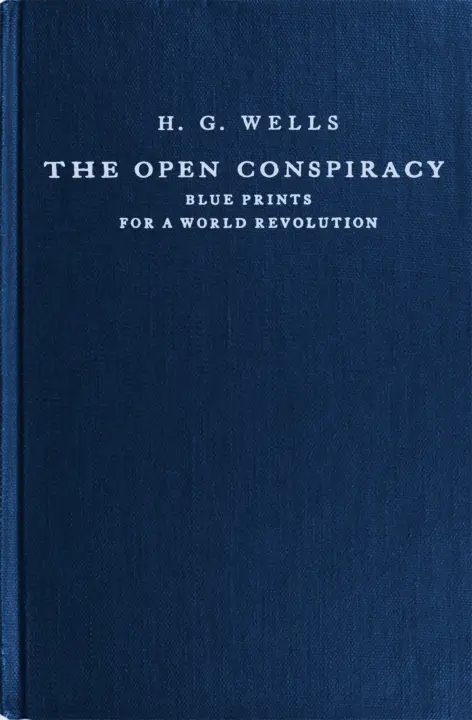
H. G. (Herbert George) Wells
H. G. (Herbert George) Wells
H. G. (Herbert George) Wells
BEHIND THE BOOK
This eBook is for the use of anyone anywhere in the United States and most other parts of the world at no cost and with almost no restrictions whatsoever. You may copy it, give it away or re-use it under the terms of the Project Gutenberg License included with this eBook or online at www.gutenberg.org. If you are not located in the United States, you will have to check the laws of the country where you are located before using this eBook. Read the source licence.
The original source file, including credits and licence, is retained by this library. Request an original-format copy at no charge. Please include the book title and Project Gutenberg identifier #59774.
KEEP YOUR CURIOSITY GOING
Coulson Kernahan

Maurice Baring
Frances Wright
Cécile Tormay
Francis Greenleaf Allinson & Anne C. E. (Anne Crosby Emery) Allinson

Frederic Jesup Stimson