THE CLASSIC COLLECTION✦A Book of Strife in the Form of The Diary of an Old SoulCLASSIC FREE BOOKS
A Book of Strife in the Form of The Diary of an Old Soul
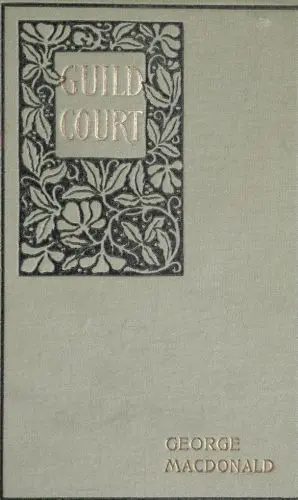
George MacDonald
THE CLASSIC COLLECTION · 1897
"Salted with Fire" by George MacDonald is a novel likely written during the late 19th century. The story revolves around the lives of a humble shoemaker, John MacLear, and his daughter Maggie, delving into themes of faith, love, and the struggles between human desires and spiritual truths. It sets a poignant tone, highlighting the complexities of their relationships, especially with figures of authority and the church. The opening of the novel introduces us to Maggie and her father, as they engage in a thoughtful conversation that reflects their differing views on the local minister. Their dialogue underscores the tension between personal integrity and societal expectations, as Maggie expresses disdain for the minister’s character while her father urges her to strive for love and understanding. The narrative then shifts to Maggie's journey through a picturesque Scottish landscape as she sets off to collect chaff for her father, revealing her innocence and devotion to their humble life. This initial exchange sets the stage for the unfolding exploration of faith, duty, and the trials they face in a world filled with both divine and human challenges.
Introduction adapted from the source catalogue; source summaries may be automatically generated.
Free to read · English · 70,989 words · No account needed
MAKE TIME FOR A GOOD BOOK
On by default. Untick to stop anonymous reading totals. Each page counts after 10 seconds in view. How this works.
Anonymous counting is on unless you have switched it off.
“Whaur are ye aff til this bonny mornin’, Maggie, my doo?” said the soutar, looking up from his work, and addressing his daughter as she stood in the doorway with her shoes in her hand.
“Jist ower to Stanecross, wi’ yer leave, father, to speir the mistress for a goupin or twa o’ chaff: yer bed aneth ye’s grown unco hungry-like.”
“Hoot, the bed’s weel eneuch, lassie!”
“Na, it’s onything but weel eneuch! It’s my pairt to luik efter my ain father, and see there be nae k-nots aither in his bed or his parritch.”
“Ye’re jist yer mither owre again, my lass!—Weel, I winna miss ye that sair, for the minister ’ill be in this mornin’.”
“Hoo ken ye that, father?”
“We didna gree vera weel last nicht.”
“I canna bide the minister—argle-barglin body!”
“Toots, bairn! I dinna like to hear ye speyk sae scornfulike o’ the gude man that has the care o’ oor sowls!”
“It wad be mair to the purpose ye had the care o’ his!”
“Sae I hae: hasna ilkabody the care o’ ilk ither’s?”
“Ay; but he preshumes upo’ ’t—and ye dinna; there’s the differ!”
“Weel, but ye see, lassie, the man has nae insicht—nane to speak o’, that is; and it’s pleased God to mak him a wee stoopid, and some thrawn (twisted). He has nae notion even o’ the wark I put intil thae wee bit sheenie (little shoes) o’ his—that I’m this moment labourin ower!”
“It’s sair wastit upo’ him ’at canna see the thoucht intil’t!”
“Is God’s wark wastit upo’ you and me excep’ we see intil’t, and un’erstan’t, Maggie?”
The girl was silent. Her father resumed.
“There’s three concernt i’ the matter o’ the wark I may be at: first, my ain duty to the wark—that’s me; syne him I’m working for—that’s the minister; and syne him ’at sets me to the wark—ye ken wha that is: whilk o’ the three wad ye hae me lea’ oot o’ the consideration?”
For another moment the girl continued silent; then she said—
“Ye maun be i’ the richt, father! I believe ’t, though I canna jist see ’t. A body canna like a’body, and the minister’s jist the ae man I canna bide.”
“Ay could ye, gi’en ye lo’ed the ane as he oucht to be lo’ed, and as ye maun learn to lo’e him.”
“Weel I’m no come to that wi’ the minister yet!”
“It’s a trowth—but a sair pity, my dautie (daughter—darling).”
Your reading position is saved on this browser. Take it to another device with a library code. Reading pages adapt to text, rather than matching a printed edition.
George MacDonald
George MacDonald
George MacDonald
George MacDonald
BEHIND THE BOOK
This eBook is for the use of anyone anywhere in the United States and most other parts of the world at no cost and with almost no restrictions whatsoever. You may copy it, give it away or re-use it under the terms of the Project Gutenberg License included with this eBook or online at www.gutenberg.org. If you are not located in the United States, you will have to check the laws of the country where you are located before using this eBook. Read the source licence.
The original source file, including credits and licence, is retained by this library. Request an original-format copy at no charge. Please include the book title and Project Gutenberg identifier #9154.
KEEP YOUR CURIOSITY GOING
Coulson Kernahan

Maurice Baring
Frances Wright
Cécile Tormay

Frederic Jesup Stimson

W. H. P. (William Henry Pope) Jarvis