THE CLASSIC COLLECTION✦A daughter of HethCLASSIC FREE BOOKS
A daughter of Heth
William Black
THE CLASSIC COLLECTION · 1878
"Goldsmith" by William Black is a literary biography written in the late 19th century. The book delves into the life and works of Oliver Goldsmith, capturing his struggles, personality, and contributions to literature in a manner that highlights both his achievements and the circumstances that shaped his career. The narrative likely emphasizes Goldsmith's optimistic and lighthearted outlook on life, even amidst various adversities that he encountered throughout his journey as a writer and thinker. The opening of the biography introduces Oliver Goldsmith's character and the misconceptions surrounding his life experiences. It discusses how he is often viewed as a tragic figure, victimized by the harshness of society, while also acknowledging the more playful and carefree aspects of his nature. The narrative portrays Goldsmith's inherent good humor, social awkwardness, and tendency towards gambles both emotionally and financially, alluding to his charming yet troubled existence. In this introductory section, readers get a glimpse of the complexity behind Goldsmith's reputation, setting the stage for a deeper exploration of his formative years, career challenges, and the eventual recognition he found in the literary world.
Introduction adapted from the source catalogue; source summaries may be automatically generated.
Free to read · English · 43,607 words · No account needed
MAKE TIME FOR A GOOD BOOK
On by default. Untick to stop anonymous reading totals. Each page counts after 10 seconds in view. How this works.
Anonymous counting is on unless you have switched it off.
"Innocently to amuse the imagination in this dream of life is wisdom." So wrote Oliver Goldsmith; and surely among those who have earned the world's gratitude by this ministration he must be accorded a conspicuous place. If, in these delightful writings of his, he mostly avoids the darker problems of existence--if the mystery of the tragic and apparently unmerited and unrequited suffering in the world is rarely touched upon--we can pardon the omission for the sake of the gentle optimism that would rather look on the kindly side of life. "You come hot and tired from the day's battle, and this sweet minstrel sings to you," says Mr. Thackeray. "Who could harm the kind vagrant harper? Whom did he ever hurt? He carries no weapon save the harp on which he plays to you; and with which he delights great and humble, young and old, the captains in the tents, or the soldiers round the fire, or the women and children in the villages, at whose porches he stops and sings his simple songs of love and beauty." And it is to be suspected--it is to be hoped, at least--that the cheerfulness which shines like sunlight through Goldsmith's writings, did not altogether desert himself even in the most trying hours of his wayward and troubled career. He had, with all his sensitiveness, a fine happy-go-lucky disposition; was ready for a frolic when he had a guinea, and, when he had none, could turn a sentence on the humorous side of starvation; and certainly never attributed to the injustice or neglect of society misfortunes the origin of which lay nearer home.
Of course, a very dark picture might be drawn of Goldsmith's life; and the sufferings that he undoubtedly endured have been made a whip with which to lash the ingratitude of a world not too quick to recognise the claims of genius. He has been put before us, without any brighter lights to the picture, as the most unfortunate of poor devils; the heart-broken usher; the hack ground down by sordid booksellers; the starving occupant of successive garrets. This is the aspect of Goldsmith's career which naturally attracts Mr. Forster. Mr. Forster seems to have been haunted throughout his life by the idea that Providence had some especial spite against literary persons; and that, in a measure to compensate them for their sad lot, society should be very kind to them, while the Government of the day might make them Companions of the Bath or give them posts in the Civil Service. In the otherwise copious, thorough, and valuable Life and Times of Oliver Goldsmith, we find an almost humiliating insistance on the complaint that Oliver Goldsmith did not receive greater recognition and larger sums of money from his contemporaries. Goldsmith is here "the poor neglected sizar"; his "marked ill-fortune" attends him constantly; he shares "the evil destinies of men of letters"; he was one of those who "struggled into fame without the aid of English institutions"; in short, "he wrote, and paid the penalty." Nay, even Christianity itself is impeached on account of the persecution suffered by poor Goldsmith. "There had been a Christian religion extant for seventeen-hundred and fifty-seven years," writes Mr. Forster, "the world having been acquainted, for even so long, with its spiritual necessities and responsibilities; yet here, in the middle of the eighteenth century, was the eminence ordinarily conceded to a spiritual teacher, to one of those men who come upon the earth to lift their fellow-men above its miry ways. He is up in a garret, writing for bread he cannot get, and dunned for a milkscore he cannot pay." That Christianity might have been worse employed than in paying the milkman's score is true enough, for then the milkman would have come by his own; but that Christianity, or the state, or society should be scolded because an author suffers the natural consequences of his allowing his expenditure to exceed his income, seems a little hard. And this is a sort of writing that is peculiarly inappropriate in the case of Goldsmith, who, if ever any man was author of his own misfortunes, may fairly have the charge brought against him. "Men of genius," says Mr. Forster, "can more easily starve, than the world, with safety to itself, can continue to neglect and starve them." Perhaps so; but the English nation, which has always had a regard and even love for Oliver Goldsmith, that is quite peculiar in the history of literature, and which has been glad to overlook his faults and follies, and eager to sympathise with him in the many miseries of his career, will be slow to believe that it is responsible for any starvation that Goldsmith may have endured.
Your reading position is saved on this browser. Take it to another device with a library code. Reading pages adapt to text, rather than matching a printed edition.
William Black
William Black
William Black
William Black
BEHIND THE BOOK
This eBook is for the use of anyone anywhere in the United States and most other parts of the world at no cost and with almost no restrictions whatsoever. You may copy it, give it away or re-use it under the terms of the Project Gutenberg License included with this eBook or online at www.gutenberg.org. If you are not located in the United States, you will have to check the laws of the country where you are located before using this eBook. Read the source licence.
The original source file, including credits and licence, is retained by this library. Request an original-format copy at no charge. Please include the book title and Project Gutenberg identifier #18917.
KEEP YOUR CURIOSITY GOING
John L. Ransom
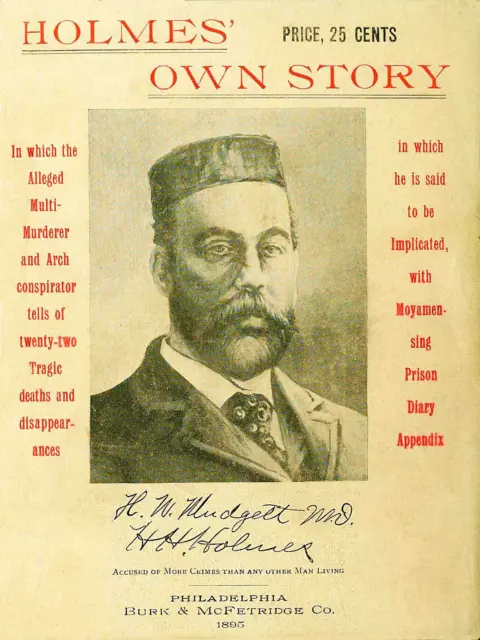
Herman W. Mudgett
Harriet Monroe
Daniel Dulany Addison
Charles Lanman
Harold Rosher