READ · DISCOVER · ENJOYClassic literature · Always free
THE CLASSIC COLLECTION✦Homespun TalesKate Douglas Smith WigginCLASSIC FREE BOOKS

THE CLASSIC COLLECTION · 1909

Homespun Tales

"Homespun Tales" by Kate Douglas Smith Wiggin is a collection of short stories written in the early 20th century. Set in an idyllic, imaginary village that evokes the rustic charm of Yankee life in York County, Maine, the tales revolve around the everyday lives of its colorful inhabitants, exploring their relationships, challenges, and the natural beauty surrounding them. The stories range from romantic endeavors to the humorous intricacies of community life, providing a warm and nostalgic glimpse into rural America. At the start of "Homespun Tales," the reader is introduced to the enchanting Saco River as it serves as both backdrop and character in the narrative. The opening chapter highlights Stephen Waterman, a young man deeply connected to the river, and his burgeoning affection for a local beauty, Rose Wiley. As he enjoys a peaceful morning, Stephen's observations and interactions depict the simplicity and charm of village life. The tale begins to weave together themes of love, adventure, and self-discovery, establishing a foundation for the interpersonal dynamics and local color that will unfold in the subsequent stories.

Introduction adapted from the source catalogue; source summaries may be automatically generated.

Start reading ↓

Free to read · English · 73,561 words · No account needed

MAKE TIME FOR A GOOD BOOK

Homespun Tales

On by default. Untick to stop anonymous reading totals. Each page counts after 10 seconds in view. How this works.

Anonymous counting is on unless you have switched it off.

Homespun Tales

Introduction

These three stories are now brought together under one cover because they have not quite outworn their welcome; but in their first estate two of them appeared as gift-books, with decorative borders and wide margins, a style not compatible with the stringent economies of the present moment. Luckily they belong together by reason of their background, which is an imaginary village, any village you choose, within the confines, or on the borders of York County, in the State of Maine.

In the first tale the river, not “Rose,” is the principal character; no one realizes this better than I. If an author spends her summers on the banks of Saco Water it fills the landscape. It flows from the White Mountains to the Atlantic in a tempestuous torrent, breaking here and there into glorious falls of amber glimpsed through snowy foam; its rapids dash through rocky cliffs crowned with pine trees, under which blue harebells and rosy columbines blossom in gay profusion. There is the glint of the mirror-like lake above the falls, and the sound of the surging floods below; the witchery of feathery elms reflected in its clear surfaces, and the enchantment of the full moon on its golden torrents, never twice alike and always beautiful! How is one to forget, evade, scorn, belittle it, by leaving its charms untold; and who could keep such a river out of a book? It has flowed through many of mine and the last sound I expect to hear in life will be the faint, far-away murmur of Saco Water!

The old Tory Hill Meeting House bulks its way into the foreground of the next story, and the old Peabody Pew (which never existed) has somehow assumed a quasi-historical aspect never intended by its author. There is a Dorcas Society, and there is a meeting house; my dedication assures the reader of these indubitable facts; and the Dorcas Society, in a season of temporary bankruptcy, succeeding a too ample generosity, did scrub the pews when there was no money for paint. Rumors of our strenuous, and somewhat unique, activities spread through our parish to many others, traveling so far (even over seas) that we became embarrassed at our easily won fame. The book was read and people occasionally came to church to see the old Peabody Pew, rather resenting the information that there had never been any Peabodys in the parish and, therefore, there could be no Peabody Pew. Matters became worse when I made, very reverently, what I suppose must be called a dramatic version of the book, which we have played for several summers in the old meeting house to audiences far exceeding our seating capacity. Inasmuch as the imaginary love-tale of my so-called Nancy Wentworth and Justin Peabody had begun under the shadow of the church steeple, and after the ten years of parting the happy reunion had come to them in the selfsame place, it was possible to present their story simply and directly, without offense, in a church building. There was no curtain, no stage, no scenery, no theatricalism. The pulpit was moved back, and four young pine trees were placed in front of it for supposed Christmas decoration. The pulpit platform, and the “wing pews” left vacant for the village players, took the place of a stage; the two aisles served for exits and entrances; and the sexton with three rings of the church bell, announced the scenes. The Carpet Committee of the Dorcas Society furnished the exposition of the first act, while sewing the last breadths of the new, hardly-bought ingrain carpet. The scrubbing of the pews ends the act, with dialogue concerning men, women, ministers, church-members and their ways, including the utter failure of Justin Peabody, Nancy's hero, to make a living anywhere, even in the West. The Dorcas members leave the church for their Saturday night suppers of beans and brown bread, but Nancy returns with her lantern at nightfall to tack down the carpet in the old Peabody pew and iron out the tattered, dog's eared leaves of the hymn-book from which she has so often sung “By cool Siloam's shady rill” with her lover in days gone by. He, still a failure, having waited for years for his luck to turn, has come back to spend Christmas in the home of his boyhood; and seeing a dim light in the church, he enters quietly and surprises Nancy at her task of carpeting the Peabody Pew, so that it shall look as well as the others at next day's services. The rest is easy to imagine. One can deny the reality of a book, but when two or three thousand people have beheld Justin Peabody and Nancy Wentworth in the flesh, and have seen the paint of the old Peabody Pew wiped with a damp cloth, its cushion darned and its carpet tacked in place, it is useless to argue; any more than it would be to deny the validity of the egg of Columbus or the apple of William Tell.

Your reading position is saved on this browser. Take it to another device with a library code. Reading pages adapt to text, rather than matching a printed edition.

More from this author

BEHIND THE WORDS

About Kate Douglas Smith Wiggin

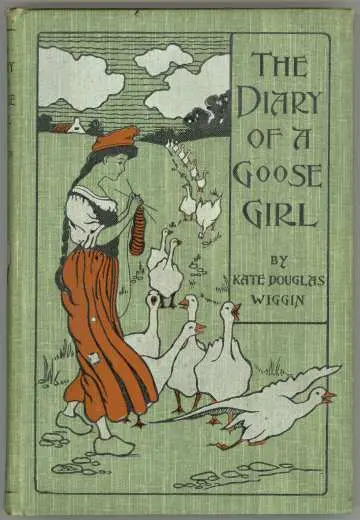
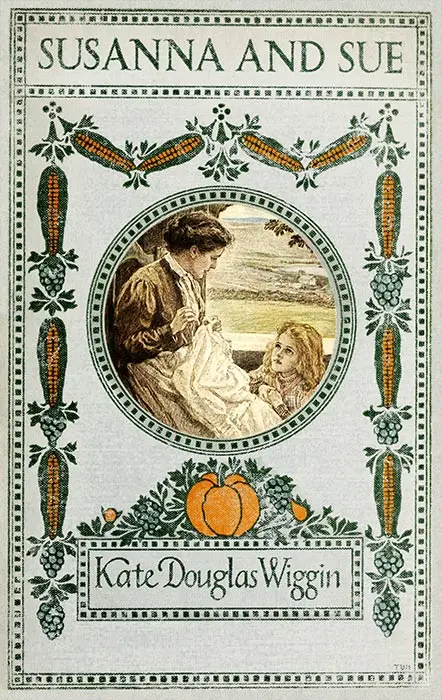
Kate Douglas Smith Wiggin (1856–1923). Explore The Diary of a Goose Girl, Half-A-Dozen Housekeepers: A Story for Girls in Half-A-Dozen Chapters, Susanna and Sue and other works in this collection. These books span children’s books, classic fiction, literature & collections.
Explore this author’s books →

THE READERS’ VERDICT

How did this story stay with you?

Not rated yet
Your rating for Homespun Tales

Be the first to share your verdict.

One rating per browser, which you can change or remove. A necessary browser identifier remembers your vote. How ratings work

A GOOD STORY DESERVES COMPANY

Pass this book along.

A great read is even better when it’s shared.

SEND A LITTLE INSPIRATION

Share this book

BEHIND THE BOOK

Edition & source details.

Title
Homespun Tales
Author
Kate Douglas Smith Wiggin
First publication (Open Library catalogue match)
1909
Digital edition publisher
Project Gutenberg
Gutenberg release date
2002-10-01
Language
English
Source edition imprint
Not stated in source catalogue
Source identifier
Project Gutenberg #3492
Contributors
No additional named contributors in source metadata

Public-domain source & licence

This eBook is for the use of anyone anywhere in the United States and most other parts of the world at no cost and with almost no restrictions whatsoever. You may copy it, give it away or re-use it under the terms of the Project Gutenberg License included with this eBook or online at www.gutenberg.org. If you are not located in the United States, you will have to check the laws of the country where you are located before using this eBook. Read the source licence.

Full source licence and obtaining an original copy

The original source file, including credits and licence, is retained by this library. Request an original-format copy at no charge. Please include the book title and Project Gutenberg identifier #3492.

the full Project Gutenberg License must appear
prominently whenever any copy of a Project Gutenberg work (any work
on which the phrase “Project Gutenberg” appears, or with which the
phrase “Project Gutenberg” is associated) is accessed, displayed,
performed, viewed, copied or distributed:

This eBook is for the use of anyone anywhere in the United States and most
other parts of the world at no cost and with almost no restrictions
whatsoever. You may copy it, give it away or re-use it under the terms
of the Project Gutenberg™ License included with this eBook or online
at www.gutenberg.org. If you
are not located in the United States, you will have to check the laws
of the country where you are located before using this eBook.

1.E.2. If an individual Project Gutenberg electronic work is
derived from texts not protected by U.S. copyright law (does not
contain a notice indicating that it is posted with permission of the
copyright holder), the work can be copied and distributed to anyone in
the United States without paying any fees or charges. If you are
redistributing or providing access to a work with the phrase “Project
Gutenberg” associated with or appearing on the work, you must comply
either with the requirements of paragraphs 1.E.1 through 1.E.7 or
obtain permission for the use of the work and the Project Gutenberg
trademark as set forth in paragraphs 1.E.8 or 1.E.9.

1.E.3. If an individual Project Gutenberg electronic work is posted
with the permission of the copyright holder, your use and distribution
must comply with both paragraphs 1.E.1 through 1.E.7 and any
additional terms imposed by the copyright holder. Additional terms
will be linked to the Project Gutenberg License for all works
posted with the permission of the copyright holder found at the
beginning of this work.

1.E.4. Do not unlink or detach or remove the full Project Gutenberg
License terms from this work, or any files containing a part of this
work or any other work associated with Project Gutenberg.

1.E.5. Do not copy, display, perform, distribute or redistribute this
electronic work, or any part of this electronic work, without
prominently displaying the sentence set forth in paragraph 1.E.1 with
active links or immediate access to the full terms of the Project
Gutenberg License.

1.E.6. You may convert to and distribute this work in any binary,
compressed, marked up, nonproprietary or proprietary form, including
any word processing or hypertext form. However, if you provide access
to or distribute copies of a Project Gutenberg work in a format
other than “Plain Vanilla ASCII” or other format used in the official
version posted on the official Project Gutenberg website
(www.gutenberg.org), you must, at no additional cost, fee or expense
to the user, provide a copy, a means of exporting a copy, or a means
of obtaining a copy upon request, of the work in its original “Plain
Vanilla ASCII” or other form. Any alternate format must include the
full Project Gutenberg License as specified in paragraph 1.E.1.

1.E.7. Do not charge a fee for access to, viewing, displaying,
performing, copying or distributing any Project Gutenberg works
unless you comply with paragraph 1.E.8 or 1.E.9.

1.E.8. You may charge a reasonable fee for copies of or providing
access to or distributing Project Gutenberg electronic works
provided that:

• You pay a royalty fee of 20% of the gross profits you derive from
the use of Project Gutenberg works calculated using the method
you already use to calculate your applicable taxes. The fee is owed
to the owner of the Project Gutenberg trademark, but he has
agreed to donate royalties under this paragraph to the Project
Gutenberg Literary Archive Foundation. Royalty payments must be paid
within 60 days following each date on which you prepare (or are
legally required to prepare) your periodic tax returns. Royalty
payments should be clearly marked as such and sent to the Project
Gutenberg Literary Archive Foundation at the address specified in
Section 4, “Information about donations to the Project Gutenberg
Literary Archive Foundation.”

• You provide a full refund of any money paid by a user who notifies
you in writing (or by e-mail) within 30 days of receipt that s/he
does not agree to the terms of the full Project Gutenberg™
License. You must require such a user to return or destroy all
copies of the works possessed in a physical medium and discontinue
all use of and all access to other copies of Project Gutenberg™
works.

• You provide, in accordance with paragraph 1.F.3, a full refund of
any money paid for a work or a replacement copy, if a defect in the
electronic work is discovered and reported to you within 90 days of
receipt of the work.

• You comply with all other terms of this agreement for free
distribution of Project Gutenberg™ works.


1.E.9. If you wish to charge a fee or distribute a Project
Gutenberg™ electronic work or group of works on different terms than
are set forth in this agreement, you must obtain permission in writing
from the Project Gutenberg Literary Archive Foundation, the manager of
the Project Gutenberg™ trademark. Contact the Foundation as set
forth in Section 3 below.

1.F.

1.F.1. Project Gutenberg volunteers and employees expend considerable
effort to identify, do copyright research on, transcribe and proofread
works not protected by U.S. copyright law in creating the Project
Gutenberg™ collection. Despite these efforts, Project Gutenberg™
electronic works, and the medium on which they may be stored, may
contain “Defects,” such as, but not limited to, incomplete, inaccurate
or corrupt data, transcription errors, a copyright or other
intellectual property infringement, a defective or damaged disk or
other medium, a computer virus, or computer codes that damage or
cannot be read by your equipment.

1.F.2. LIMITED WARRANTY, DISCLAIMER OF DAMAGES - Except for the “Right
of Replacement or Refund” described in paragraph 1.F.3, the Project
Gutenberg Literary Archive Foundation, the owner of the Project
Gutenberg™ trademark, and any other party distributing a Project
Gutenberg™ electronic work under this agreement, disclaim all
liability to you for damages, costs and expenses, including legal
fees. YOU AGREE THAT YOU HAVE NO REMEDIES FOR NEGLIGENCE, STRICT
LIABILITY, BREACH OF WARRANTY OR BREACH OF CONTRACT EXCEPT THOSE
PROVIDED IN PARAGRAPH 1.F.3. YOU AGREE THAT THE FOUNDATION, THE
TRADEMARK OWNER, AND ANY DISTRIBUTOR UNDER THIS AGREEMENT WILL NOT BE
LIABLE TO YOU FOR ACTUAL, DIRECT, INDIRECT, CONSEQUENTIAL, PUNITIVE OR
INCIDENTAL DAMAGES EVEN IF YOU GIVE NOTICE OF THE POSSIBILITY OF SUCH
DAMAGE.

1.F.3. LIMITED RIGHT OF REPLACEMENT OR REFUND - If you discover a
defect in this electronic work within 90 days of receiving it, you can
receive a refund of the money (if any) you paid for it by sending a
written explanation to the person you received the work from. If you
received the work on a physical medium, you must return the medium
with your written explanation. The person or entity that provided you
with the defective work may elect to provide a replacement copy in
lieu of a refund. If you received the work electronically, the person
or entity providing it to you may choose to give you a second
opportunity to receive the work electronically in lieu of a refund. If
the second copy is also defective, you may demand a refund in writing
without further opportunities to fix the problem.

1.F.4. Except for the limited right of replacement or refund set forth
in paragraph 1.F.3, this work is provided to you ‘AS-IS’, WITH NO
OTHER WARRANTIES OF ANY KIND, EXPRESS OR IMPLIED, INCLUDING BUT NOT
LIMITED TO WARRANTIES OF MERCHANTABILITY OR FITNESS FOR ANY PURPOSE.

1.F.5. Some states do not allow disclaimers of certain implied
warranties or the exclusion or limitation of certain types of
damages. If any disclaimer or limitation set forth in this agreement
violates the law of the state applicable to this agreement, the
agreement shall be interpreted to make the maximum disclaimer or
limitation permitted by the applicable state law. The invalidity or
unenforceability of any provision of this agreement shall not void the
remaining provisions.

1.F.6. INDEMNITY - You agree to indemnify and hold the Foundation, the
trademark owner, any agent or employee of the Foundation, anyone
providing copies of Project Gutenberg™ electronic works in
accordance with this agreement, and any volunteers associated with the
production, promotion and distribution of Project Gutenberg™
electronic works, harmless from all liability, costs and expenses,
including legal fees, that arise directly or indirectly from any of
the following which you do or cause to occur: (a) distribution of this
or any Project Gutenberg work, (b) alteration, modification, or
additions or deletions to any Project Gutenberg work, and (c) any
Defect you cause.

Section 2. Information about the Mission of Project Gutenberg

Project Gutenberg is synonymous with the free distribution of
electronic works in formats readable by the widest variety of
computers including obsolete, old, middle-aged and new computers. It
exists because of the efforts of hundreds of volunteers and donations
from people in all walks of life.

Volunteers and financial support to provide volunteers with the
assistance they need are critical to reaching Project Gutenberg’s
goals and ensuring that the Project Gutenberg collection will
remain freely available for generations to come. In 2001, the Project
Gutenberg Literary Archive Foundation was created to provide a secure
and permanent future for Project Gutenberg and future
generations. To learn more about the Project Gutenberg Literary
Archive Foundation and how your efforts and donations can help, see
Sections 3 and 4 and the Foundation information page at www.gutenberg.org.

Section 3. Information about the Project Gutenberg Literary Archive Foundation

The Project Gutenberg Literary Archive Foundation is a non-profit
501(c)(3) educational corporation organized under the laws of the
state of Mississippi and granted tax exempt status by the Internal
Revenue Service. The Foundation’s EIN or federal tax identification
number is 64-6221541. Contributions to the Project Gutenberg Literary
Archive Foundation are tax deductible to the full extent permitted by
U.S. federal laws and your state’s laws.

The Foundation’s business office is located at 41 Watchung Plaza #516,
Montclair NJ 07042, USA, +1 (862) 621-9288. Email contact links and up
to date contact information can be found at the Foundation’s website
and official page at www.gutenberg.org/contact

Section 4. Information about Donations to the Project Gutenberg
Literary Archive Foundation

Project Gutenberg™ depends upon and cannot survive without widespread
public support and donations to carry out its mission of
increasing the number of public domain and licensed works that can be
freely distributed in machine-readable form accessible by the widest
array of equipment including outdated equipment. Many small donations
($1 to $5,000) are particularly important to maintaining tax exempt
status with the IRS.

The Foundation is committed to complying with the laws regulating
charities and charitable donations in all 50 states of the United
States. Compliance requirements are not uniform and it takes a
considerable effort, much paperwork and many fees to meet and keep up
with these requirements. We do not solicit donations in locations
where we have not received written confirmation of compliance. To SEND
DONATIONS or determine the status of compliance for any particular state
visit www.gutenberg.org/donate.

While we cannot and do not solicit contributions from states where we
have not met the solicitation requirements, we know of no prohibition
against accepting unsolicited donations from donors in such states who
approach us with offers to donate.

International donations are gratefully accepted, but we cannot make
any statements concerning tax treatment of donations received from
outside the United States. U.S. laws alone swamp our small staff.

Please check the Project Gutenberg web pages for current donation
methods and addresses. Donations are accepted in a number of other
ways including checks, online payments and credit card donations. To
donate, please visit: www.gutenberg.org/donate.

Section 5. General Information About Project Gutenberg electronic works

Professor Michael S. Hart was the originator of the Project
Gutenberg concept of a library of electronic works that could be
freely shared with anyone. For forty years, he produced and
distributed Project Gutenberg eBooks with only a loose network of
volunteer support.

Project Gutenberg eBooks are often created from several printed
editions, all of which are confirmed as not protected by copyright in
the U.S. unless a copyright notice is included. Thus, we do not
necessarily keep eBooks in compliance with any particular paper
edition.

Most people start at our website which has the main PG search
facility: www.gutenberg.org.

This website includes information about Project Gutenberg,
including how to make donations to the Project Gutenberg Literary
Archive Foundation, how to help produce our new eBooks, and how to
subscribe to our email newsletter to hear about new eBooks.


KEEP YOUR CURIOSITY GOING

Your next chapter awaits.