Luxurious Bathing
Andrew White Tuer
THE CLASSIC COLLECTION · 1885
"Old London Street Cries and the Cries of To-day" by Andrew White Tuer is a historical account written in the late 19th century. The book explores the unique street cries of London vendors, providing a vivid record of daily life in the city, along with a variety of illustrations that capture the essence of the trading culture of the time. It serves as a nostalgic reflection on how these cries, which were once a fixture in the city's auditory landscape, have evolved or faded in modern times. The opening of the work sets the stage by referencing the historical significance of these street cries, tracing their origins back to the 15th century through the writings of John Lydgate. It includes poetic descriptions of various cries heard in London—such as vendors selling everything from ripe strawberries to hot mutton pies—highlighting their whimsical nature and cultural importance. Various mentions of notable characters and their distinctive calls hint at the multifaceted social fabric of London, revealing how street cries not only advertised goods but also served as a window into the lives of the city's inhabitants.
Introduction adapted from the source catalogue; source summaries may be automatically generated.
Free to read · English · 17,272 words · No account needed
MAKE TIME FOR A GOOD BOOK
On by default. Untick to stop anonymous reading totals. Each page counts after 10 seconds in view. How this works.
Anonymous counting is on unless you have switched it off.
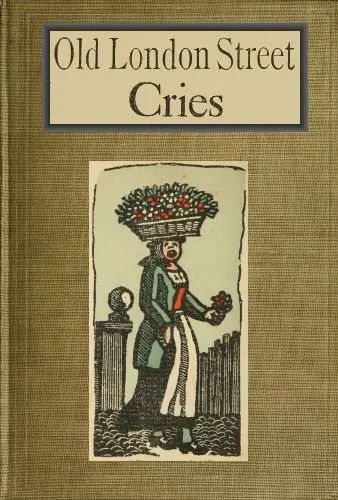
Old London Street
Cries
Heaps of Quaint Cuts
Hand-coloured Frontispiece:
Author of "Bartolozzi and his Works," &c.
Published for
The Old London Street Company,
[Rights Reserved: Wrongs Revenged!
PRINTED AT
THE LEADENHALL PRESS,
LONDON, E.C.
T 4,237.
Introductory.
The "Cries" have been sufficiently well received in bolder form to induce the publication of this additionally illustrated extension at a more popular price.
Old London Street Cries.
Dates, unless in the form of the luscious fruit of Smyrna, are generally dry. It is enough therefore to state that the earliest mention of London Cries is found in a quaint old ballad entitled "London Lyckpenny," or Lack penny, by that prolific writer, John Lydgate, a Benedictine monk of Bury St. Edmunds, who flourished about the middle of the fifteenth century.
These cries are particularly quaint, and especially valuable as a record of the daily life of the time.
Then unto London I dyd me hye,
Of all the land it beareth the pryse:
Hot pescodes, one began to crye,
Strabery rype, and cherryes in the ryse;[1]
One bad me come nere and by some spyce,
Peper and safforne they gan me bede,
But for lack of money I myght not spede.
Then to the Chepe I began me drawne,
Where mutch people I saw for to stande;
One spred me velvet, sylke, and lawne,
Another he taketh me by the hande,
"Here is Parys thred, the fynest in the land;"
I never was used to such thyngs indede,
And wantyng money I myght not spede.
Then went I forth by London stone,
Throughout all Canwyke[2] Streete;
Drapers mutch cloth me offred anone,
Then comes me one cryed hot shepes feete;
One cryde makerell, ryster[3] grene, an other gan greete
On bad me by a hood to cover my head,
But for want of mony I myght not be sped.
Then I hyed me into Est-Chepe;
One cryes rybbs of befe, and many a pye;
Since Lydgate's time the cries of London have been a stock subject for ballads and children's books, of which, in various forms, some hundreds must have appeared within the last two centuries. The cuts, unless from the hand of a Rowlandson or a Cruikshank, are usually of the mechanical order; and one finds copies of the same illustrations, though differently treated, constantly reappearing.
In the books there is usually a cut on each page, with a cry printed above or underneath, and in addition a verse of descriptive poetry, which, if not of the highest order, serves its purpose.
Your reading position is saved on this browser. Take it to another device with a library code. Reading pages adapt to text, rather than matching a printed edition.
Andrew White Tuer
BEHIND THE BOOK
This eBook is for the use of anyone anywhere in the United States and most other parts of the world at no cost and with almost no restrictions whatsoever. You may copy it, give it away or re-use it under the terms of the Project Gutenberg License included with this eBook or online at www.gutenberg.org. If you are not located in the United States, you will have to check the laws of the country where you are located before using this eBook. Read the source licence.
The original source file, including credits and licence, is retained by this library. Request an original-format copy at no charge. Please include the book title and Project Gutenberg identifier #61861.
KEEP YOUR CURIOSITY GOING
Cécile Tormay

Moritz Busch
John L. Ransom
Frances Wright
Cécile Tormay

Mabel Potter Daggett