THE CLASSIC COLLECTION✦Building the pacific railwayCLASSIC FREE BOOKS
Building the pacific railway
Edwin L. (Edwin Legrand) Sabin
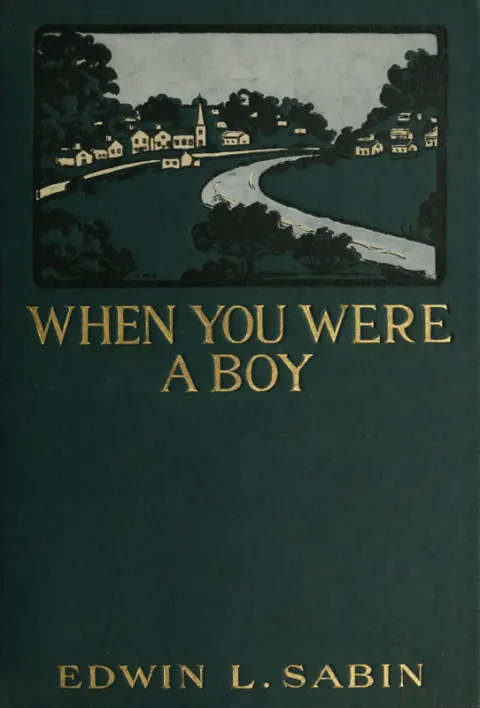
THE CLASSIC COLLECTION · 1905
"When You Were a Boy" by Edwin L. Sabin is a nostalgic children's narrative written in the early 20th century. The text is likely a novel or a collection of intertwined stories centered around the experiences of boys during childhood, exploring themes of innocence, adventure, and the simplicity of pastimes like baseball and the circus. The main character, addressed as "you," engages with a cast of friends, including relatable figures such as Fat Day, Hen Schmidt, and Billy Lunt, who embody the essence of youthful camaraderie and imaginative play. The opening portion of the work introduces the reader to a lively scene where the main character joins friends in forming a baseball team, the North Stars. The camaraderie is palpable as they organize their lineup, discuss their uniforms, and anticipate an upcoming match against the Second-street kids. The sense of competition, childhood rivalry, and the spirit of playfulness is highlighted as the boys navigate the trials of their baseball game, culminating in moments filled with excitement and disappointment. The narrative captures the essence of boyhood adventures, from the thrill of playing sports to the simplicity of the friendships formed during these formative years.
Introduction adapted from the source catalogue; source summaries may be automatically generated.
Free to read · English · 42,358 words · No account needed
MAKE TIME FOR A GOOD BOOK
On by default. Untick to stop anonymous reading totals. Each page counts after 10 seconds in view. How this works.
Anonymous counting is on unless you have switched it off.
Produced by ellinora, Barry Abrahamsen, and the Online Distributed Proofreading Team at http://www.pgdp.net (This file was produced from images generously made available by The Internet Archive/American Libraries.)
New York
THE BAKER & TAYLOR COMPANY
33-37 EAST 17TH STREET, UNION SQUARE (NORTH)
Copyright, 1905, by THE BAKER & TAYLOR COMPANY
Published October, 1905
The Plimpton Press Norwood Mass. U.S.A.
For permission to republish the following
sketches the author is gratefully indebted
to the Century Magazine, the Saturday Evening
Post, Everybody’s Magazine, and the National
Magazine.
Spunk Carey, c
Doc Kennedy, p
Screw Major, 1b
Ted Watson, 2b
Red Conroy, 3b
Slim Harding, ss
Pete Jones, lf
Tug McCormack, rf
Ollie Hansen, cf
We: 5 9 9 8—31
They: 11 14 9 16—50
FAT DAY was captain and pitcher. He was captain because, if he was not, he wouldn’t play, and inasmuch as he owned the ball, this would have been disastrous; and he was pitcher because he was captain.
In the North Stars were other pitchers—seven of them! The only member who did not aspire to pitch was Billy Lunt, and as catcher he occupied a place, in “takin’ ’em off the bat,” too delightfully hazardous for him to surrender, and too painful for anybody else to covet.
The organization of the North Stars was effected through verbal
contracts somewhat as follows:
“Say, we want you to be in our nine.”
“All right. Will you lemme pitch?”
“Naw; Fat’s pitcher, ’cause he’s captain; but you can play first.”
“Pooh! Fat can’t pitch—”
“I can, too. I can pitch lots better’n you can, anyhow.” (This from
Fat himself.)
“W-well, I’ll play first, then. I don’t care.”
Thus an adjustment was reached.
A proud moment for you was it when your merits as a ball-player were recognized, and you were engaged for center-field. Of course, secretly you nourished the strong conviction that you were cut out for a pitcher. Next to pitcher, you preferred short-stop, and next to short-stop, first base. But these positions, and pretty much everything, in fact, had been preempted; so, after the necessary haggling, you accepted center-field.
Speedily the North Star make-up was complete, and disappointed applicants—those too little, too big, too late, or not good enough—were busy sneering about it.
The equipment of the North Star Base-Ball Club consisted of Fat’s “regular league” ball, six bats (owned by various members, and in some cases exercising no small influence in determining fitness of the same for enlistment as recruits), and four uniforms.
Your reading position is saved on this browser. Take it to another device with a library code. Reading pages adapt to text, rather than matching a printed edition.
Edwin L. (Edwin Legrand) Sabin
Edwin L. (Edwin Legrand) Sabin
Edwin L. (Edwin Legrand) Sabin
Edwin L. (Edwin Legrand) Sabin
BEHIND THE BOOK
This eBook is for the use of anyone anywhere in the United States and most other parts of the world at no cost and with almost no restrictions whatsoever. You may copy it, give it away or re-use it under the terms of the Project Gutenberg License included with this eBook or online at www.gutenberg.org. If you are not located in the United States, you will have to check the laws of the country where you are located before using this eBook. Read the source licence.
The original source file, including credits and licence, is retained by this library. Request an original-format copy at no charge. Please include the book title and Project Gutenberg identifier #58165.
KEEP YOUR CURIOSITY GOING
Coulson Kernahan

Maurice Baring
Frances Wright
Cécile Tormay

Frederic Jesup Stimson

W. H. P. (William Henry Pope) Jarvis