Moving the Mountain
Charlotte Perkins Gilman
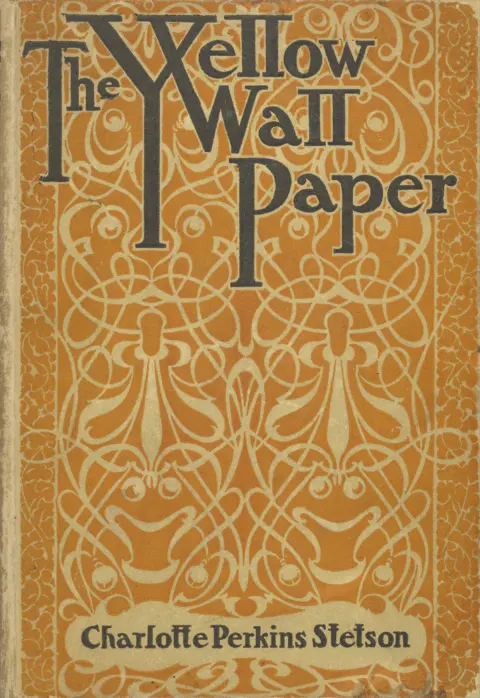
THE CLASSIC COLLECTION · 1892
"The Yellow Wallpaper" by Charlotte Perkins Gilman is a short story published in January 1892. This landmark work of feminist literature and horror fiction follows a woman confined to a nursery by her physician husband as treatment for "temporary nervous depression." Forbidden from working or writing, she documents her experience through secret journal entries. With nothing to occupy her mind but the room's disturbing yellow wallpaper, she descends into madness, becoming obsessed with its strange patterns and the figures she perceives within it.
Introduction adapted from the source catalogue; source summaries may be automatically generated.
Free to read · English · 6,225 words · No account needed
MAKE TIME FOR A GOOD BOOK
On by default. Untick to stop anonymous reading totals. Each page counts after 10 seconds in view. How this works.
Anonymous counting is on unless you have switched it off.
John is practical in the extreme. He has no patience with faith, an intense horror of superstition, and he scoffs openly at any talk of things not to be felt and seen and put down in figures.
John is a physician, and perhaps—(I would not say it to a living soul, of course, but this is dead paper and a great relief to my mind)—perhaps that is one reason I do not get well faster.
You see, he does not believe I am sick!
And what can one do?
If a physician of high standing, and one’s own husband, assures friends and relatives that there is really nothing the matter with one but temporary nervous depression—a slight hysterical tendency—what is one to do?
My brother is also a physician, and also of high standing, and he says
the same thing.
So I take phosphates or phosphites—whichever it is, and tonics, and journeys, and air, and exercise, and am absolutely forbidden to “work” until I am well again.
Personally, I disagree with their ideas.
Personally, I believe that congenial work, with excitement and change,
would do me good.
But what is one to do?
I did write for a while in spite of them; but it does exhaust me a good deal—having to be so sly about it, or else meet with heavy opposition.
I sometimes fancy that in my condition if I had less opposition and more society and stimulus—but John says the very worst thing I can do is to think about my condition, and I confess it always makes me feel bad.
So I will let it alone and talk about the house.
The most beautiful place! It is quite alone, standing well back from the road, quite three miles from the village. It makes me think of English places that you read about, for there are hedges and walls and gates that lock, and lots of separate little houses for the gardeners and people.
There is a delicious garden! I never saw such a garden—large and shady, full of box-bordered paths, and lined with long grape-covered arbors with seats under them.
There were greenhouses, too, but they are all broken now.
There was some legal trouble, I believe, something about the heirs and co-heirs; anyhow, the place has been empty for years.
That spoils my ghostliness, I am afraid; but I don’t care—there is something strange about the house—I can feel it.
I even said so to John one moonlight evening, but he said what I felt was a draught, and shut the window.
Your reading position is saved on this browser. Take it to another device with a library code. Reading pages adapt to text, rather than matching a printed edition.
Charlotte Perkins Gilman
Charlotte Perkins Gilman
Charlotte Perkins Gilman
Charlotte Perkins Gilman
BEHIND THE BOOK
This eBook is for the use of anyone anywhere in the United States and most other parts of the world at no cost and with almost no restrictions whatsoever. You may copy it, give it away or re-use it under the terms of the Project Gutenberg License included with this eBook or online at www.gutenberg.org. If you are not located in the United States, you will have to check the laws of the country where you are located before using this eBook. Read the source licence.
The original source file, including credits and licence, is retained by this library. Request an original-format copy at no charge. Please include the book title and Project Gutenberg identifier #1952.
KEEP YOUR CURIOSITY GOING
Coulson Kernahan

Maurice Baring
Frances Wright
Cécile Tormay

Frederic Jesup Stimson

W. H. P. (William Henry Pope) Jarvis