THE CLASSIC COLLECTION✦Rumpty-Dudget’s Tower: A Fairy TaleCLASSIC FREE BOOKS
Rumpty-Dudget’s Tower: A Fairy Tale
Julian Hawthorne
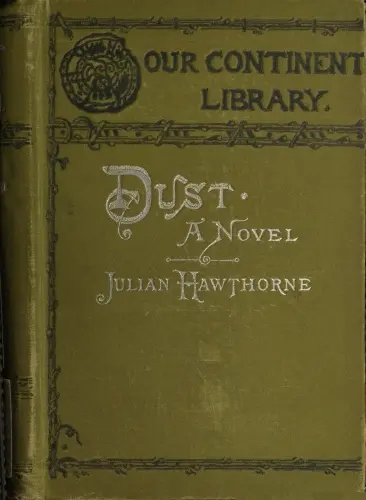
THE CLASSIC COLLECTION · 1882
"Dust: A Novel" by Julian Hawthorne is a historical fiction written in the late 19th century. Set in the time of chaos and change following the end of the 18th century, it paints a vivid picture of societal shifts with a complex backdrop of characters navigating through emerging modernity. The story centers around Mrs. Lockhart and her daughter Marion as they face economic difficulties and decide to rent out their home, leading to encounters with figures from their past and new acquaintances who are pivotal to their future. At the start of the narrative, we are introduced to a colorful depiction of a society in transition, where the remnants of social hierarchy collide with the rise of new concerns and realities. The Lockharts' decision to rent out their home sets the stage for new relationships and potential complications in their lives. The dramatic overturn of a coach they had been traveling in sparks incidents that intertwine their fate with a character named Lancaster, while hints of past triumphs and tragedies linger in the air, particularly concerning Major Lockhart, who died at Waterloo. The opening chapters establish the groundwork for themes of love, loss, and societal change that promise to evolve throughout the story.
Introduction adapted from the source catalogue; source summaries may be automatically generated.
Free to read · English · 125,116 words · No account needed
MAKE TIME FOR A GOOD BOOK
On by default. Untick to stop anonymous reading totals. Each page counts after 10 seconds in view. How this works.
Anonymous counting is on unless you have switched it off.
The time at which this story begins was a time of many beginnings and many endings. The Eighteenth Century had expired the better part of a score of years before, and everything was in confusion. Youth--tumultuous, hearty, reckless, showy, slangy, insolent, kindly, savage--was the genius of the hour. The Iron Duke had thrashed the Corsican Ogre, England was the Queen of nations, and Englishmen thought so much of themselves and of one another that society, for all its caste, became well-nigh republican. Gentlemen were bruisers and bruisers were gentlemen. At Ranelagh and Vauxhall fine ladies rubbed shoulders with actresses, magistrates foregathered with jockeys and sharpers, and the guardians of public order had more to fear from young bloods and sprigs of nobility than from professional thieves and blacklegs. Costumes were grotesque and irrational, but were worn with a dash and effrontery that made them becoming. There were cocked hats and steeple-crowned hats; yards of neck-cloth and mountains of coat-collar; green coats and blue coats, claret coats and white coats; four or five great coats, one on top of another; small clothes and tight breeches, corduroys, hessians and pumps. Beards were shaved smooth, and hair grew long. Young ladies wore drab josephs and flat-crowned beaver bonnets, and rode to balls on pillions with their ball clothes in bandboxes. The lowest of necks were compensated by the shortest of waists; and the gleam of garter-buckles showed through the filmy skirts that scarcely reached to the ankle. Coral necklaces were the fashion, and silvery twilled silks and lace tuckers; and these fine things were laid up in lavender and rose leaves. Hair was cropped short behind and dressed with flat curls in front. Mob-caps and top-knotted caps, skull-caps and fronts, turbans and muslin kerchiefs, and puffed yellow satins--these things were a trifle antiquated, and belonged to the elder generation. Gentlemen said “Dammy, sir!” “Doosid,” “Egad,” “Stifle me!” “Monstrous fine,” “Faith!” and “S’blood!” The ladies said, “Thank God!” “God A’mighty!” and “Law!” and everybody said “Genteel.” Stage-coaches and post-horses occupied the place of railways and telegraphs, and driving was a fine art, and five hours from Brighton to London was monstrous slow going. Stage-coachmen were among the potentates of the day; they could do but one thing, but that they did perfectly; they were clannish among themselves, bullies to the poor, comrades to gentlemen, lickspittles to lords, and the high-priests of horse-flesh, which was at that epoch one of the most influential religions in England; pugilism being another, caste a third, and drunkenness the fourth. A snuff-box was still the universal wear, blue-pill was the specific for liver complaint, shopping was done in Cheape and Cornhill; fashionable bloods lodged in High Holborn, lounged at Bennet’s and the Piazza Coffee-House, made calls in Grosvenor Square, looked in at a dog-fight, or to see Kemble, Siddons or Kean in the evening, and finished the night over rack-punch and cards at the club. Literature was not much in vogue, though most people had read “Birron” and the “Monk,” and many were familiar with the “Dialogues of Devils,” the “Arabian Nights,” and “Zadkiel’s Prophetic Almanac;” while the “Dairyman’s Daughter” either had been written or soon was to be. Royalty and nobility showed themselves much more freely than they do now. George the Third was still King of England, and George, his son, was still the first gentleman and foremost blackguard of Europe; and everything, in short, was outwardly very different from what it is at the present day. Nevertheless, underneath all appearances, flowed then, as now, the mighty current of human nature. Then, as now, mothers groaned that infants might be born; poverty and wealth were married in every human soul, so that beggars were rich in some things and princes poor in others; young men and women fell in love, and either fell out again, or wedded, or took the law into their own hands, or jilted one another, just as they do now. Men in power were tyrannous or just, pompous or simple, wise or foolish, and men in subjection were faithful or dishonest, servile or self-respectful, scheming or contented, then as now. Then, no less than now, some men broke one Commandment, some another, and some broke all; and the young looked forward to a good time coming and the old prophesied misfortune. At that epoch, as in this, Death plied his trade after his well-known fashion, which seems so cruel and arbitrary, and is so merciful and wise. And finally--to make an end of this summary--the human race was predestined to good, and the individual human being was free to choose either good or evil, the same then as now and always. And--to leave generalities and begin upon particulars--it was at this time that Mrs. Lockhart (who, seven-and-forty years ago, as lovely Fanny Pell, had cherished a passing ideal passion for Handsome Tom Grantley, and had got over it and married honest young Lieutenant Lockhart)--that Mrs. Lockhart, we say, having lost her beloved Major at Waterloo, and finding herself in somewhat narrow circumstances, had made up her mind to a new departure in life, and had, in accordance with this determination, caused her daughter Marion to write “Lodgings to Let” on a card, and to hang the same up in the window of the front drawing-room. This event occurred on the morning of the third of May, Eighteen hundred and sixteen.
Your reading position is saved on this browser. Take it to another device with a library code. Reading pages adapt to text, rather than matching a printed edition.
Julian Hawthorne
Julian Hawthorne
Julian Hawthorne
Julian Hawthorne
BEHIND THE BOOK
This eBook is for the use of anyone anywhere in the United States and most other parts of the world at no cost and with almost no restrictions whatsoever. You may copy it, give it away or re-use it under the terms of the Project Gutenberg License included with this eBook or online at www.gutenberg.org. If you are not located in the United States, you will have to check the laws of the country where you are located before using this eBook. Read the source licence.
The original source file, including credits and licence, is retained by this library. Request an original-format copy at no charge. Please include the book title and Project Gutenberg identifier #47905.
KEEP YOUR CURIOSITY GOING
Cécile Tormay

Moritz Busch
Coulson Kernahan
John L. Ransom

Maurice Baring
Frances Wright